
Why go
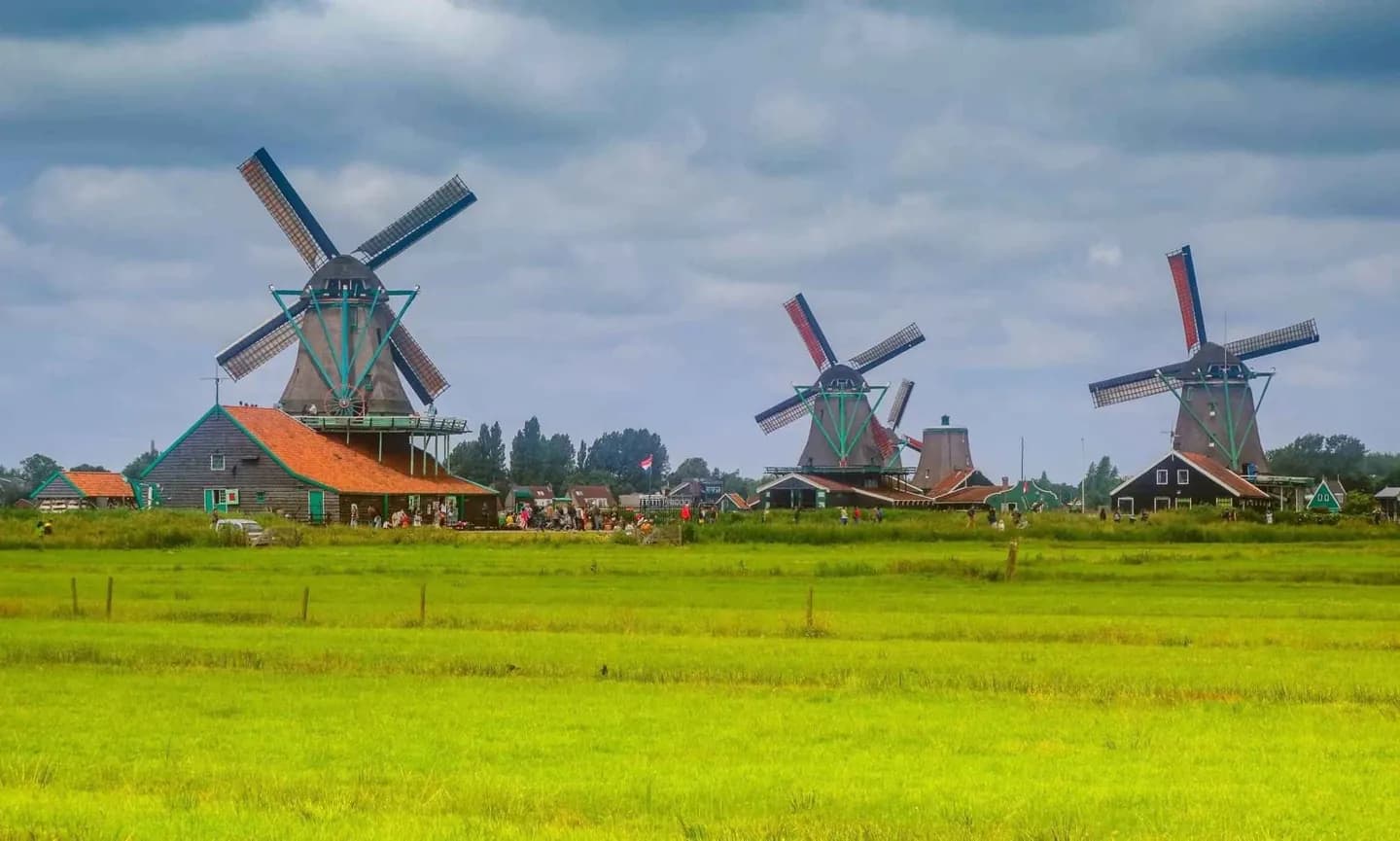
Visit to see how wind powered a regional economy, not just a picturesque skyline. Sawmills, oil mills, a dye mill and craft houses explain the specialised production that made the Zaanstreek an early industrial centre. The riverside layout keeps those trades tied to their original geography.
What to look for
- Match named mills to their jobs: sawing, oil pressing, mustard or dye production.
- Compare relocated wooden houses with the broad river landscape around them.
- Use the Zaans Museum and craft houses to connect machinery with domestic life.
The full story
Zaanse Schans is not an untouched village preserved exactly where it first grew. From the 1960s into the 1970s, historic Zaanstreek buildings were moved here to create a heritage area. That relocation makes the site easy to explore, but changes how to read it: the buildings are authentic regional structures arranged as an interpretation of Zaan life. The mills show how varied wind-powered production could be. De Gekroonde Poelenburg and Het Jonge Schaap are sawmills; De Os, De Zoeker and De Bonte Hen pressed oil; De Huisman produced mustard; De Kat worked as a dye mill. Small museums and craft houses add weaving, cooperage, baking, clocks and retail to the industrial story. The name Schans recalls an earlier defensive work connected to the Eighty Years' War. River, mills and relocated houses present the Zaanstreek as a place where defence, domestic life and mechanised production overlapped.
Useful to know
- Check each museum and mill separately because access is not governed by one shared timetable.
- Choose two or three interiors and leave time to walk the outdoor site.
- Expect wind and exposed paths beside the Zaan, even when indoor venues are your priority.
Your next visit
Estimated · Declared scenario and planning estimates; no live opening, weather, queue or booking service.
Outdoor visit · 30–45 min
World planning estimate; admission, opening, visit duration and access need checking.