
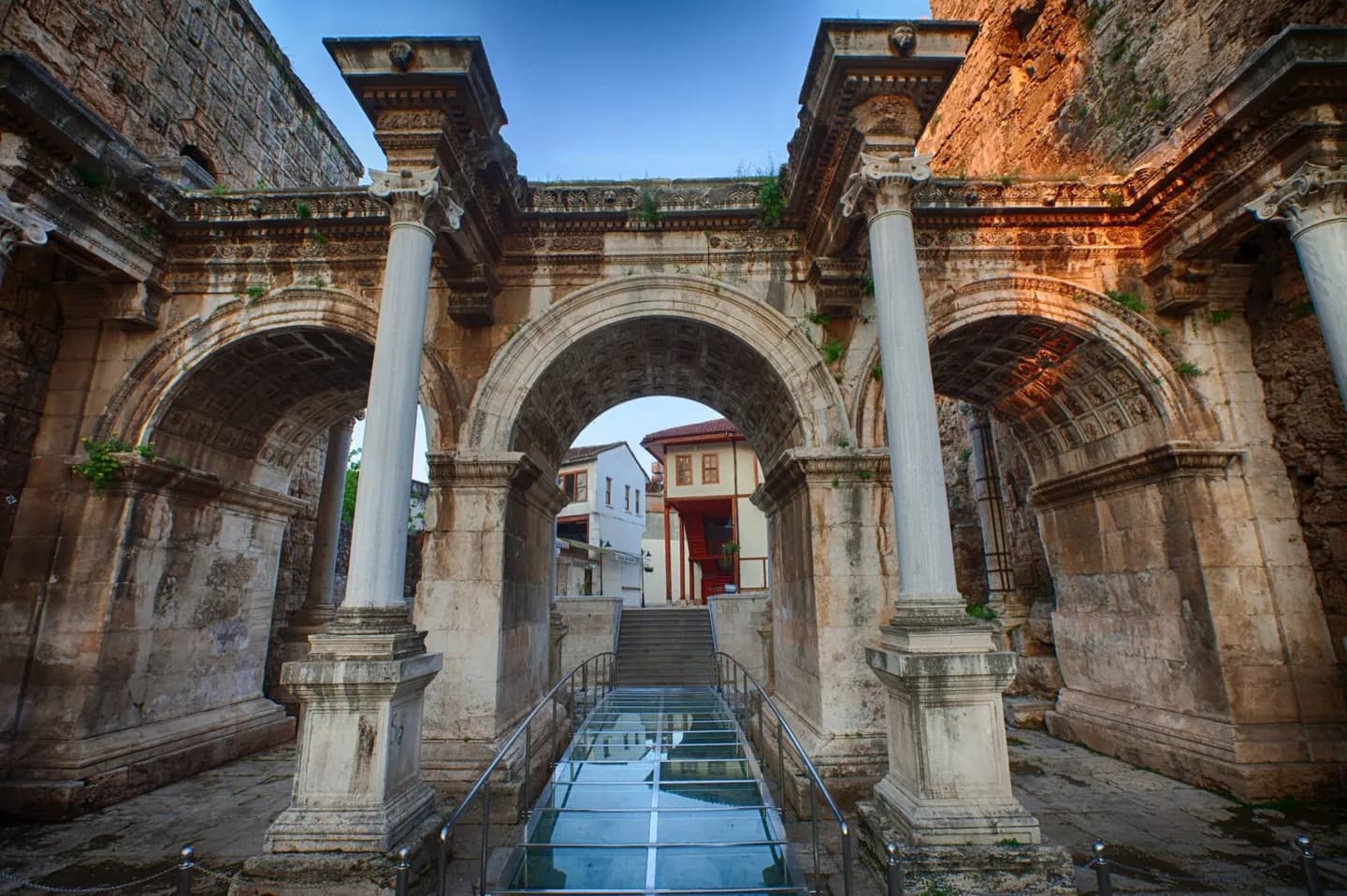
Why go
Karain Cave points to habitation long before the city, while Hadrian’s Gate belongs to Roman Antalya. Kaleiçi then preserves traces of Byzantine, Seljuk and Ottoman life around a harbour that made the coast strategically valuable. Knowing these layers turns a walk among gates, minarets and walls into a more legible story.
The full story
Human occupation in the Antalya region reaches far before the classical city. Finds at Karain Cave and other sites point to prehistoric communities. In antiquity, the western part of the modern province was associated with Lycia, the eastern coastal plain with Pamphylia, and the inland north with Pisidia. These names describe a varied region, not a single continuous state. Antalya itself developed under the kingdom of Pergamon and later Roman rule; Hadrian’s Gate is one visible marker of that Roman chapter. Byzantine control and later struggles with Turkish powers reflect the value of a Mediterranean port. The Seljuks sought a coastal trading base, and their period remains especially visible at Yivli Minare. Ottoman rule followed in the later medieval period. Walking Kaleiçi, compare the Roman gate, later religious buildings and the harbour below: each shows a different reason the same small area remained important.