
Why go
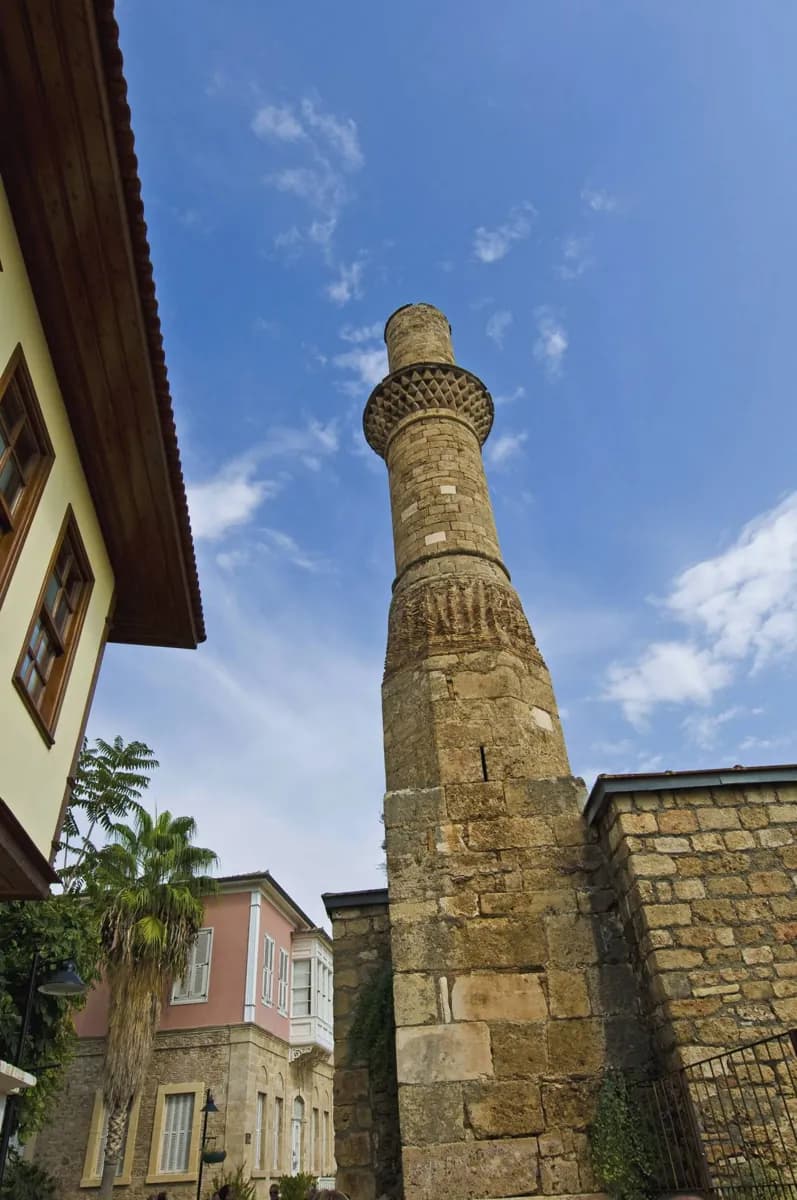
The site’s successive temple, church and mosque histories make Antalya’s changing rulers tangible in one place. Its surviving minaret became known as the Broken Minaret after a nineteenth-century fire damaged the main building. Compare those layers with Roman Hadrian’s Gate and Seljuk Yivli Minare elsewhere in Kaleiçi.
What to look for
- The minaret recalls the building’s mosque phase.
- The site’s fabric reflects repeated religious and architectural changes.
- Its position among Kaleiçi streets makes the layers easy to compare with nearby landmarks.
The full story
Kesik Minare carries several of Antalya’s historical layers on one site. The older account traces its origin to a Roman temple, followed by a Byzantine church dedicated to the Virgin Mary. Damage and repair occurred during the early medieval centuries. After Seljuk control of Antalya, the building became a mosque and gained a minaret. A later change of power briefly returned it to church use before it became a mosque again. Fire in 1846 damaged the main structure, while the minaret survived and gave the place its familiar Broken Minaret name. The exact sequence is less important on a short visit than the visible lesson: in Kaleiçi, later communities repeatedly adapted earlier buildings. Pair this exterior view with Hadrian’s Gate and Yivli Minare to place those changes within the wider old-town story.
Useful to know
- Treat this as a short exterior stop during a Kaleiçi walk.
- Check current access if seeing more than the exterior matters to you.