
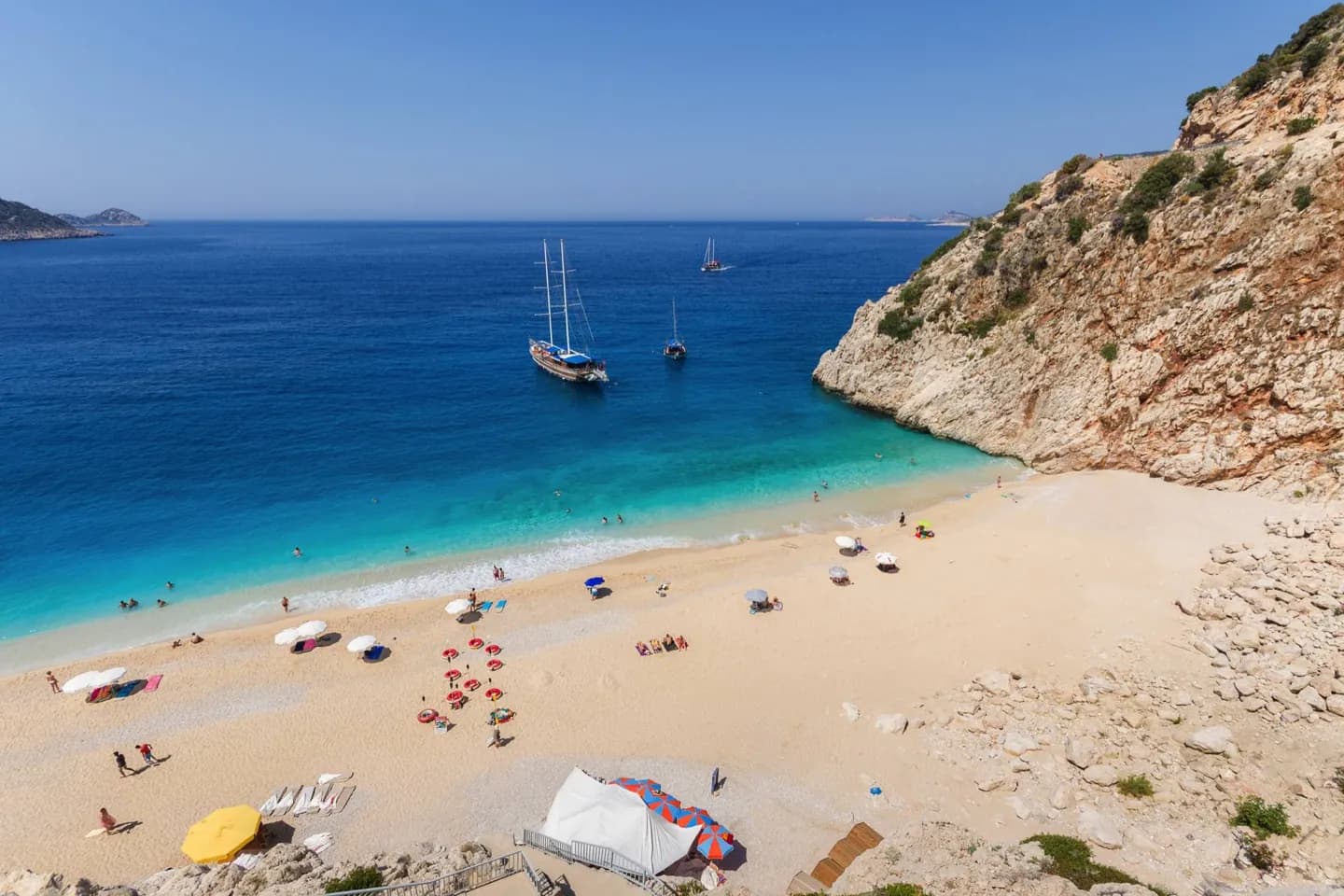
Why go
The Taurus Mountains shelter the coast from northerly winds, while the Mediterranean shapes a warm summer and rainy winter pattern. If your day is built around old-town streets or archaeological sites, summer heat is a real planning constraint. Cooler periods suit longer walks, but winter plans need room for rain.
The full story
Antalya’s coast and the Taurus Mountains create a clear seasonal contrast. Summers are usually hot and dry, which favors time by the water but can make open stone streets and archaeological sites tiring in the middle of the day. Winter is milder than inland Turkey and brings more rain. The sea also changes with the season: the older climate account describes much warmer water in summer than in winter, a useful distinction when swimming matters to your trip. For a city-focused visit, put Kaleiçi, Hadrian’s Gate and other outdoor landmarks into the cooler parts of a summer day. In a wetter period, keep an indoor alternative available and leave flexibility around longer open-air excursions. These patterns are more useful than a fixed promise of sunshine on any particular date.