
Why go
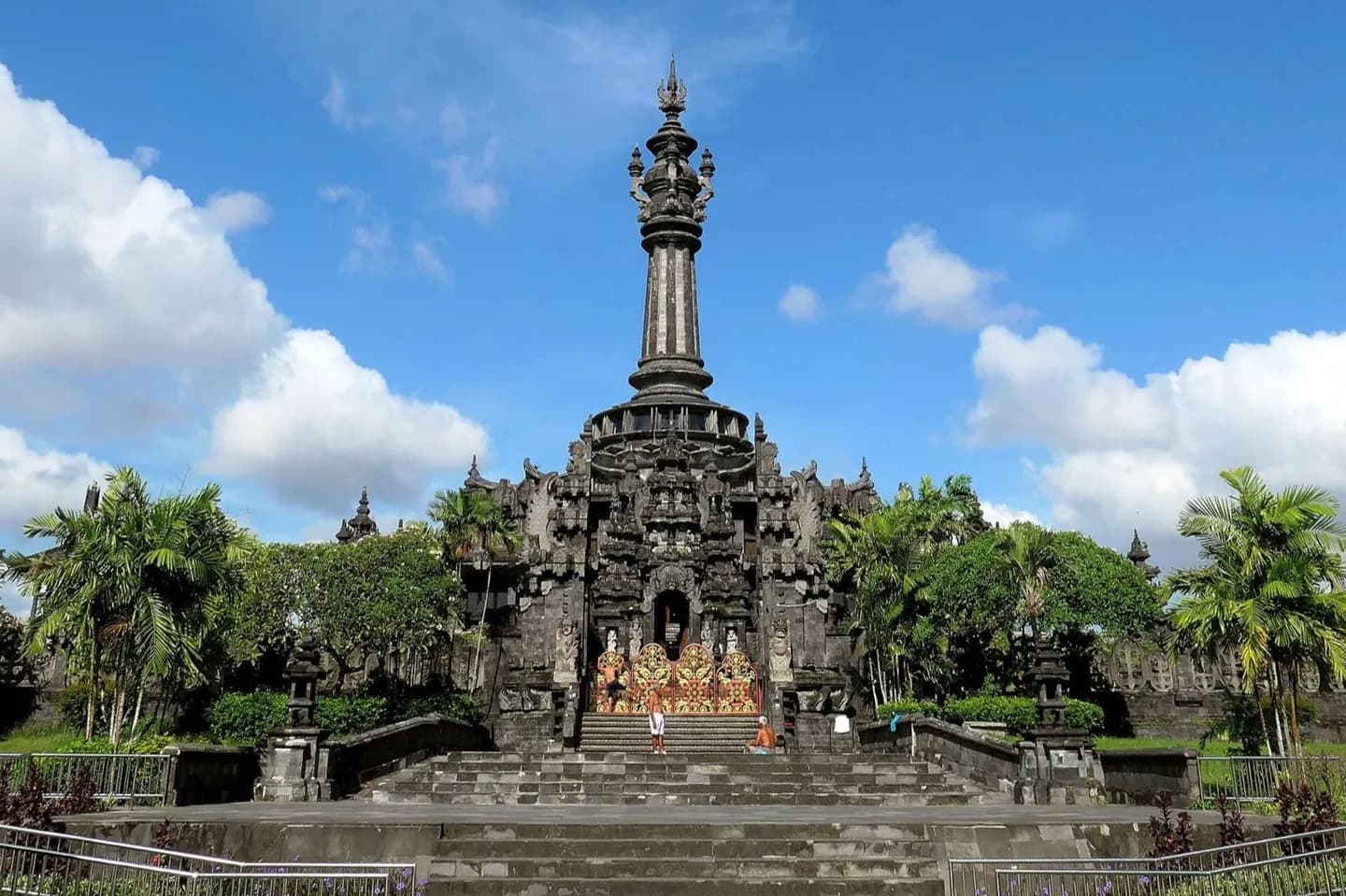
Bajra Sandhi broadens Denpasar beyond traditional courts and markets. Its scale and deliberate symbolism belong to modern civic Bali, while interior displays frame episodes of struggle and social change. The surrounding field also shows how residents use the capital's monumental center in everyday life.
What to look for
- The central form recalls a bajra, the ritual bell used by Hindu priests.
- Relief panels and dioramas present episodes from Balinese history.
- The monument stands within an open civic landscape used for exercise and gatherings.
The full story
Bajra Sandhi was conceived as a monument to the struggles of the Balinese people. Its central silhouette refers to the ritual bell used by Hindu priests, translating a sacred object into monumental civic architecture. Interior displays use dioramas to move through episodes of social, political and anti-colonial history, while the surrounding reliefs and symbolic numbers embed further references in the building. The monument occupies Renon, the administrative heart of modern Denpasar, rather than an old royal court. That placement matters. It presents history through the language of provincial identity and public commemoration. Outside, the broad lawns are used for exercise, public events and ordinary recreation, so the site shifts between formal monument and lived civic space throughout the day and evening.
Useful to know
- Check current interior access before planning around the exhibition or upper level.
- Visit earlier in the day for cooler walking across the exposed Renon grounds.
Your next visit
Estimated · Declared scenario and planning estimates; no live opening, weather, queue or booking service.
Outdoor visit · 45–75 min
World planning estimate; admission, opening, visit duration and access need checking.