
Why go
Besakih offers the clearest sense of a temple complex operating at island scale. Pura Penataran Agung anchors more than twenty related sanctuaries on parallel ridges, while Mount Agung shapes their orientation and atmosphere. The visit suits travelers ready for stairs, ceremony and a site that cannot be reduced to one façade.
What to look for
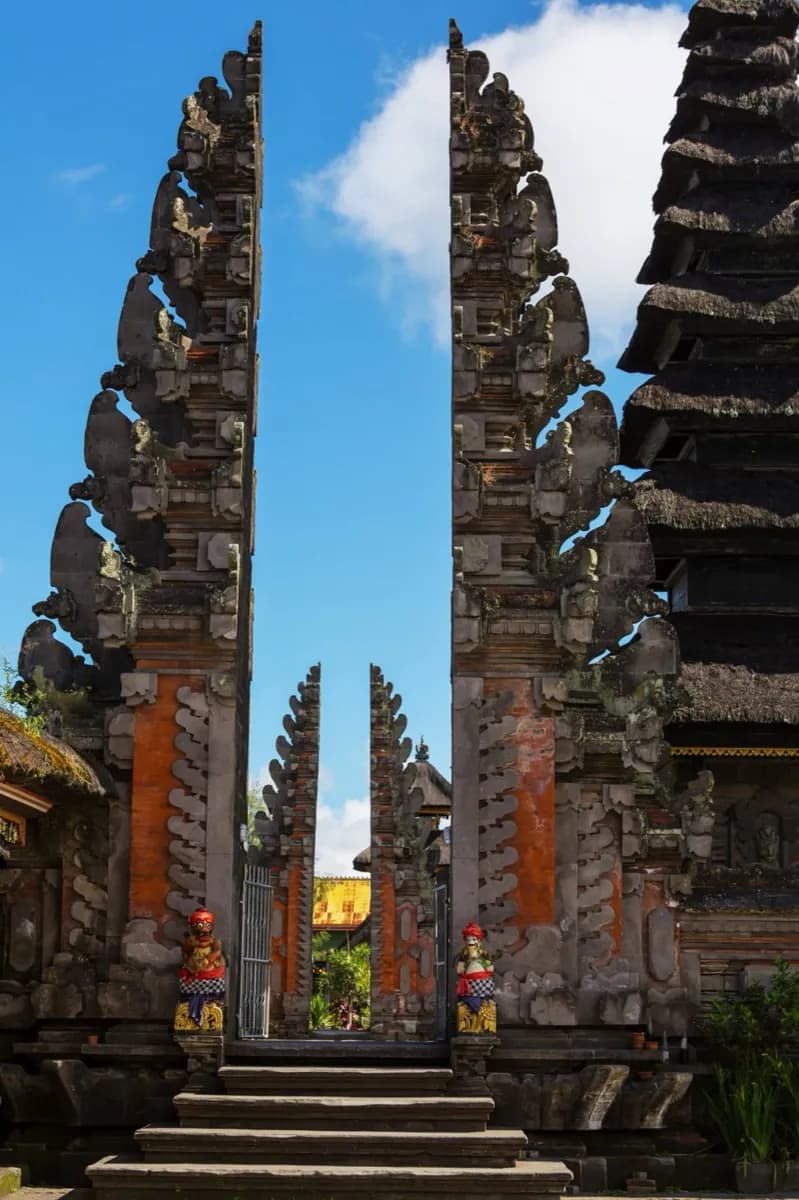
- Split gateways reveal new terraces as the main processional axis climbs uphill.
- Meru towers with layered roofs punctuate the courtyards around Pura Penataran Agung.
- Mount Agung remains the dominant presence behind the temple ridges when clouds clear.
The full story
Besakih is not one building. It is a linked sacred landscape of more than twenty temple compounds arranged on the slope of Mount Agung, the volcano Balinese tradition treats as a cosmic center. Pura Penataran Agung forms the principal axis, rising through terraces that frame gateways, pavilions and multi-tiered meru towers. Inscriptions record the sanctuary by the early eleventh century, although ritual use of the mountain landscape is older. The complex later became closely associated with Bali's kingdoms and with ceremonies involving communities from across the island. That layered history explains why the visit feels both monumental and intensely local. Look for shifts in elevation and orientation rather than trying to count every shrine. Each higher courtyard changes the relationship between the built complex, the processional route and Mount Agung above it.
Useful to know
- Wear clothing suitable for an active Hindu sanctuary and follow the guide's directions around prayer areas.
- Confirm access before leaving; major ceremonies can change which courtyards visitors may enter.
Your next visit
Estimated · Declared scenario and planning estimates; no live opening, weather, queue or booking service.
Outdoor visit · 60–120 min
World planning estimate; admission, opening, visit duration and access need checking.