
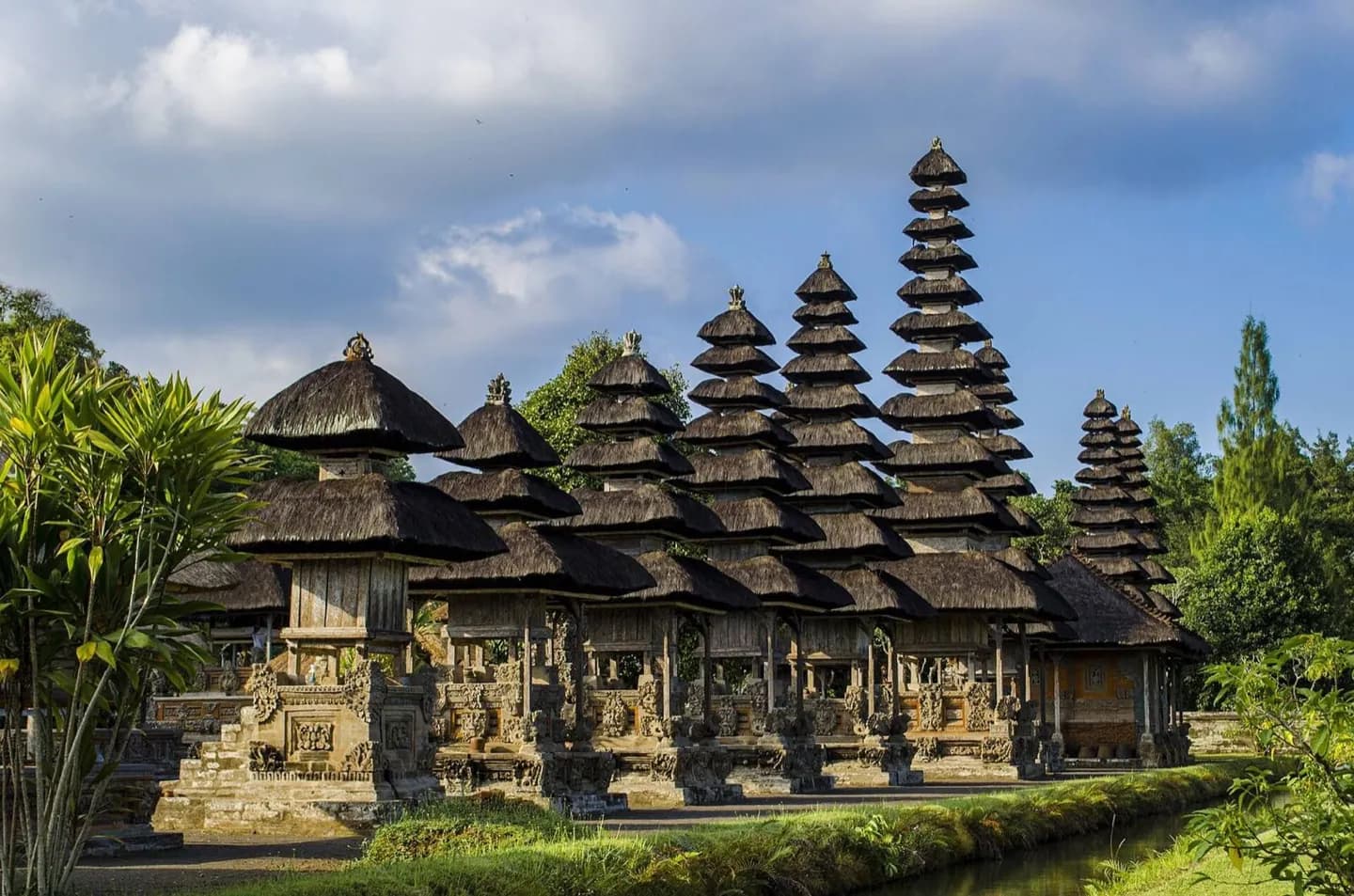
Why go
Taman Ayun adds the royal and institutional side of Bali's water system to a guide dominated by coastal and mountain temples. The outer grounds feel spacious, while the inner sanctuary concentrates tiered shrines behind walls and water. It pairs naturally with Jatiluwih or Tanah Lot on a west-central driving day.
What to look for
- A wide moat separates the temple precinct from its surroundings.
- Successive gateways frame increasingly restricted courtyards.
- Rows of meru towers create a layered skyline inside the inner compound.
The full story
Pura Taman Ayun was developed as the royal temple of the Mengwi kingdom. Its name refers to a beautiful garden, and the broad moat, lawns and ordered courts still give the complex a composed character. The sanctuary also belongs to the UNESCO-listed cultural landscape of Bali because royal water temples helped connect political authority, ritual and subak irrigation networks. Visitors usually move around rather than through the innermost sacred court, which makes the enclosing walls and raised viewpoints important. From there, the concentration of meru towers becomes visible as a single architectural composition. Compare the controlled garden geometry with the working terraces at Jatiluwih: both belong to the island's water culture, but they express different relationships among rulers, temples, farmers and landscape.
Useful to know
- Follow signs around the inner sanctuary rather than assuming every courtyard is open.
- Combine the temple with western Bali stops; crossing the island afterward wastes much of the day.
Your next visit
Estimated · Declared scenario and planning estimates; no live opening, weather, queue or booking service.
Outdoor visit · 45–75 min
World planning estimate; admission, opening, visit duration and access need checking.