
Why go
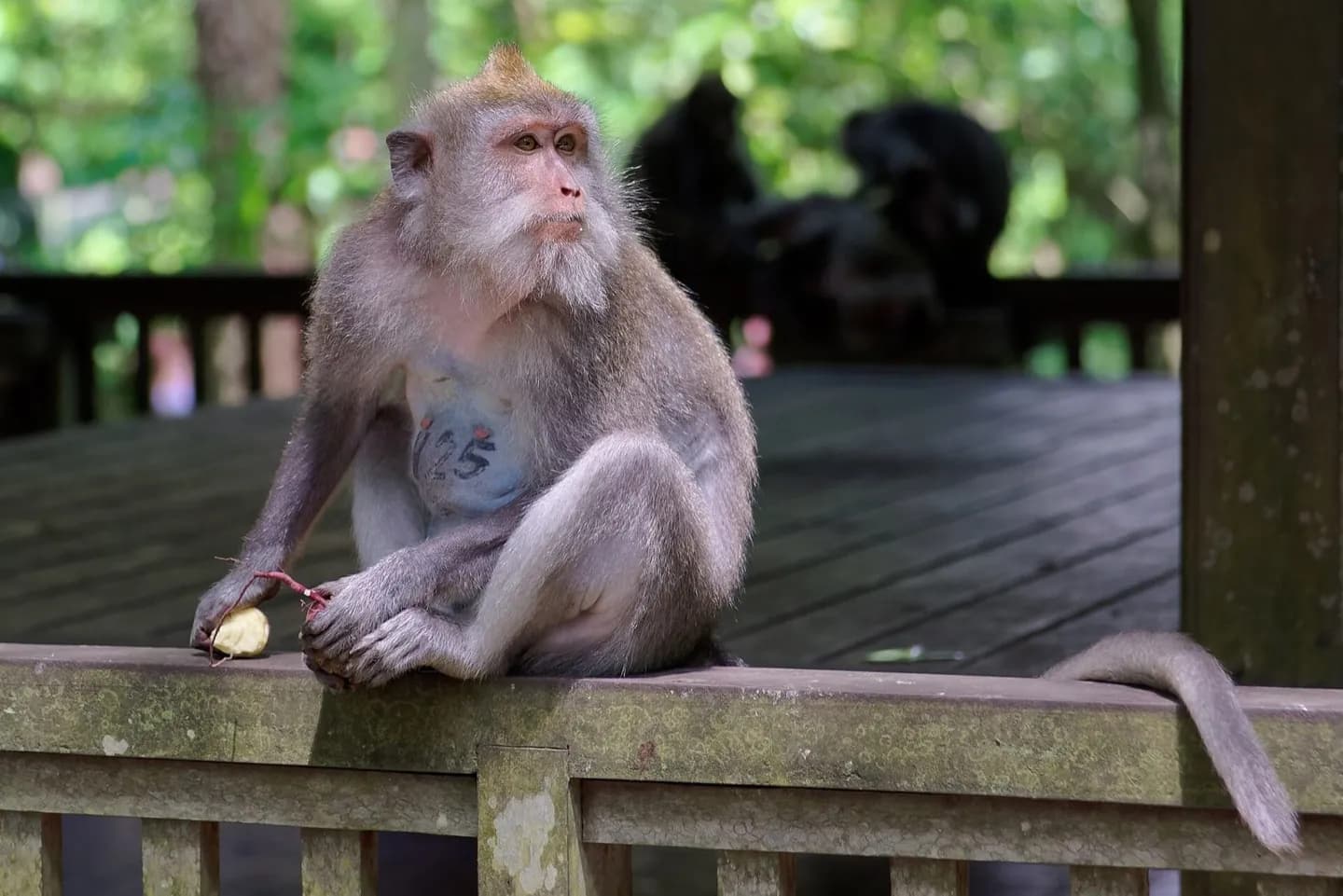
The forest gives Ubud a compact encounter with living temple space and urban wildlife. Paths descend through dense vegetation toward bridges, streams and shrines, while macaque groups move across the same route. Come for the layered setting, but follow staff instructions and treat the animals as wildlife rather than performers.
What to look for
- Temple courtyards sit within a dense stand of mature trees.
- Stone bridges and ravines create several levels through the sanctuary.
- Macaque groups use paths, walls and branches throughout the visitor route.
The full story
The sanctuary is known locally as Mandala Suci Wenara Wana, a sacred forest associated with the village of Padangtegal. Its temples, cemetery spaces and wooded ravine form an active ritual landscape rather than a zoo enclosure. Long-tailed macaques live in several social groups within that setting and have adapted closely to daily visitor movement. Their presence can make the walk feel informal, but the temples and burial grounds still carry local religious roles. The forest's management connects conservation, ceremony and tourism in one compact site. Notice how paths repeatedly shift between open courtyards and enclosed vegetation. Those transitions explain why the place feels different from Ubud's streets even though the town center is close. Respect barriers and staff instructions, especially near ceremonies or animals with young.
Useful to know
- Keep food out of sight and secure glasses, phones and loose bags before entering.
- Do not touch, feed or stare closely at macaques; follow staff directions if one approaches.
Your next visit
Estimated · Declared scenario and planning estimates; no live opening, weather, queue or booking service.
Outdoor visit · 60–90 min
World planning estimate; admission, opening, visit duration and access need checking.