
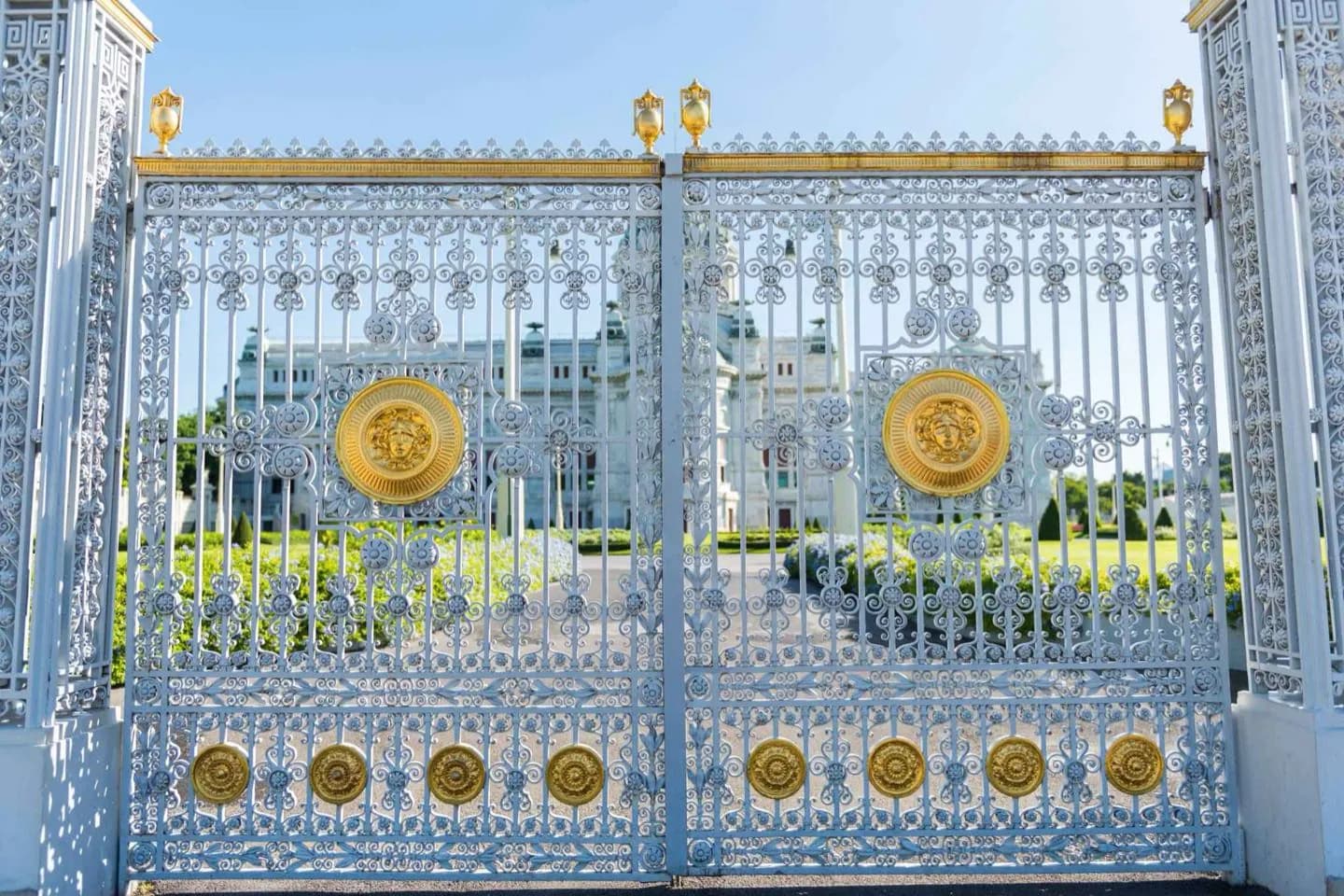
Why go
The compound matters as the project that shifted royal life beyond the dense Grand Palace at the turn of the 20th century. King Chulalongkorn’s garden-palace idea introduced larger grounds and separate residences. For visitors, its value is contextual: understanding the walls and surrounding avenues clarifies the architecture of wider Dusit.
What to look for
- Exploring Dusit Palace draws attention to a royal landscape begun by King Chulalongkorn after his 1897 European journey.
- At Dusit Palace, visitors can see separate residences set among gardens rather than one tightly packed palace core.
- Dusit Palace contains the later incorporation of Chitralada’s garden and royal villa.
The full story
King Chulalongkorn began Dusit Palace between 1897 and 1901 after finding the Grand Palace crowded, hot and increasingly difficult to adapt. His travels in Europe suggested another model: a royal residence spread through gardens on the capital’s edge. He purchased farmland and orchards between canals and called the new estate Suan Dusit, the Celestial Garden. Residences, lawns and separate compounds replaced the close-packed courts of Rattanakosin. Later rulers expanded the estate. King Vajiravudh created Suan Chitralada and built the Chitralada Royal Villa; in 1925, that garden became part of the wider palace by royal command. Political change altered the compound again after 1932, when parts were transferred to the constitutional government and public institutions. The palace remains best understood as a large, evolving royal landscape whose former gardens and boundaries helped structure modern Dusit, not as a single building with one visitor route.
Useful to know
- Do not assume entry to the compound or its residences; rely on confirmed official access information.
- Read the palace from surrounding public streets while exploring the wider Dusit civic district.
- Use Wat Benchamabophit as the nearby public interior rather than building the visit around palace access.