
Why go
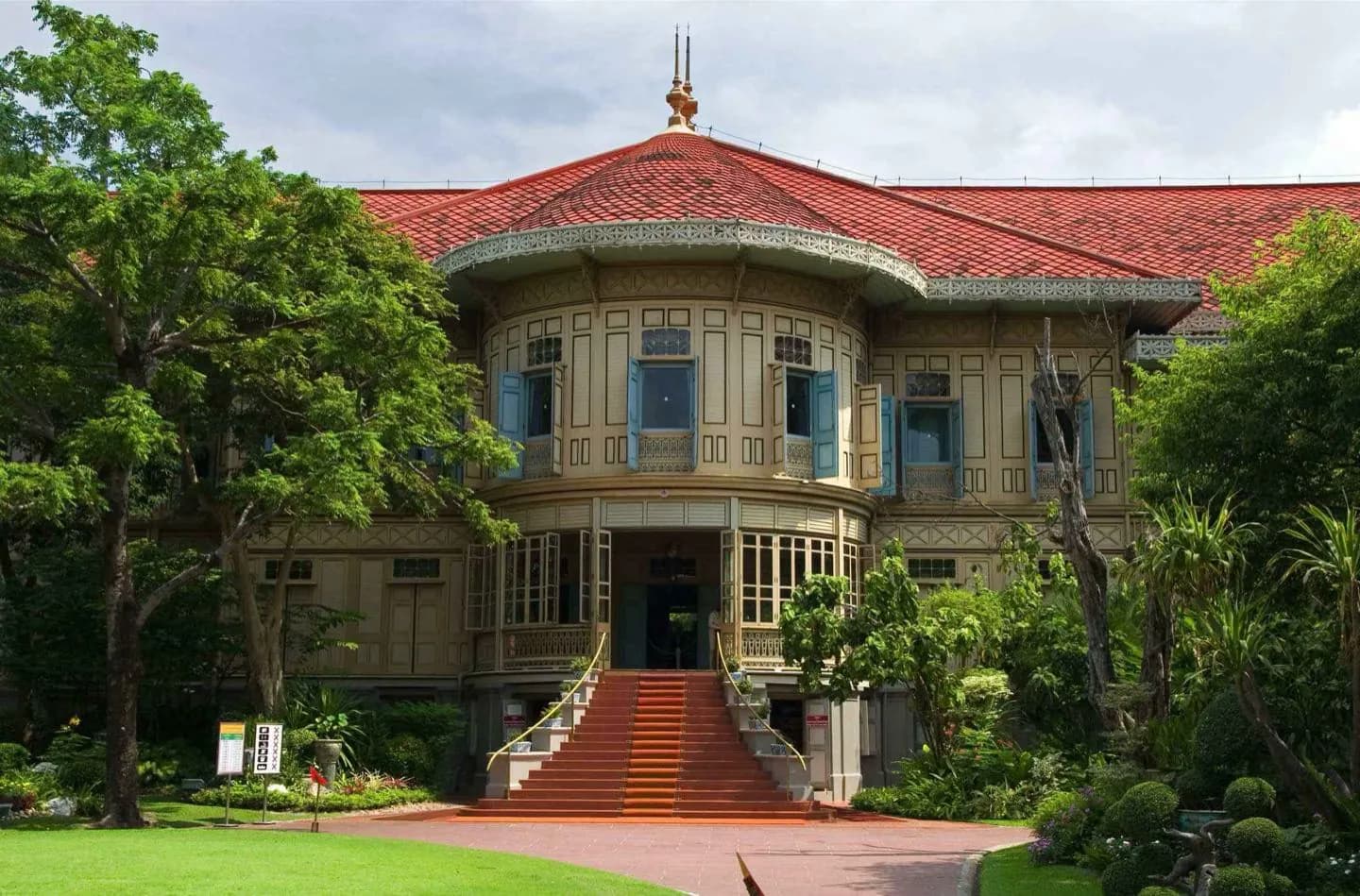
Vimanmek matters as an experiment in moving and reassembling architecture. A residence from Ko Sichang was reconstructed in Bangkok for Rama V, combining a large timber structure with European and Thai design influences. Its reconstruction also places the building within the larger royal landscape developed in Dusit.
What to look for
- Understand the mansion as a relocated building rather than a structure conceived entirely for Bangkok.
- Look for the blend of Victorian massing, Thai roof forms and carved timber ventilation panels.
- Connect the house with Rama V’s creation of the broader Dusit Garden palace landscape.
The full story
Vimanmek was created by dismantling the Munthatu Rattanaroj Residence on Ko Sichang and rebuilding it in Bangkok’s Dusit Garden around 1900. It became the first permanent residence in the new royal garden and was occupied by Rama V until the completion of Amphorn Sathan Villa in 1906. The mansion’s scale and material gave it a distinctive presence: upper levels were built in golden teak, while the design mixed European neoclassical and Victorian influence with Thai roofs, decorative patterns and ventilation details. Its L-shaped plan included a taller octagonal residential section, and interior rooms used different colors. After 1932, the building served as storage for the Bureau of the Royal Household. It was later restored as a museum associated with Rama V and Thai heritage. Those older museum descriptions do not establish present-day access, but the architectural story remains useful. The mansion embodies how a royal residence could be physically moved, adapted and given new meaning within Bangkok’s expanding palace district.
Useful to know
- Confirm current public access before making a dedicated trip; reliable visitor availability is unresolved.
- Treat any historic opening hours or museum descriptions as outdated until the operator confirms them.
- If access is unavailable, use nearby public Dusit landmarks to understand the palace district instead.