
Why go
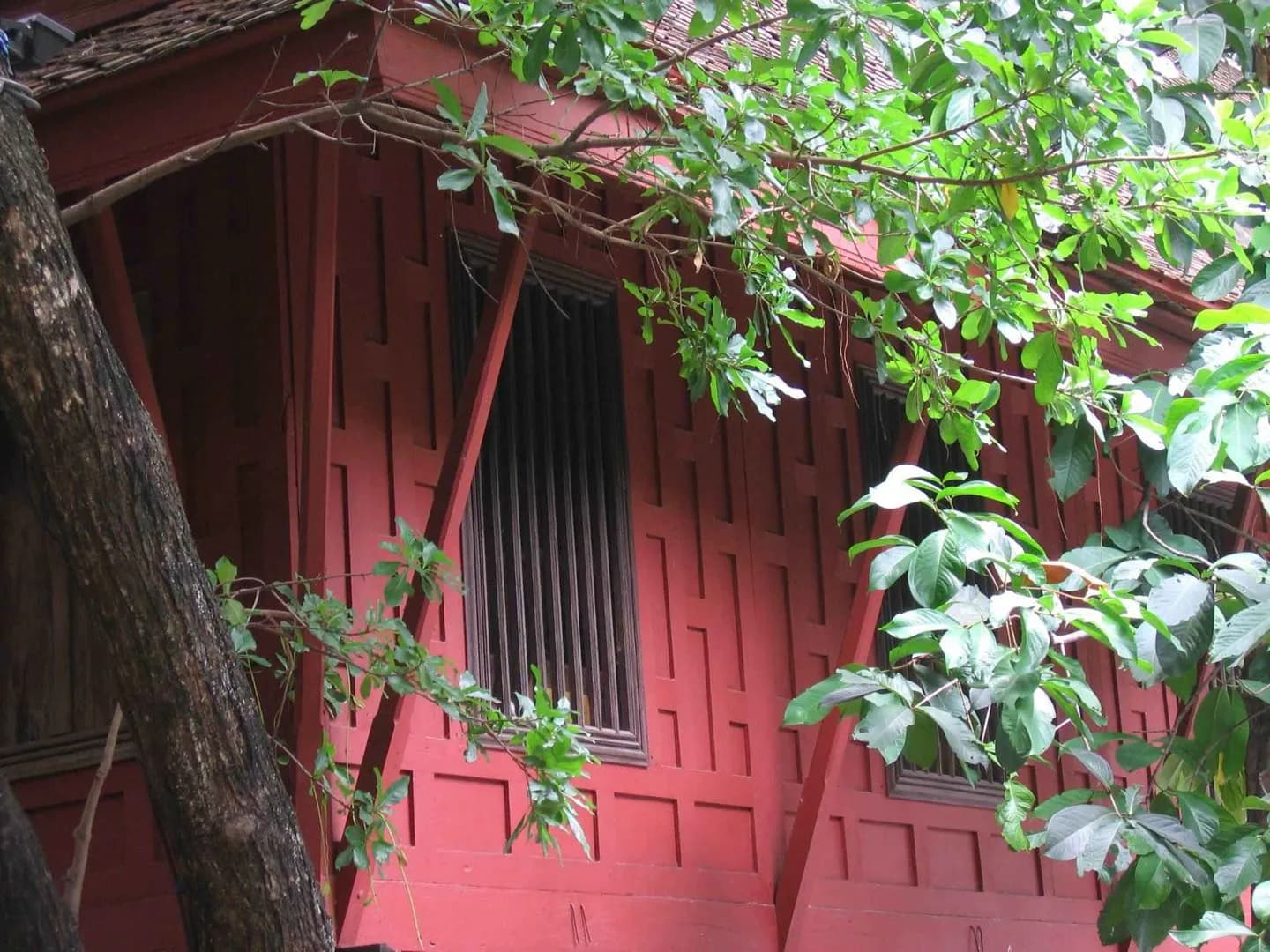
The attraction brings architecture and collecting into the same experience. Six old Thai houses were reassembled beside a canal to hold Jim Thompson’s Buddhist sculpture, paintings, ceramics and other Asian art, so the rooms themselves matter as much as the objects inside them.
What to look for
- Compare the six reassembled timber houses and the way their raised floors frame the garden.
- Look for Buddhist images and paintings on wood, cloth and paper from across mainland Southeast Asia.
- Notice the blue-and-white Chinese porcelain that reached Thailand through earlier trade networks.
The full story
Jim Thompson moved to Bangkok after the Second World War and established the Thai Silk Company in 1948. Alongside that business, he built a collection of Southeast Asian art at a time when it had little international attention. His holdings ranged from Buddhist sculpture and paintings of the Buddha’s life to secular objects from Thailand, Myanmar, Cambodia and Laos. In 1958–59, he assembled a home from six traditional timber houses, most moved from Ayutthaya; the largest living-room structure came from the Ban Krua weaving community across the canal. The result was both a residence and a setting for the collection. After Thompson disappeared in 1967, the property passed to the James H. W. Thompson Foundation. That history explains the museum’s unusual balance: it is neither simply a preserved home nor a conventional gallery, but a carefully arranged conversation between Thai domestic architecture and a collector’s eye.
Useful to know
- Allow enough time for the required guided visit; unaccompanied entry to the main house is not permitted.
- Buy admission only at the museum ticket office, as the operator warns against online ticket sellers.
- Combine the house with the nearby Bangkok Art and Culture Centre rather than crossing the city for a second stop.
Your next visit
Estimated · Declared scenario and planning estimates; no live opening, weather, queue or booking service.
Outdoor visit · 30–45 min
World planning estimate; admission, opening, visit duration and access need checking.