
Why go
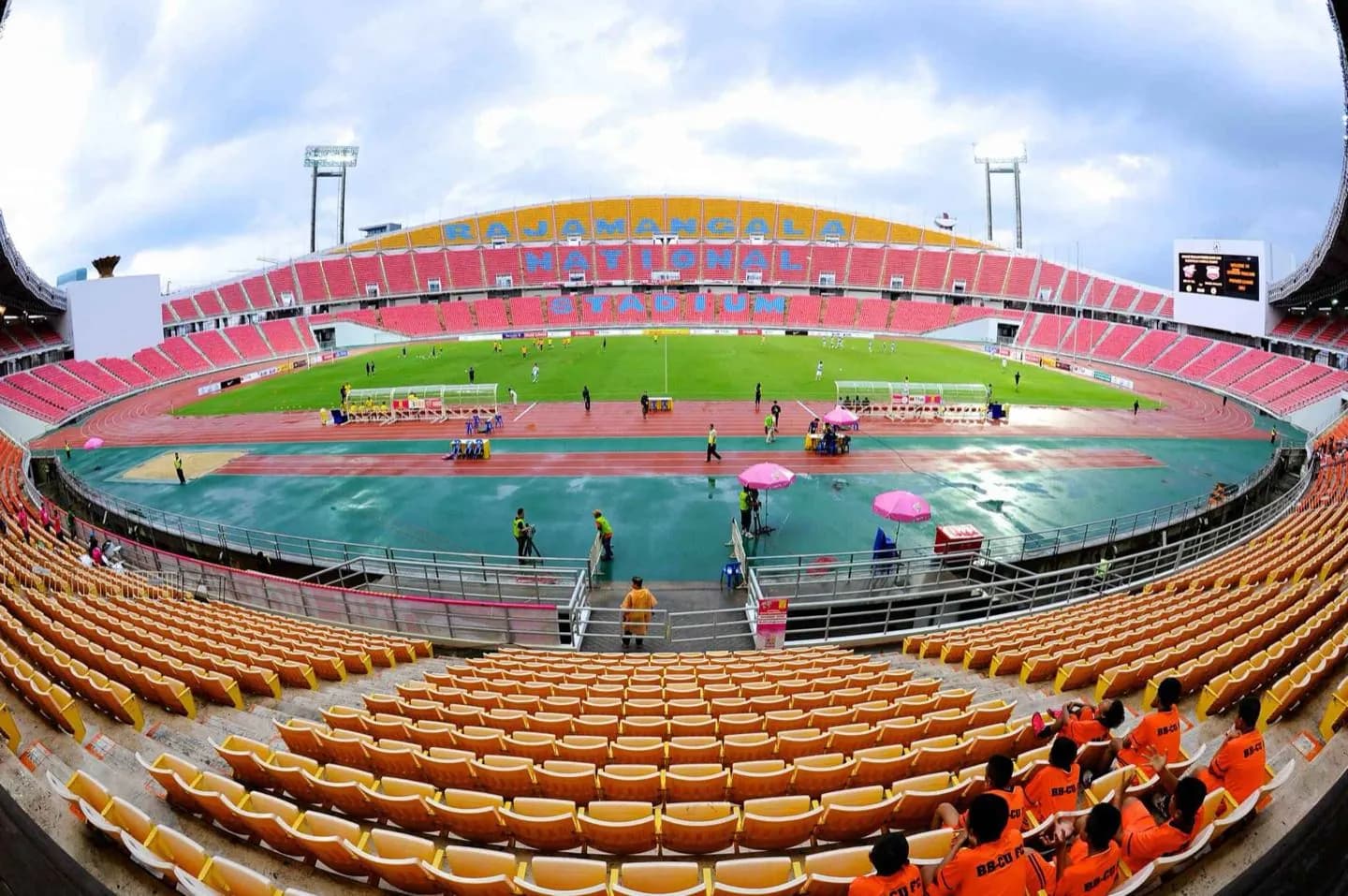
Rajamangala is most meaningful during an event, when its steep side stands and national role become tangible. Even as architecture, the concrete bowl is dramatic: low ends and rising east and west tiers produce a distinctive profile best read from a distance.
What to look for
- Rajamangala is the home ground of Thailand’s national football team.
- Rajamangala Stadium’s concrete bowl has stands that rise toward midfield.
- Rajamangala opened as a major venue for the 1998 Asian Games.
The full story
Rajamangala National Stadium opened in 1998 as part of the Hua Mak Sports Complex and served the Asian Games held that year. It became the home stadium of Thailand’s national football team and has also accommodated athletics, concerts and public gatherings. Designed by Chulalongkorn University’s Faculty of Architecture, the arena relies heavily on concrete. Its shape is especially recognizable in section: the stands are narrower at the north and south ends, then rise along the east and west sides toward the halfway line. This uneven crown gives the stadium a forceful silhouette. Rajamangala’s significance comes less from daily sightseeing than from scale and occasion—a national venue that changes character when teams, performers and tens of thousands of spectators occupy it.
Useful to know
- Visit only with a confirmed event or authorized access; it is not presented as an always-open attraction.
- Check the event organizer’s current entry, bag and transport guidance.
- Allow generous arrival and departure time when a large crowd is expected.
Your next visit
Estimated · Declared scenario and planning estimates; no live opening, weather, queue or booking service.
Outdoor visit · 30–45 min
World planning estimate; admission, opening, visit duration and access need checking.