
Why go
The broad hall lets you see the old street pattern from above before deciding whether to take a guided archaeological visit. This is one of the clearest places in El Born to connect the neighborhood’s physical fabric with the War of the Spanish Succession.
What to look for
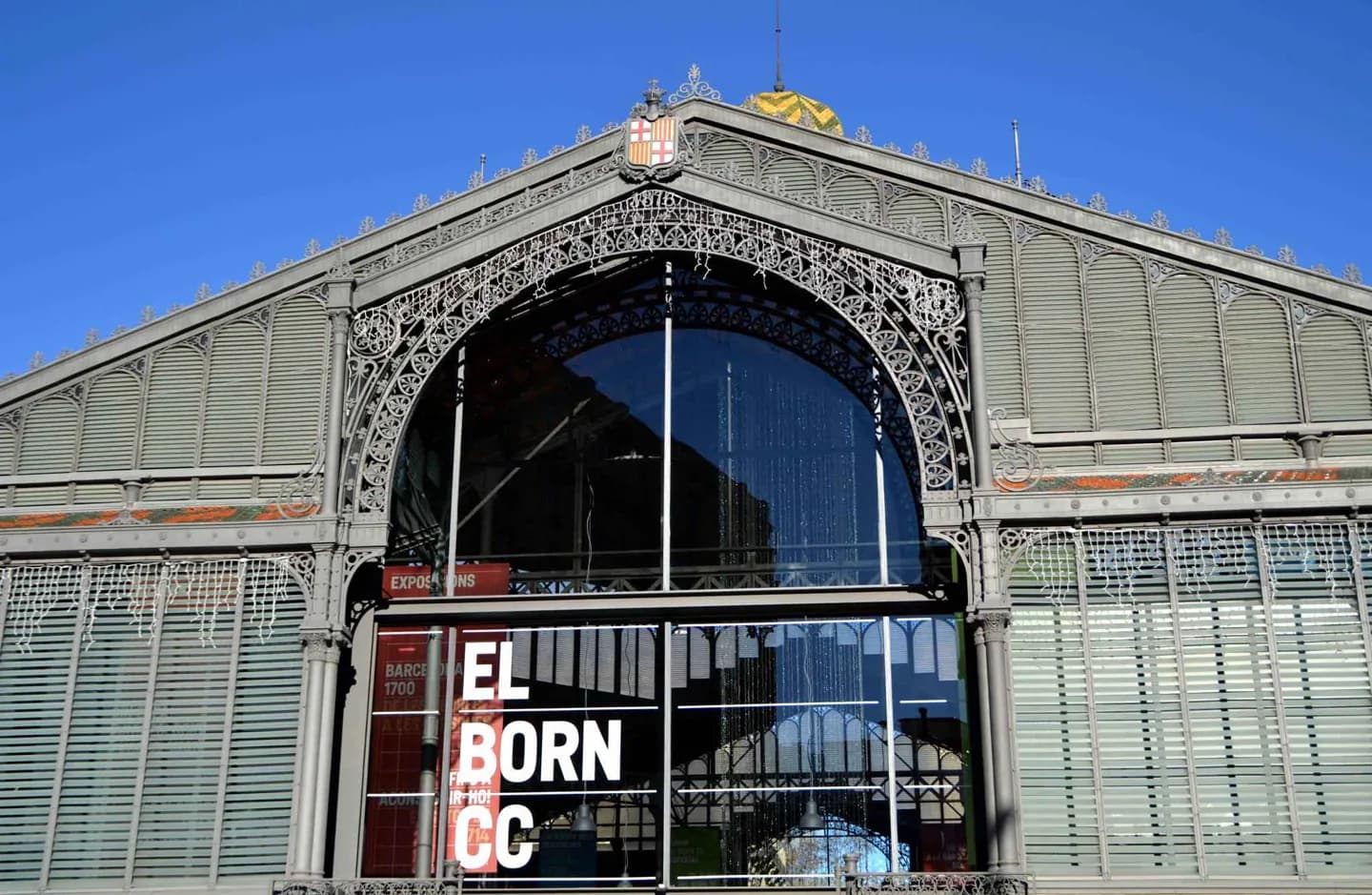
- Iron columns and glazed roof frame the former market hall.
- Excavated streets of La Ribera lie below the floor.
- The hall links Passeig del Born with the route toward Ciutadella.
The full story
Mercat del Born opened as a market in 1878 in a structure designed by municipal architect Antoni Rovira i Trias. Its iron columns and roof speak to the nineteenth-century city. The ground below tells an older, harder story. During preparations for a library, excavators uncovered a substantial part of La Ribera’s street grid. These streets had been cleared after the War of the Spanish Succession and the 1714 defeat of Catalonia, when Philip V ordered the Ciutadella military complex. Rather than build over the remains, Barcelona preserved them within the former market hall, which became a cultural and history venue. From the upper level, you can compare the grid of houses and lanes with the large industrial space overhead. A guided archaeological visit offers a closer look at the remains, while a shorter hall visit still makes the layered history visible. The surrounding El Born streets help connect what survived outside the excavation to what was lost within it.
Useful to know
- Use the open hall for an overview; arrange a separate guided visit if you want to enter the excavation.
- Pair it with Santa Maria del Mar or the Picasso Museum on foot.
Your next visit
Estimated · Declared scenario and planning estimates; no live opening, weather, queue or booking service.
Indoor visit · 30–60 min
World planning estimate; admission, opening, visit duration and access need checking.