
Why go
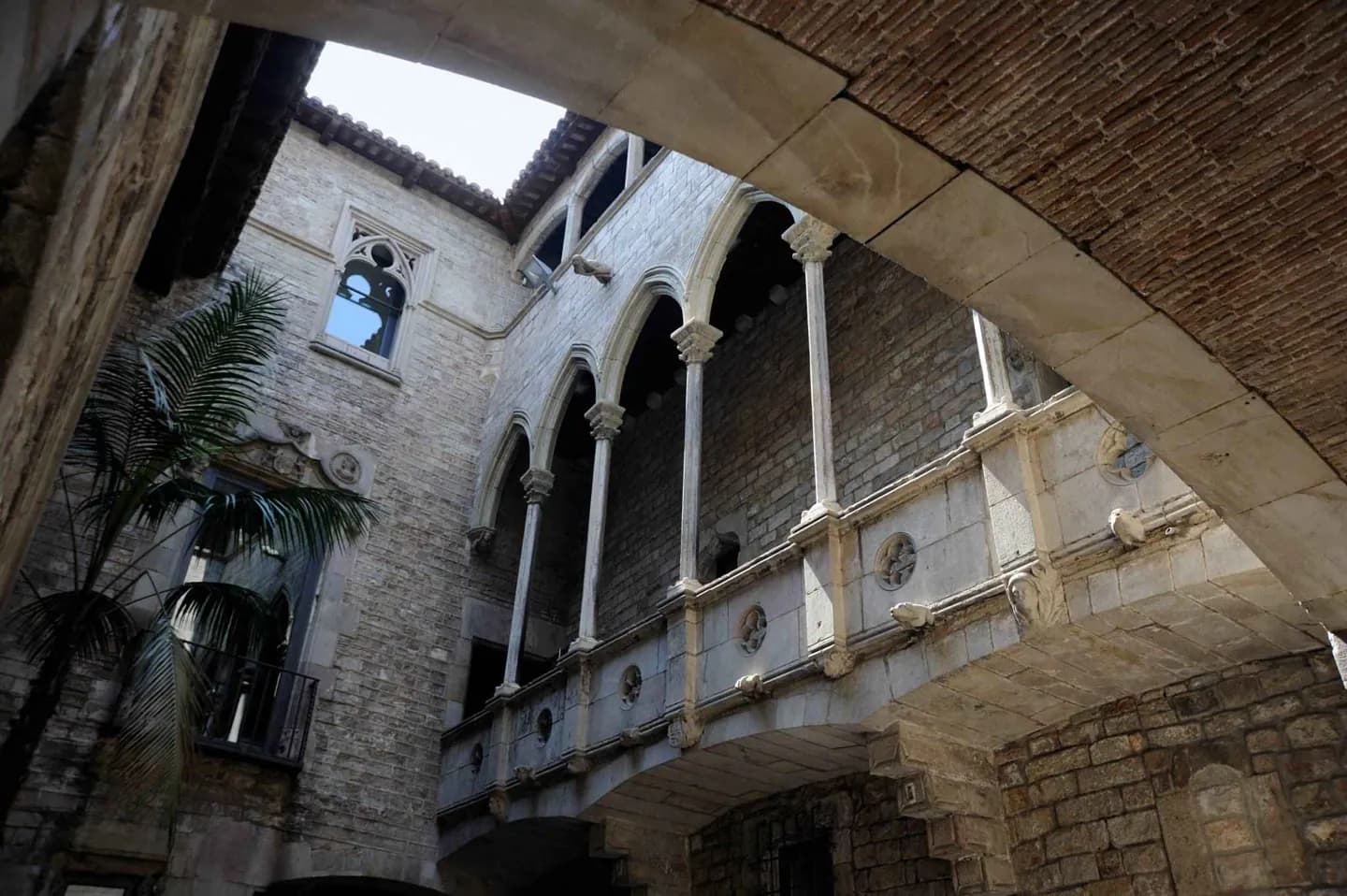
The museum is strongest as a way to understand Picasso’s early development and his lasting connection with the city. The sequence of palace spaces gives the visit a second subject: the wealthy medieval street around it. Both subjects unfold in the same visit.
What to look for
- Seek out the early works The First Communion and Science and Charity.
- Notice how the museum passes between adjoining palace buildings.
- Look back at Carrer de Montcada after seeing the interiors.
The full story
The Museu Picasso opened in 1963, during the artist’s lifetime. Its origins are closely tied to Jaume Sabartés, Picasso’s longtime friend and secretary, and the collection highlights the years when Barcelona helped form the young artist. Early paintings such as The First Communion and Science and Charity make that development tangible. The setting matters just as much to the visitor’s sense of place. The museum occupies five connected medieval palaces on Carrer de Montcada, a street associated with La Ribera’s prosperous past. Moving through these buildings interrupts the idea of a single, neutral gallery. You pass from room to room through pieces of the old city while following an artist whose relationship with Barcelona continued long after he left. Keep a little attention for the palaces themselves, especially when you return to the street.
Useful to know
- Set aside a dedicated museum visit rather than folding it into a fast La Ribera walk.
- Check the museum’s current entry information before fixing your route.
Your next visit
Estimated · Declared scenario and planning estimates; no live opening, weather, queue or booking service.
Indoor visit · 60–90 min
World planning estimate; admission, opening, visit duration and access need checking.