
Why go
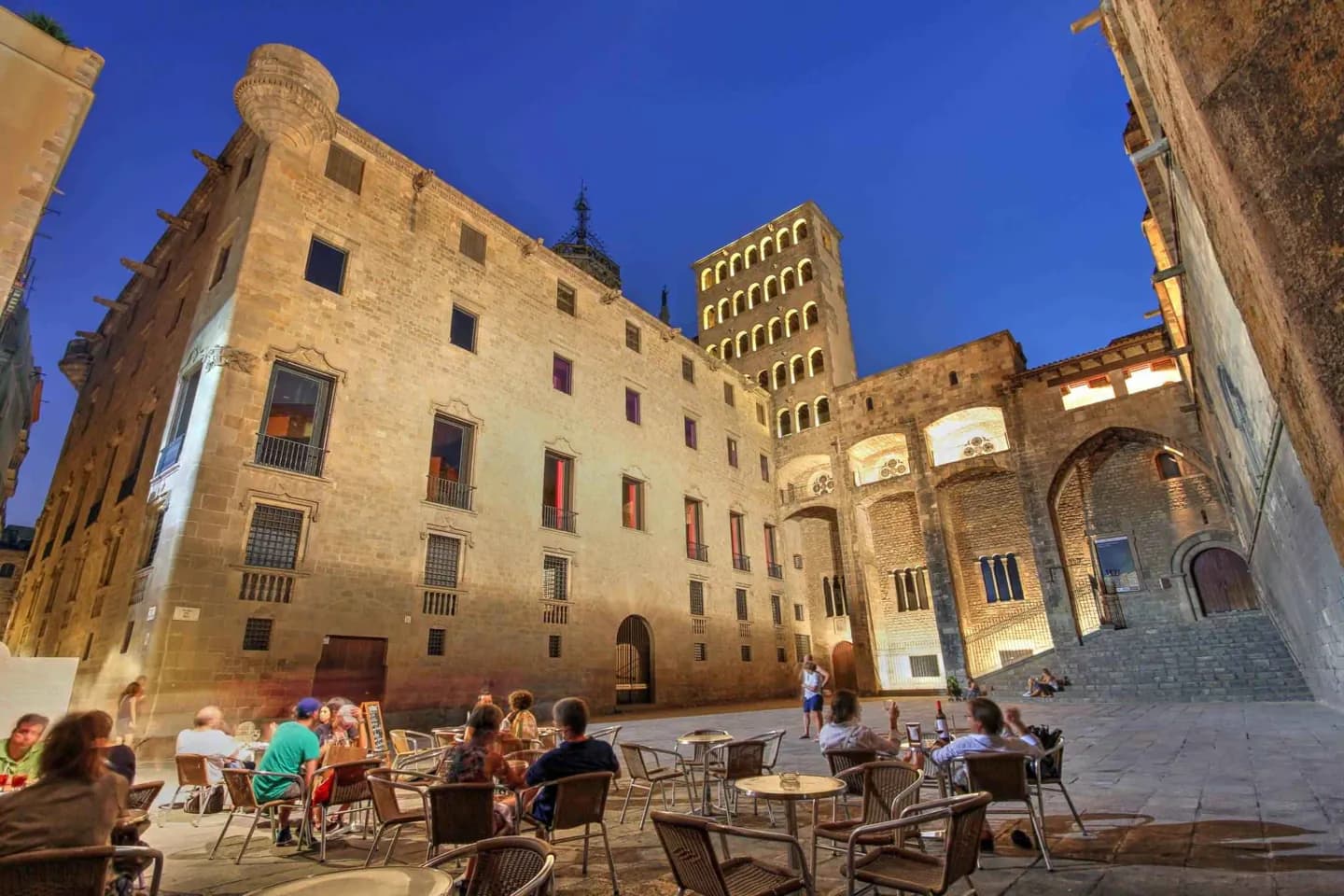
The Palau Reial Major, Santa Àgata chapel and Casa Clariana-Padellàs frame a square that makes medieval Barcelona unusually easy to read. Stand in the open space first, then decide whether to follow the city’s earlier history below the museum. The surrounding lanes make the contrast even clearer.
What to look for
- Compare the royal palace frontage with the smaller Santa Àgata chapel.
- Look for Casa Clariana-Padellàs closing the square on its southern side.
- Find Eduardo Chillida’s sculpture Topos V in a corner of the square.
The full story
Plaça del Rei was shaped as a royal setting in the medieval city. The Palau Reial Major was a residence of the counts of Barcelona and later the kings of Aragon. Its Saló del Tinell belongs to the fourteenth-century complex, while Santa Àgata chapel adds a smaller, more intimate Gothic space. The square also holds a building with a very different journey: Casa Clariana-Padellàs was moved here from Carrer de Mercaders in the twentieth century. It now forms the entrance to MUHBA’s exploration of the city below street level. Read the square as a group of buildings rather than a single façade. The contrast between the palace, chapel and relocated house explains why one small open space can lead into several centuries of Barcelona’s history.
Useful to know
- Walk the square before entering MUHBA so the buildings have a clear place in the story.
- Allow separate time for the museum’s underground archaeology if that is your main interest.
Your next visit
Estimated · Declared scenario and planning estimates; no live opening, weather, queue or booking service.
Outdoor visit · 10–25 min
World planning estimate; admission, opening, visit duration and access need checking.