
Why go
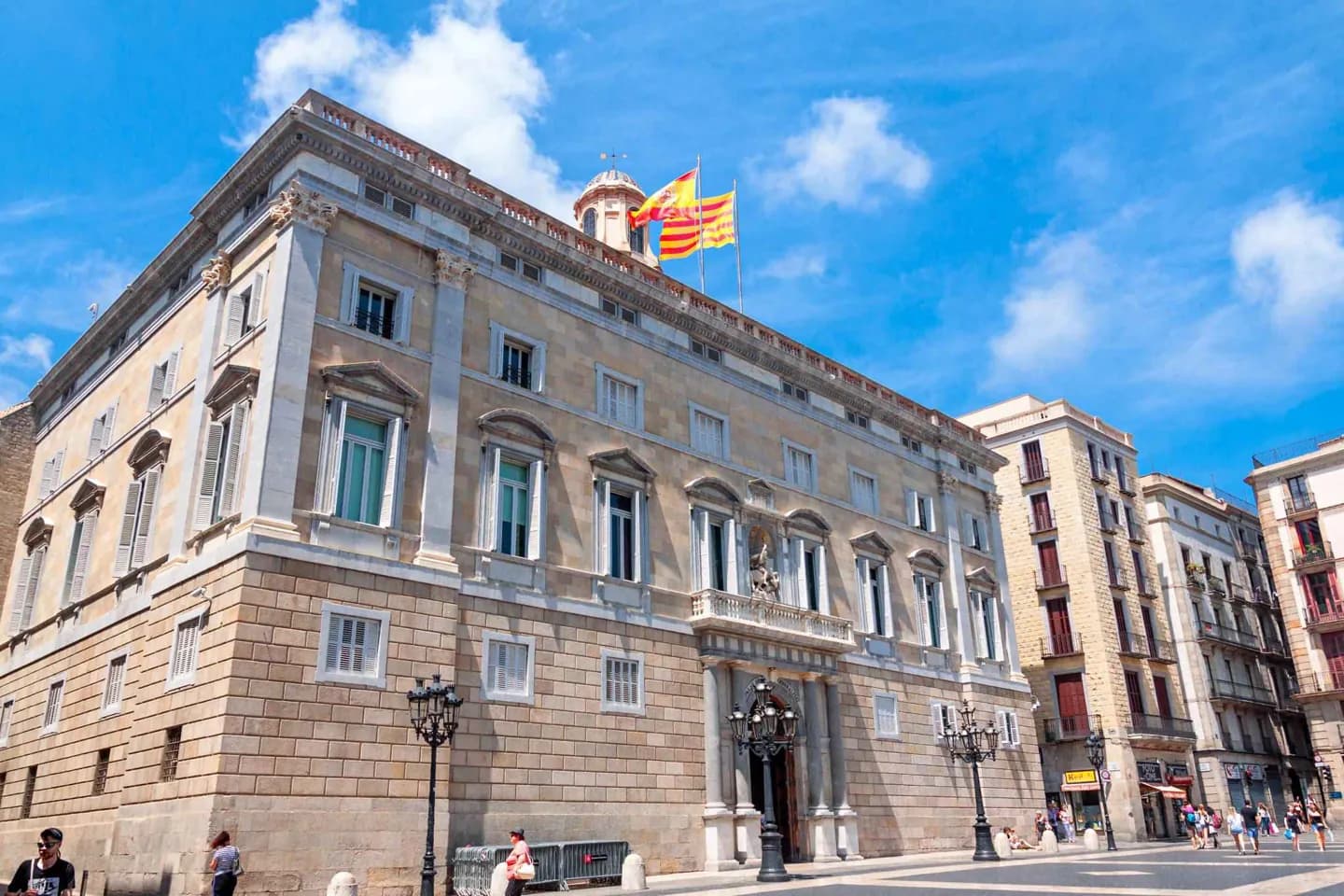
The Generalitat acquired the original palace property around 1400, and the building now gives Catalonia’s government a visible link to its medieval past. Its Renaissance frontage faces Barcelona City Hall across Plaça Sant Jaume, while older parts lie behind it. Together, these layers make the square a compact place to read the city’s civic history.
What to look for
- The Renaissance façade facing Plaça Sant Jaume.
- The direct view across the square to City Hall.
- Historic interior rooms on a guided visit.
The full story
The Generalitat acquired the original palace property around 1400, and the building took shape through later additions and alterations. That long connection gives the building a role beyond architectural display: it is still the working home of Catalonia’s government. The façade facing Plaça Sant Jaume dates from a later Renaissance phase and stands opposite Barcelona City Hall. From the square, that pairing makes the city and regional levels of government visible at once. Older parts of the palace lie behind the formal front, including spaces added as the institution grew. A guided visit can reveal some of those layers, but entry follows a limited, dated programme. Even from outside, the setting explains why Plaça Sant Jaume is the civic centre of the old city.
Useful to know
- Reserve a dated guided slot if entering the palace is important.
- For a spontaneous visit, focus on the exterior and the two civic façades across the square.
Your next visit
Estimated · Declared scenario and planning estimates; no live opening, weather, queue or booking service.
Indoor visit · 50–50 min
World planning estimate; admission, opening, visit duration and access need checking.