
Why go
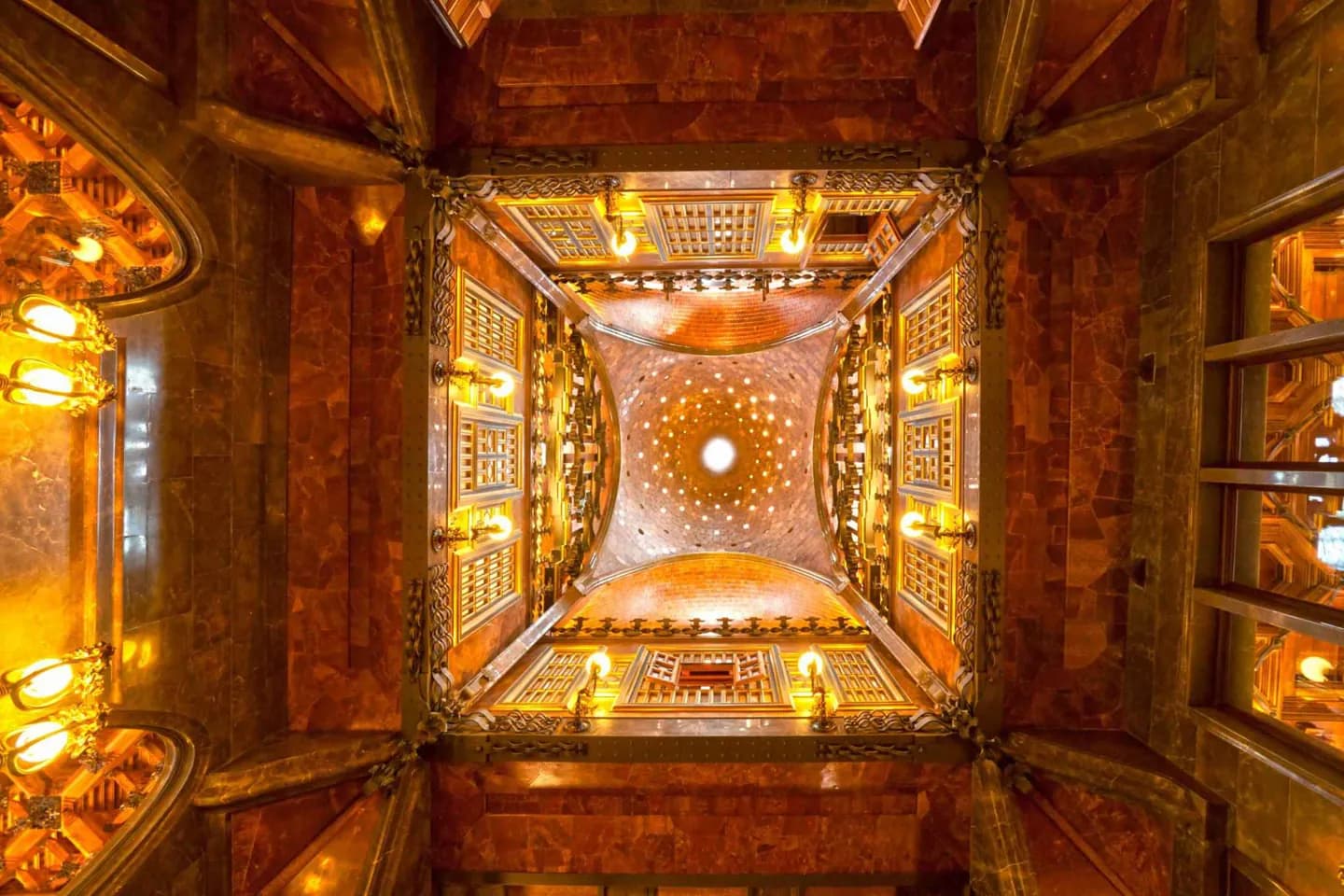
This urban palace makes architecture feel theatrical from the entry gates to the roof. The central hall shows how rooms served the social life of Güell’s household, while the chimneys turn functional rooftop elements into sculpture. It is a substantial indoor visit that pairs geographically with La Boqueria or Plaça Reial.
What to look for
- The entry gates and route into the former mansion.
- The high central hall used for gatherings.
- Distinctive sculpted chimneys on the rooftop.
The full story
Eusebi Güell commissioned Gaudí to design an urban mansion in the late nineteenth century, near what is now La Rambla. The building served as both a family home and a setting for receiving guests. Its architecture makes that social role visible. Visitors entered through large iron gates, while the internal route led upward toward a lofty central hall. The roof then replaces the formality of the rooms with a group of striking chimneys. Seeing both levels explains why Palau Güell is more revealing than a photograph of its façade: Gaudí shaped a sequence of spaces as well as a distinctive skyline. This is an early work, preceding the houses on Passeig de Gràcia. It offers a useful comparison if you want to trace how his treatment of stone, iron and functional features developed.
Useful to know
- Give the rooms and rooftop more time than a quick façade stop.
- Check the venue’s timetable for holiday or event changes before linking it to nearby La Rambla stops.
Your next visit
Estimated · Declared scenario and planning estimates; no live opening, weather, queue or booking service.
Outdoor visit · 50–75 min
World planning estimate; admission, opening, visit duration and access need checking.