
Why go
Sant Pau del Camp offers a compact contrast to the busy streets around it. The church’s stonework and the cloister’s paired columns bring medieval Barcelona into close view. It is a worthwhile short detour for Romanesque architecture, provided you can confirm entry before setting out.
What to look for
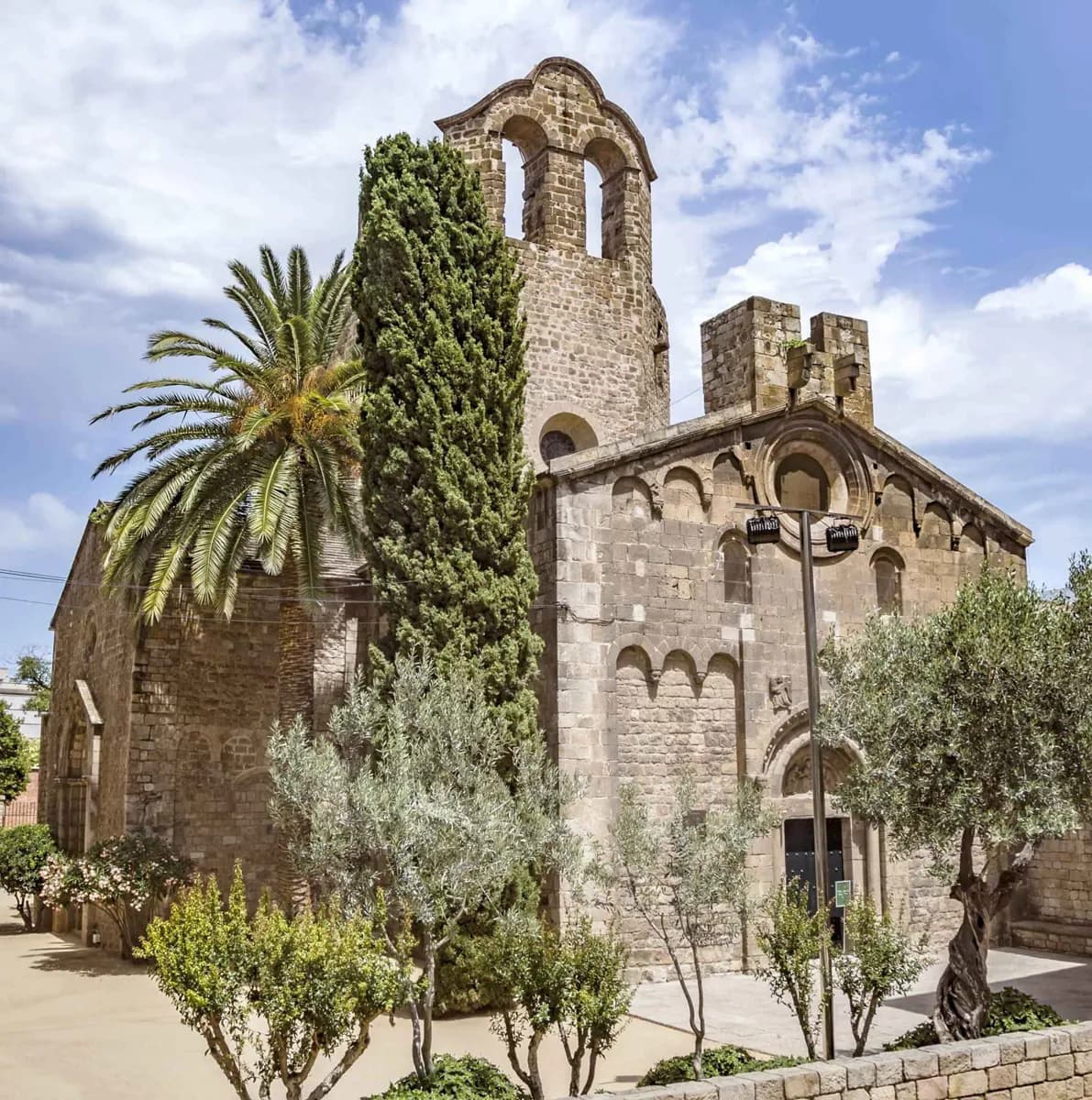
- The compact Romanesque church stands amid the streets of El Raval.
- The cloister’s lobed arches rest on paired columns with carved capitals.
The full story
Sant Pau del Camp means Saint Paul in the Fields. The name recalls a time when the monastery stood outside Barcelona’s settled centre; El Raval has since grown around it. The monastery is documented by the tenth century, though its precise beginnings are uncertain. It suffered destruction in the raid of 985 and was later rebuilt. The surviving Romanesque church and small thirteenth-century cloister are the parts to slow down for. In the cloister, paired columns carry unusual lobed arches. Their capitals show a mix of biblical subjects, animals, foliage and figures from daily life. Those details make this a place to look closely rather than to scan from a distance. The surrounding city streets help explain why the old rural name now sounds surprising.
Useful to know
- Confirm current visitor access directly before planning to enter the church or cloister.
- Pair an exterior look with a walk through nearby El Raval if access is unavailable.
Your next visit
Estimated · Declared scenario and planning estimates; no live opening, weather, queue or booking service.
Outdoor visit · 30–45 min
World planning estimate; admission, opening, visit duration and access need checking.