
Why go
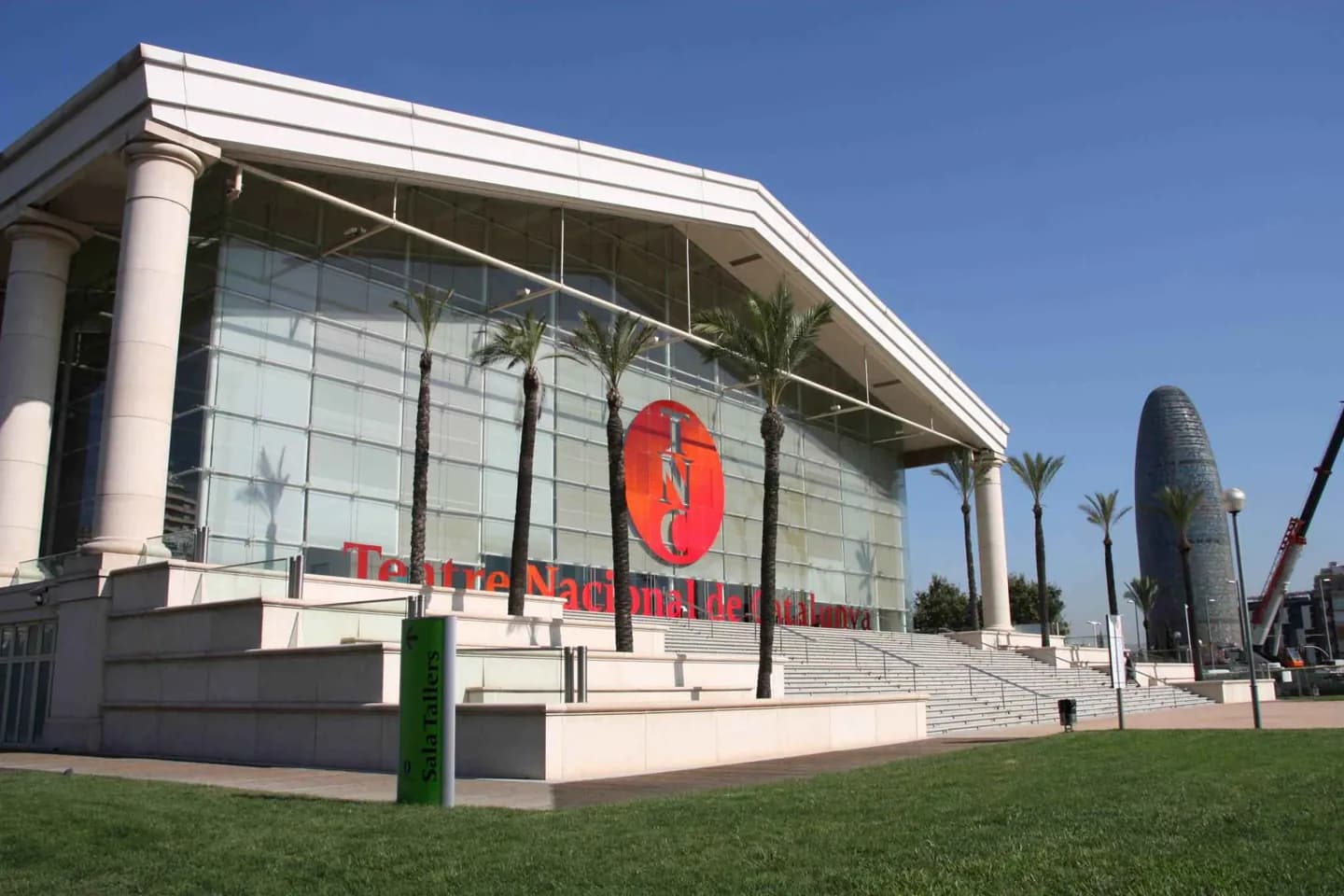
A performance gives the building its full purpose; the monumental exterior offers a separate architecture stop. The contrast between its classical temple form and surrounding modern streets makes it easy to recognize, even on a short area walk. Nearby cultural buildings give the square a larger civic setting.
What to look for
- Tall columns support the main building’s gabled roof.
- The theatre faces Plaça de les Arts near Glòries.
The full story
The Teatre Nacional de Catalunya was designed by Ricardo Bofill and opened in the 1990s. Its main building takes a striking temple-like form, with tall columns and a broad gabled roof. That choice gives the theatre a civic presence unlike the compact playhouses of the old centre. The venue contains several performance spaces, including Sala Gran, Sala Petita and Sala Tallers. Their different sizes allow different kinds of production, but the programme and language vary by performance. A visitor can appreciate the architecture from Plaça de les Arts without treating the building as an open museum. To experience the theatre itself, select a specific show and review its language and access details in advance. The venue sits close to L’Auditori and the Glòries area, so an evening performance can follow a daytime walk nearby without trying to force a general building tour into the plan.
Useful to know
- Choose a specific production before planning an interior visit.
- Check its language, performance time and hall access.
- View the exterior from Plaça de les Arts if passing through.
Your next visit
Estimated · Declared scenario and planning estimates; no live opening, weather, queue or booking service.
Outdoor visit · 15–25 min
World planning estimate; admission, opening, visit duration and access need checking.