
Why go
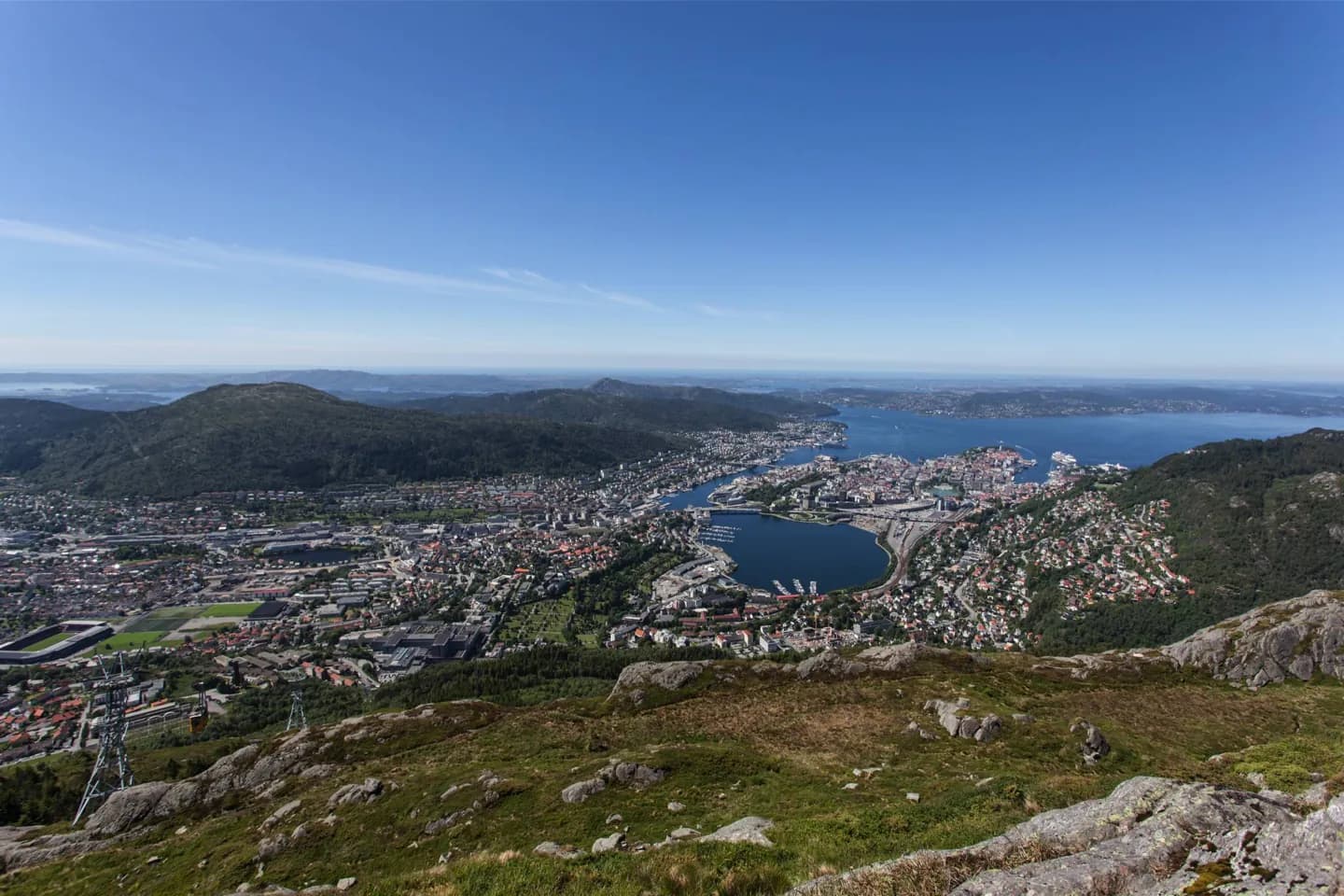
The mountain name is a useful lens for reading Bergen’s geography rather than a single checklist to finish. From central Bergen, Fløyen rises close to the harbour; Ulriken offers a higher mountain perspective. Their different positions make the city’s narrow built areas, water and steep slopes more legible. A full seven-peak hike is a separate undertaking.
The full story
Bergen’s “seven mountains” are a cultural grouping, not a single unchanging set of peaks. Ulriken, Fløyen, Løvstakken and Damsgårdsfjellet are generally included, while other names vary by definition. The ambiguity comes partly from where one ridge ends and another begins. An annual seven-mountain hike uses its own defined sequence, but that route should not be mistaken for the only possible interpretation of the city’s nickname. For most visitors, the useful question is which mountain gives the view or walk they want. Fløyen is close to the centre and connected by funicular; Ulriken offers a higher outlook. Look back from either one and the compact city centre appears pressed between the water and rising ground. The mountain boundaries matter most when planning a walk: neighbouring summits may share the same high ground, while a viewpoint visit can be much shorter than a traverse.
Useful to know
- Choose one mountain viewpoint for a shorter visit; the seven-peak hike is a demanding separate plan.
- Check mountain weather before setting out, since conditions above town can differ from the harbour.