
Why go
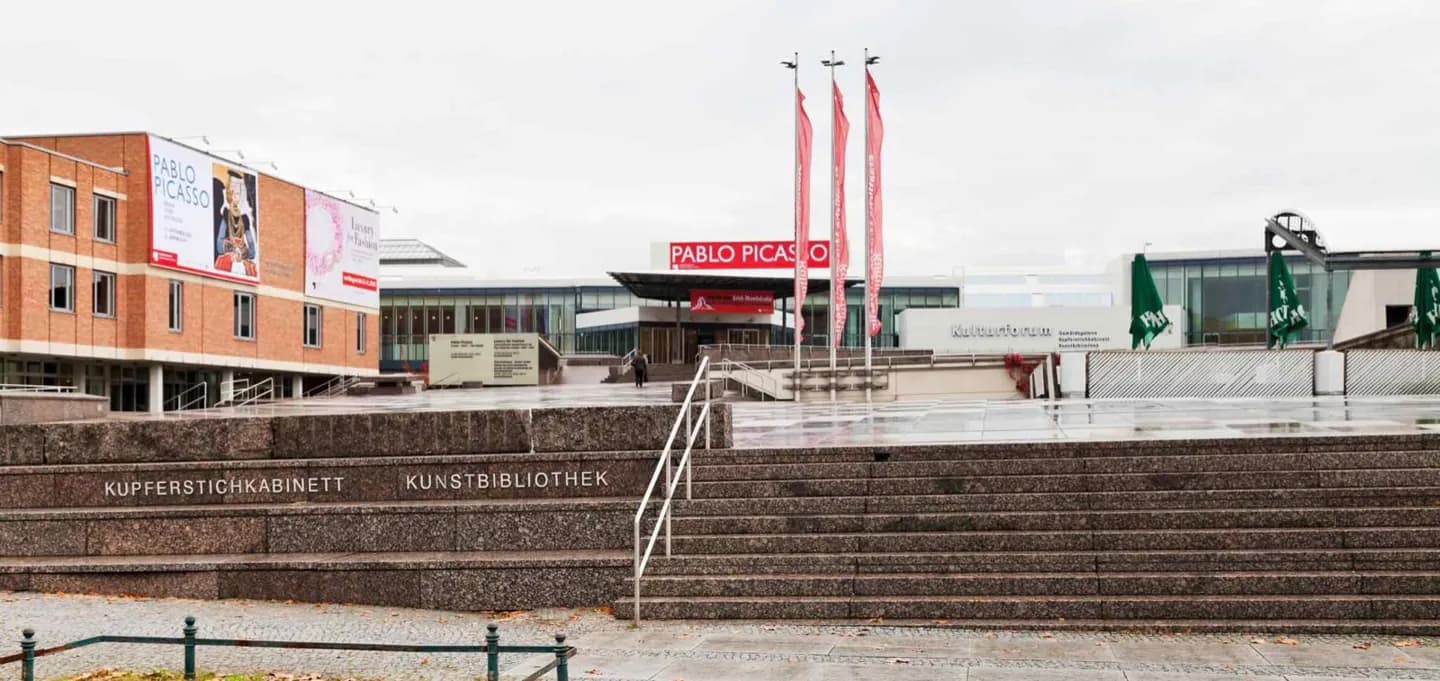
It is part of the Berlin State Museums, and is located in the Kulturforum on Potsdamer Platz. It is the largest museum of graphic art in Germany, with more than 500,000 prints and around 110,000 individual works on paper.
What to look for
- The museum's prints and drawings are shown in changing exhibitions, while much of the collection is accessed.
The full story
It grew throughout the 19th and 20th centuries, with the addition of Medieval, Renaissance and later works, including drawings by Albrecht Dürer and Matthias Grünewald, Sandro Botticelli's illustrations of Dante's Divine Comedy, and the estate of Adolph Menzel. In 1986 the Kupferstichkabinett took over the graphics collection of the National Gallery of Berlin, whose emphasis was on 20th-century prints, including Expressionist works that the Nazis had classified as "degenerate" and confiscated. In 1994 it opened in a new building in the Kulturforum, reuniting the parts of the collection that had been split between East and West Berlin together with the National Gallery's collection. Collection The emphasis is on European drawings and printed graphics from the Middle Ages to the present, as well as illuminated manuscripts, sketchbooks, topographical drawings and printing plates.
Useful to know
- Verify current opening hours, closures and timed-entry rules on the official visitor page before setting out.
- Allow extra time for security or ticketing when the visit includes an interior collection or viewing platform.