
Why go
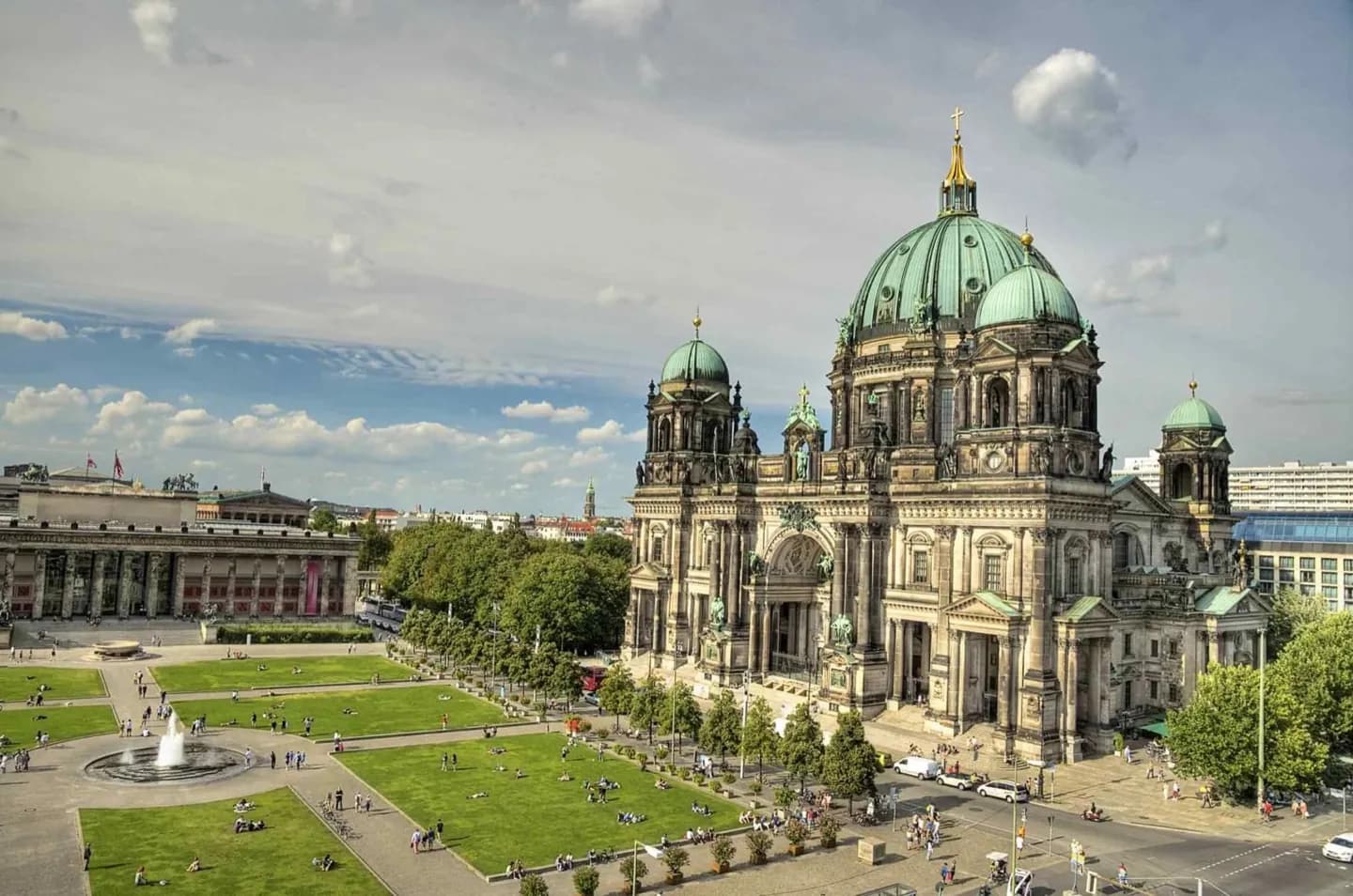
At various times in its history, the park has been used as a parade ground, a place for mass rallies and a public park. The area of the Lustgarten was originally developed in the 16th century as a kitchen garden attached to the Palace, then the residence of the Elector of Brandenburg, the core of the later Kingdom of Prussia.
What to look for
- The open lawn frames a close comparison between Berlin Cathedral, Altes Museum and the Humboldt Forum.
The full story
It was Luise, with the assistance of a military engineer Johann Mauritz and a landscape gardener Michael Hanff, who, in 1646, converted the former kitchen garden into a formal garden, with fountains and geometric paths, and gave it its current name. In 1713, Friedrich Wilhelm I became King of Prussia and set about converting Prussia into a militarised state. He ripped out his grandmother's garden and converted the Lustgarten into a sand-covered parade ground: Pariser Platz near the Brandenburg Gate and Leipziger Platz were also laid out as parade grounds at this time. In 1790, Friedrich Wilhelm II allowed the Lustgarten to be turned back into a park, but during French occupation of Berlin in 1806 Napoleon again drilled troops there.
Useful to know
- Visit in daylight for the clearest reading of the architecture and surrounding urban space.
- Combine the stop with nearby sights on foot, allowing extra time only for any separate interior component.