
Why go
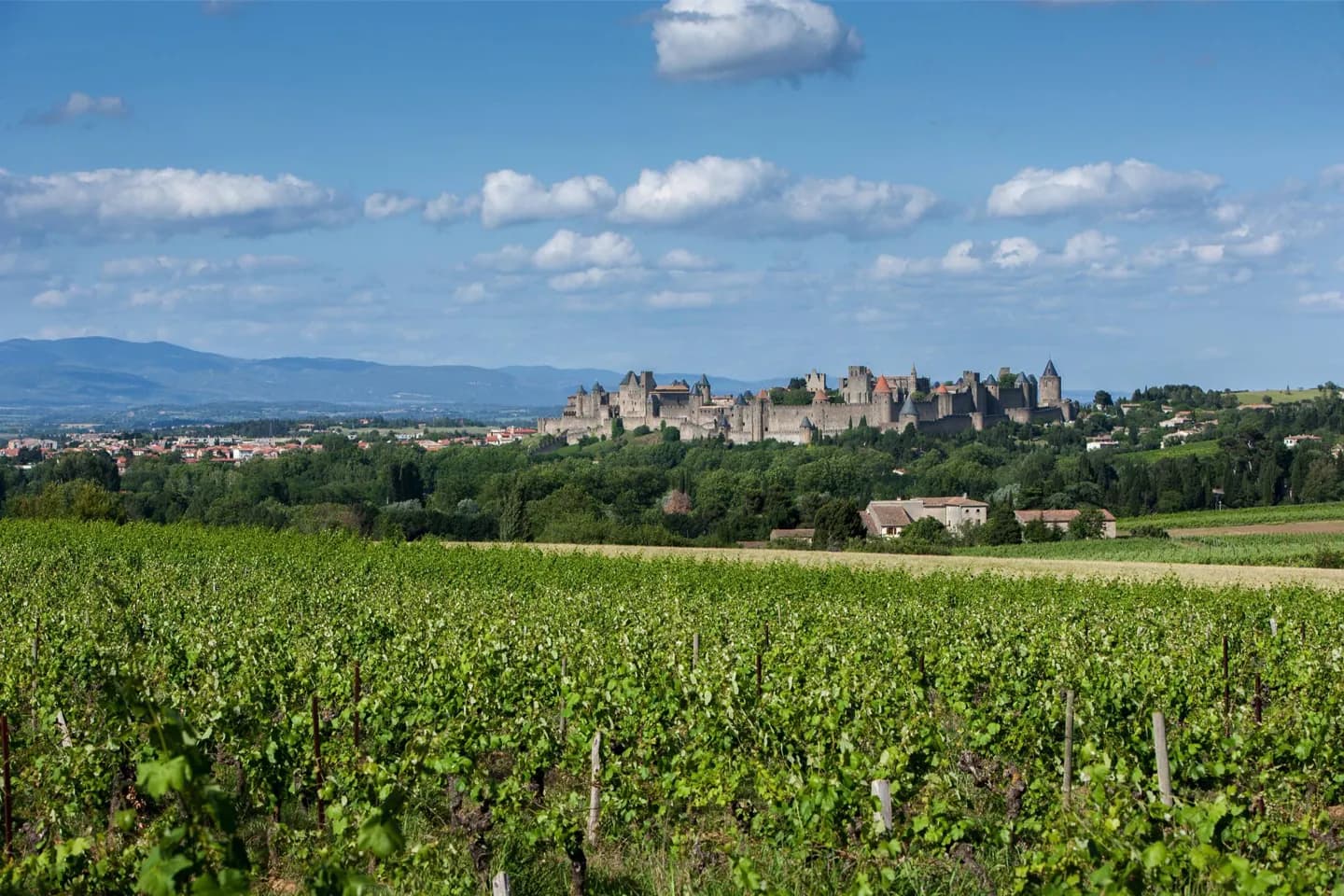
The river, hill and surrounding ranges are useful planning clues. The Cité rises above the Aude; the lower city sits across the water. The Montagne Noire lies to the north, the Corbières to the east and the Lauragais plain to the west, so outings quickly change terrain.
The full story
Carcassonne sits in southern France, east of Toulouse, at a route between the Atlantic and Mediterranean. The Aude shapes the city’s local layout: a fortified hill above the river and a lower town across it. To the north rises the Montagne Noire; eastward are the Corbières, while the Lauragais plain opens to the west. The setting explains why the Cité was defensible and why a short trip beyond the center can feel unlike a walk through the walls. Use the river and the two town levels for orientation in the core. Treat hills, villages and the lake as separate excursions rather than assuming the whole visitor region is walkable from the Cité. The Canal du Midi runs near the railway station, while Lac de la Cavayère lies beyond the old center. Neither belongs to the short crossing between Cité and bastide.