
Why go
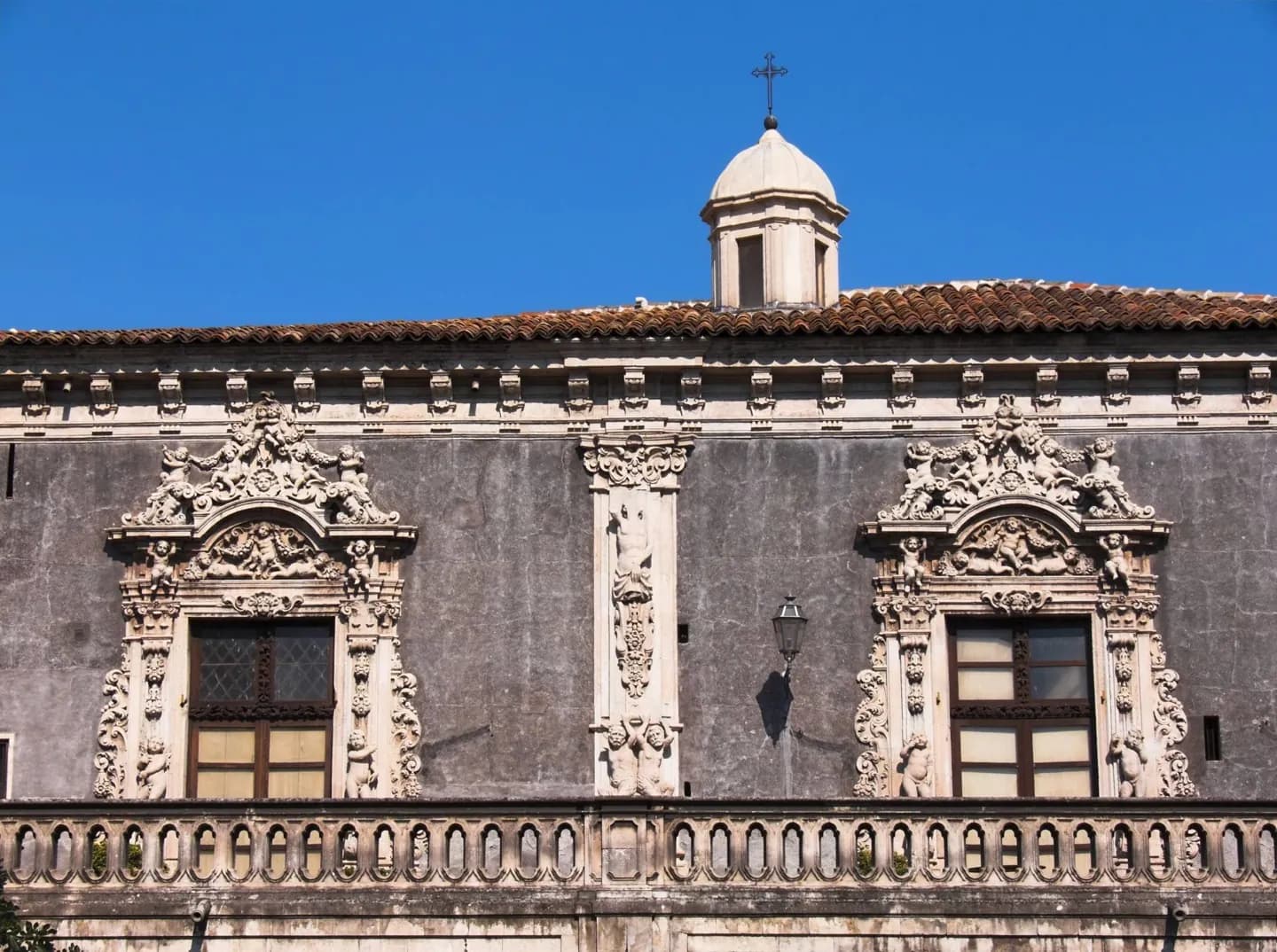
This palace gives a close view of the private side of Catania’s rebuilding after the 1693 earthquake. The Salone dell’Orchestra has a gallery once used by musicians, while painted rooms and the family apartments show how decoration, collecting and entertainment shaped an aristocratic home. It rewards visitors who want interiors rather than another façade.
What to look for
- The Rococo Salone dell’Orchestra and its musicians’ gallery
- The courtyard staircase and painted rooms
- Rosewood panelling and Roman marble fragments in the private apartments
The full story
The Paternò Castello family, princes of Biscari, began building this palace after the earthquake of 1693 and continued shaping it through the eighteenth century. Its rooms reflect a family intent on both display and collecting. The courtyard staircase leads toward richly decorated spaces, but the Salone dell’Orchestra is the clearest expression of that ambition: a gallery gave musicians a place above the festivities, making performance part of the room itself. Elsewhere, rosewood panelling and fragments of Roman marble bring different materials and periods into a private home. The family’s collection also connects this palace with Castello Ursino, where objects from the Biscari holdings are now displayed. Seeing the two sites together makes the shift from aristocratic collection to civic museum tangible. At Palazzo Biscari, focus on how the rooms were used, not only on their ornament: the staircase, music gallery and apartments each served a different part of palace life.
Useful to know
- Check the palace’s current guided-tour calendar before making it a fixed stop.
- Pair the interior visit with nearby central Catania sights if a suitable tour is available.
Your next visit
Estimated · Declared scenario and planning estimates; no live opening, weather, queue or booking service.
Outdoor visit · 30–45 min
World planning estimate; admission, opening, visit duration and access need checking.