
Why go
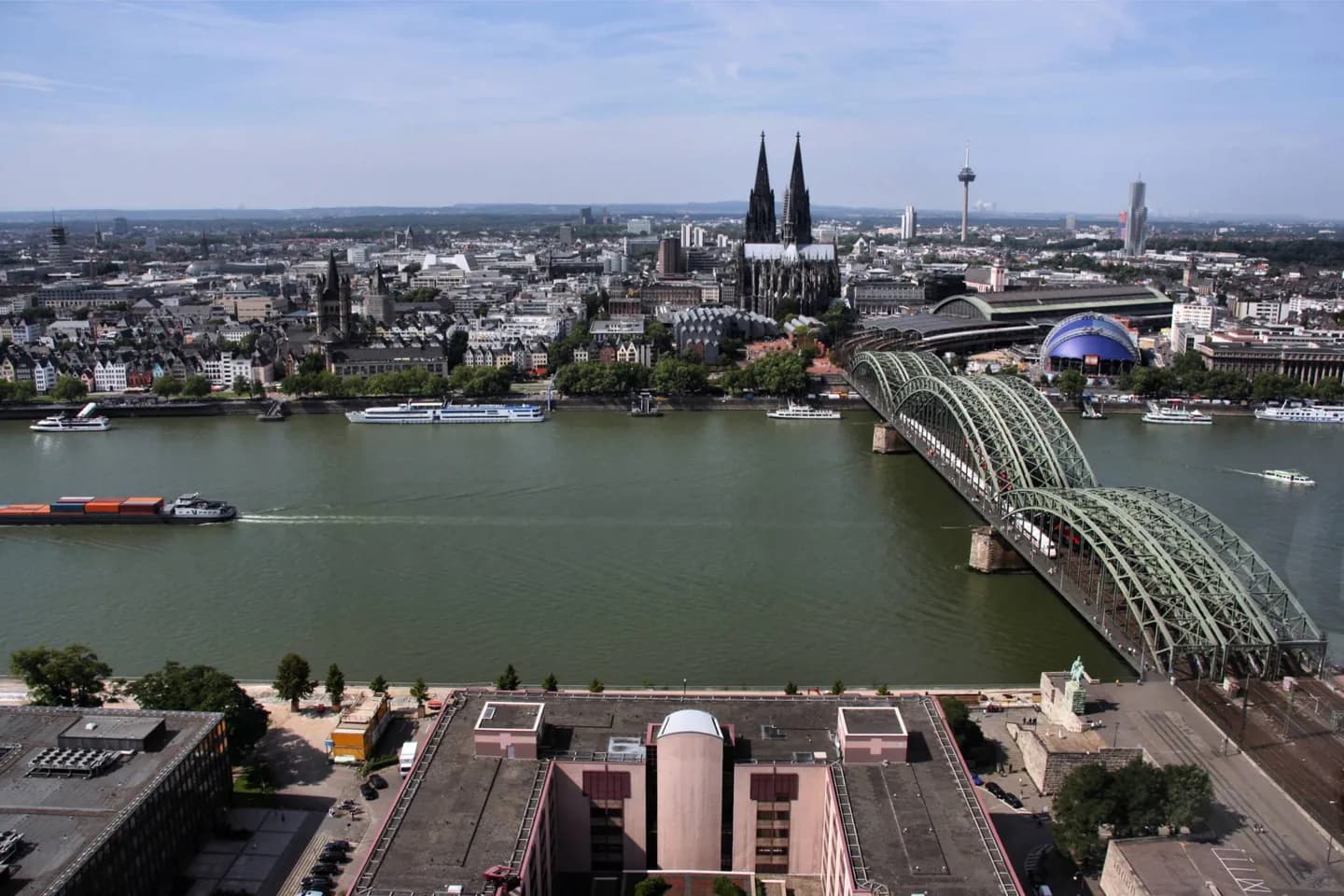
Use the cathedral as an orientation point, then look beyond it: Roman traces explain the city’s beginnings, while galleries and museums show how its cultural life extends past the medieval skyline. The Rhine ties these sights together and offers a different perspective from each bank.
The full story
Cologne’s name comes from the Roman Colonia Claudia Ara Agrippinensium. That origin is more than a label: Roman remains still form part of the city’s cultural landscape. The Rhine shaped its position, connecting the settlement to trade routes and giving today’s visitor a clear line through the center. Cologne Cathedral later became the city’s defining landmark and the seat of its Catholic archbishop. Its scale can dominate a first impression, yet Cologne is not solely a church city. Museums cover subjects from archaeology to contemporary art, and galleries add another reason to spend time here. A useful way to read Cologne is to move between these layers rather than try to take in every institution. Begin near the cathedral, choose one museum for a closer look, and cross the Rhine to see how the cathedral and old city sit together on the riverbank.
Useful to know
- Pair a central museum with the cathedral for a clearer contrast between the city’s historical and artistic sides.
- Cross to the opposite bank when you want to see the cathedral within the wider Rhine skyline.