
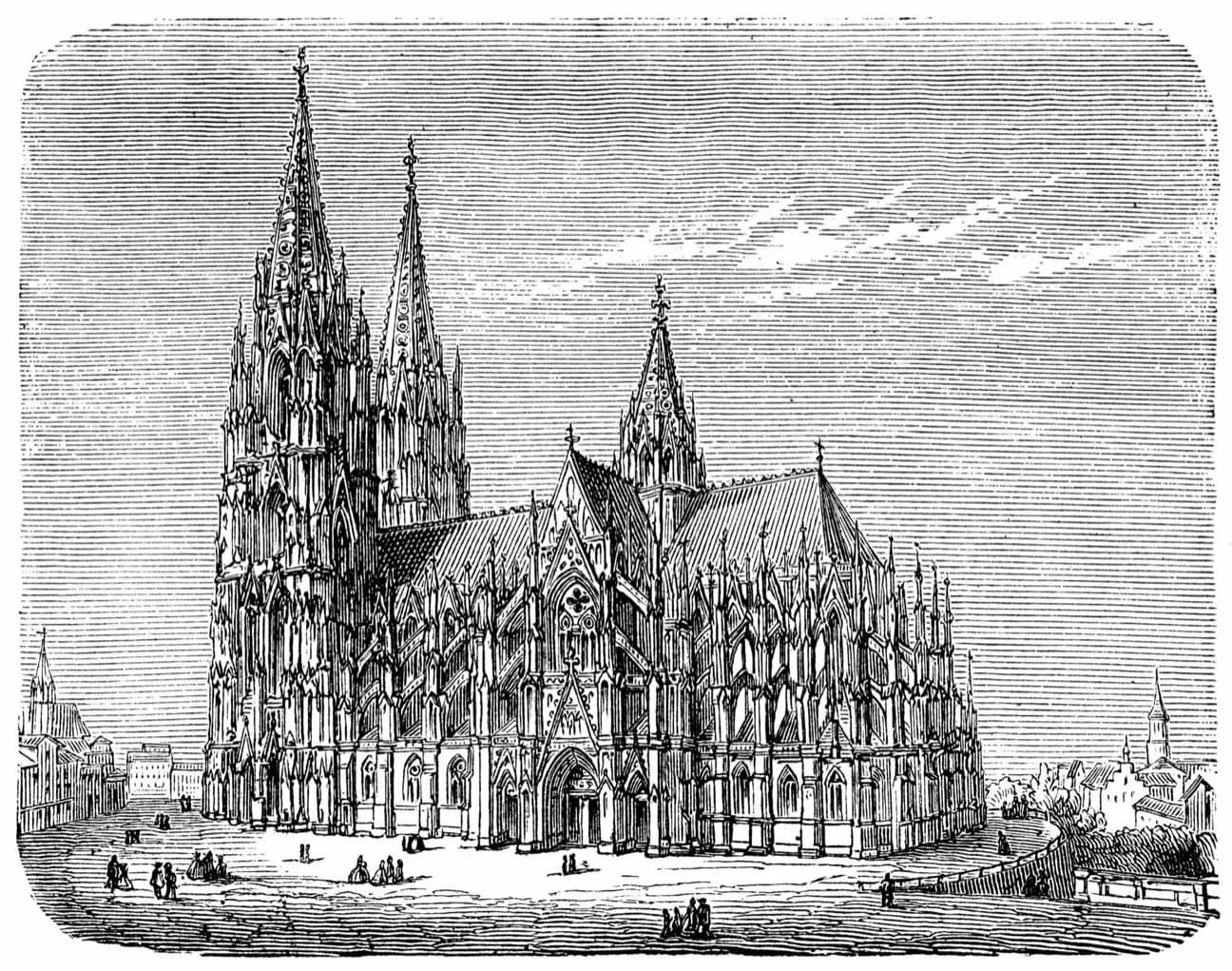
Why go
Cologne’s streets are easier to understand when you know why the cathedral became a pilgrimage focus and why the older center is dense. The Roman settlement, Rhine trade, medieval walls and nineteenth-century fortress each left a different mark that can still guide what you look for.
What to look for
- The cathedral links Cologne’s medieval pilgrimage history with its nineteenth-century completion.
- Surviving gates recall the walls that once enclosed the growing city.
The full story
A settlement stood here in 38 BC, and the Romans recognized it as a city in AD 50 under the name Colonia Claudia Ara Agrippinensium. The Rhine made Cologne a trading place as well as a political center. In the Middle Ages, its archbishop held considerable power, and the arrival of relics associated with the Three Wise Men in 1164 strengthened the city’s role as a pilgrimage destination. The cathedral, begun in 1248, belongs to that story, although work stopped for centuries before its completion in 1880. Its eventual finish also reflected nineteenth-century ideas of national identity. Industry and population growth changed Cologne again. Parts of the old walls and buildings disappeared, while two rings of fortifications constrained expansion and helped produce a tightly built center. Surviving city gates and remains of the fortified belts make that pressure visible. Look for these fragments alongside the cathedral: together they show a city repeatedly remade around its river, religious institutions and defenses.