
Why go
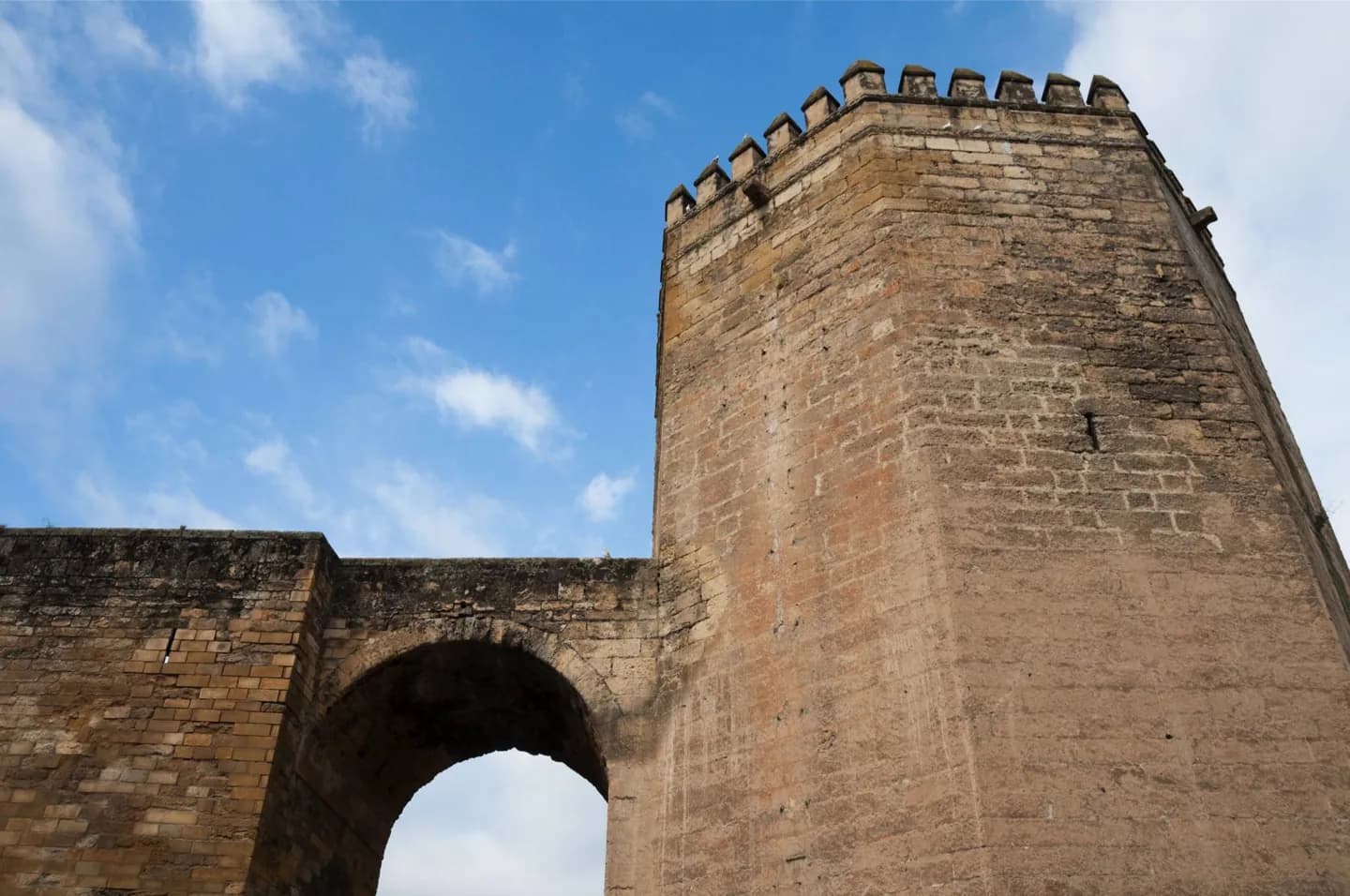
The tower gives a concise look at how Córdoba defended its northern gates. Its solid octagonal mass and adjoining arch are easier to grasp from the street than a fragment of wall alone. The name carries a local legend, but the visible masonry tells the firmer story of fortification.
What to look for
- The octagonal tower stands beside an attached arch.
- Its position relates to the former Rincón and Colodro gates.
The full story
King Henry III ordered this tower built in the early fifteenth century over an earlier Almohad structure. It strengthened the approaches to the Rincón and Colodro gates and later served as a prison for nobles. The tower is an albarrana, a defensive structure set forward from a city wall, and its adjoining arch makes that military role easier to picture. Its Spanish name translates roughly as “tower of the badly killed woman.” A legend links it to a woman murdered by her husband after a false accusation of adultery, though the tale should not be mistaken for the tower’s documented origin. Standing outside, the contrast between the heavy stonework and the dramatic name is a reminder of how a practical fortification can gather stories over centuries.
Useful to know
- Plan an exterior look from the Plaza de Colón area.
Your next visit
Estimated · Declared scenario and planning estimates; no live opening, weather, queue or booking service.
Outdoor visit · 30–45 min
World planning estimate; admission, opening, visit duration and access need checking.