
Why go
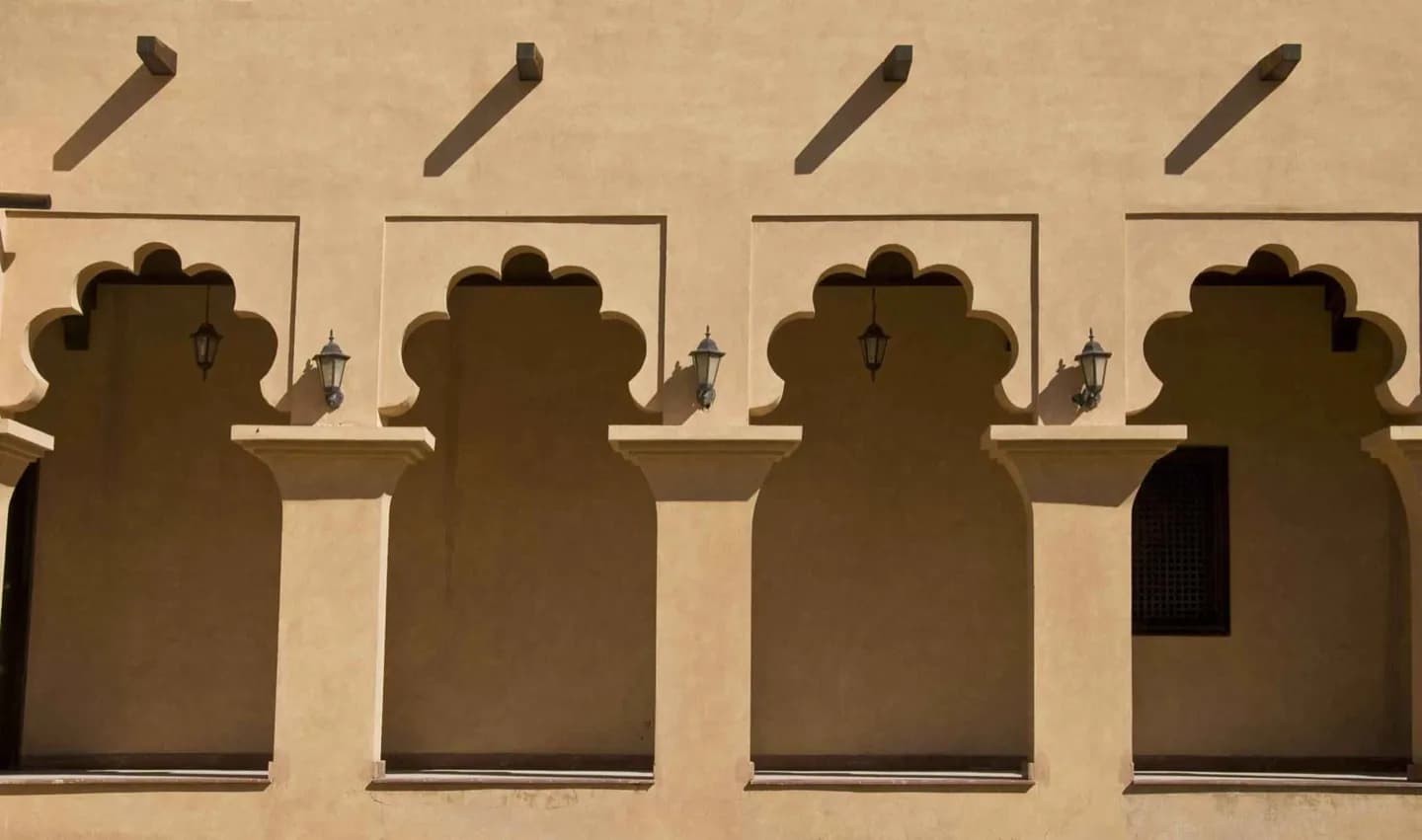
Al Fahidi offers the most coherent pedestrian setting for reading traditional Dubai architecture at close range. The shaded lanes reveal how buildings handled privacy and heat before air conditioning, while museums and galleries make the quarter more than an outdoor reconstruction. It pairs naturally with the creek and nearby souks.
What to look for
- Wind towers rise above plastered courtyard houses in the narrow lanes.
- Museums, galleries and cultural venues occupy restored traditional buildings.
- The irregular street pattern creates shade and changing views at walking pace.
The full story
Al Fahidi Historical Neighbourhood took shape in the late nineteenth century, with courtyard houses separated by narrow, winding lanes. By the 1980s, part of the district had been cleared for new offices and many surviving houses were used as warehouses or worker accommodation. A wider demolition plan followed in 1989. British architect Rayner Otter, who was restoring the house where he stayed, campaigned for preservation and wrote to Prince Charles before the prince's visit to Dubai. Prince Charles toured the area with Otter and argued that it should be saved; the demolition was canceled. Dubai Municipality later began a restoration project in 2005. The result is not an untouched village but a deliberately preserved urban fragment, which is why repaired walls, reused houses and the surviving lane pattern deserve as much attention as individual exhibits.
Useful to know
- Walk the lanes before choosing indoor venues; each museum or gallery operates independently.
- Continue toward Dubai Creek and the Bur Dubai souks to connect the architecture with the trading district.
- Expect outdoor exposure between buildings and plan the walk for cooler conditions.
Your next visit
Estimated · Declared scenario and planning estimates; no live opening, weather, queue or booking service.
Outdoor visit · 10–15 min
Public-space walk and exterior observation only; no interior, garden, tower or ticketed admission included. Durations and walking are estimates. Check temporary restrictions and park or market opening times.
Outdoor visit · 30–45 min
World planning estimate; admission, opening, visit duration and access need checking.