
Why go
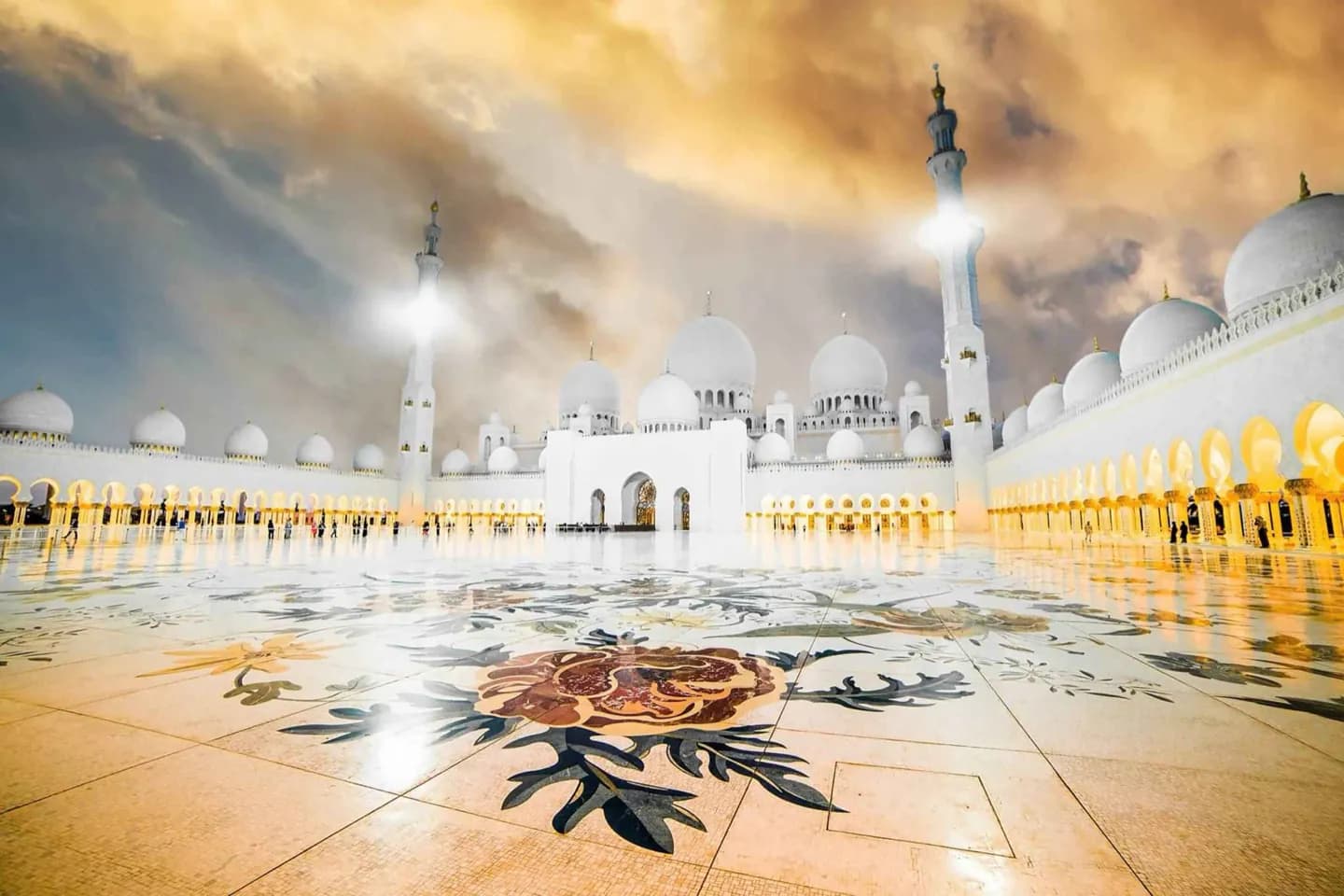
The mosque is worth noticing from the surrounding streets for the way its pale walls, roofline of many domes and slender minaret sit within old Bur Dubai. It is an architectural stop to combine with the textile market and Al Fahidi area, not a confirmed general-entry attraction.
What to look for
- A tall minaret shaped like a lighthouse rises above the old-town roofline.
- Small and large domes form a dense pattern across the mosque roof.
- Handmade stained-glass windows soften the otherwise restrained exterior.
The full story
The site began in 1900 as a kuttab, a school where children learned the Quran. A mosque replaced that building in 1960, and the present structure followed in 1998 with a design intended to recall the earlier building. That sequence explains why the mosque looks closely tied to the old Bur Dubai streets around it despite its relatively recent reconstruction. The exterior is restrained in sandy gray, but the details become clearer at walking pace: a Quranic inscription sits above five entrance columns, handmade stained-glass windows face the lanes, and groups of small and large domes lead the eye toward the minaret. The building remains an active place of worship, so its strongest visitor value is the architectural presence it gives the historic district.
Useful to know
- Plan to appreciate the mosque from public streets unless current entry arrangements are confirmed directly.
- Combine the exterior view with the textile market and nearby Al Fahidi Historical Neighbourhood.
Your next visit
Estimated · Declared scenario and planning estimates; no live opening, weather, queue or booking service.
Outdoor visit · 10–15 min
Public-space walk and exterior observation only; no interior, garden, tower or ticketed admission included. Durations and walking are estimates. Check temporary restrictions and park or market opening times.
Outdoor visit · 30–45 min
World planning estimate; admission, opening, visit duration and access need checking.