
Why go
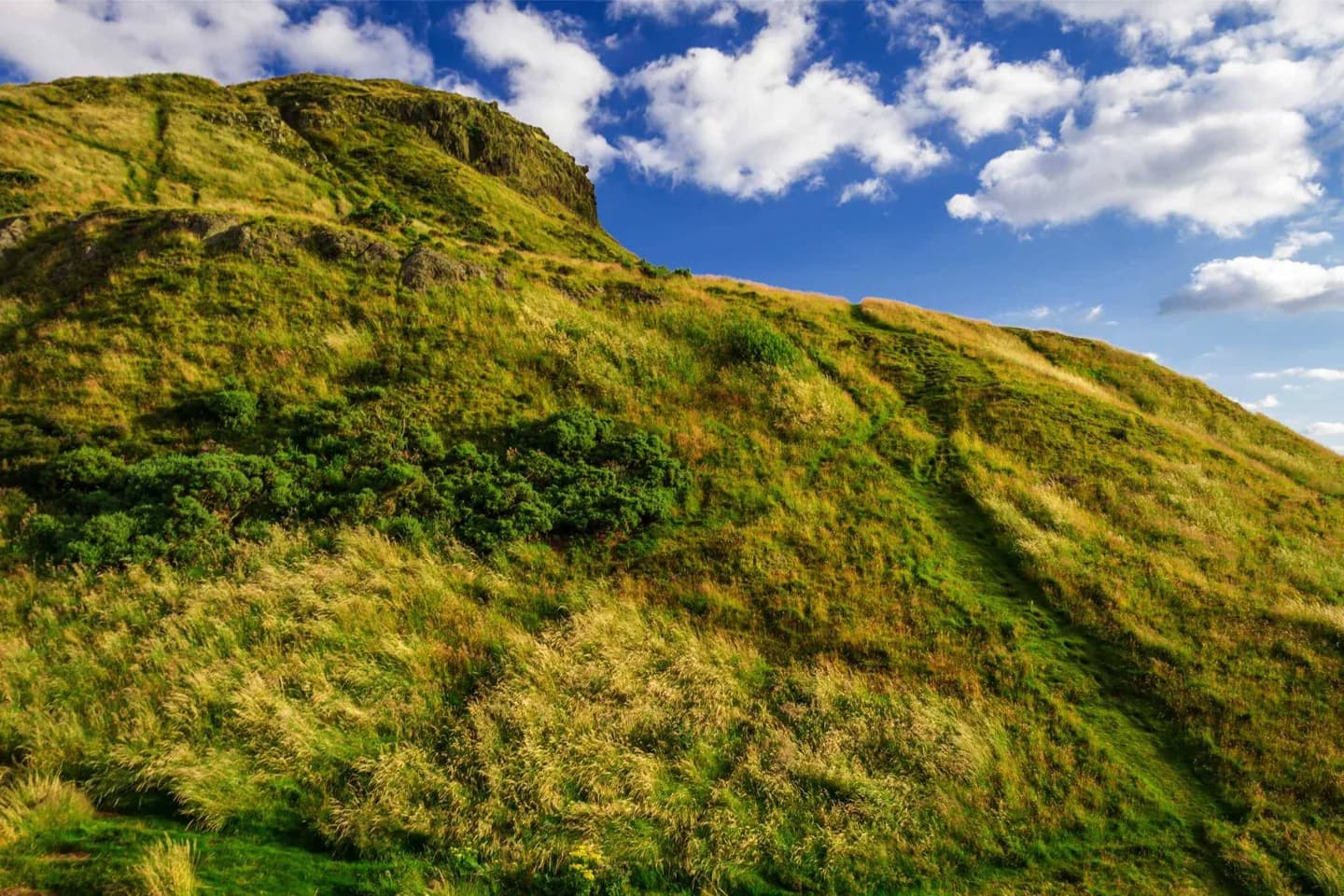
The summit puts the Old Town skyline and the Firth of Forth in the same outlook, while the climb reveals the volcanic landforms beneath the city. The east-facing approach above Dunsapie Loch follows a grassy slope, but the overall outing still involves uneven ground and exposure. It suits a deliberate outdoor walk rather than a quick city stroll.
What to look for
- The summit outlook connects Edinburgh’s Old Town skyline with the Firth of Forth.
- Rocky crags and slopes reveal the hill’s volcanic origins.
- A grassy east-facing approach rises above Dunsapie Loch.
The full story
Arthur’s Seat formed within an extinct volcanic system of Carboniferous age, around 350 million years ago. Later glaciers moved from west to east, exposing harder rock and sweeping material eastwards. Together, volcanic formation and erosion gave the hill its rugged outline within the city. The summit rises to 251 metres, and Salisbury Crags form a rocky edge between the hills and central Edinburgh. Two extinct vents are known as the Lion’s Head and Lion’s Haunch, names that become clearer when viewed from a distance. The eastern slope above Dunsapie Loch looks grassy, while the western side is craggier. These contrasts explain why route choice changes the character of the ascent, even though each route leads towards the same summit above Edinburgh.
Useful to know
- Allow around two hours for the hill walk, with extra time for a longer route or pauses.
- Check current Holyrood Park route restrictions, weather and daylight before starting the ascent.
- If the exposed climb does not suit the conditions, choose a lower-level Holyrood Park walk instead.
Your next visit
Estimated · Declared scenario and planning estimates; no live opening, weather, queue or booking service.
Outdoor visit · 60–120 min
World planning estimate; admission, opening, visit duration and access need checking.