
Why go
The King’s offers a theatre evening with an architectural history dating to 1906. Its exterior and interior were designed by different architects, creating a contrast between the symmetrical street frontage and the elaborate spaces beyond it. A performance is the practical way to make that historic setting part of the visit.
What to look for
- The symmetrical facade has paired windows and a central semicircular window above the entrance.
- The exterior was designed by James Davidson and the interior by J D Swanston.
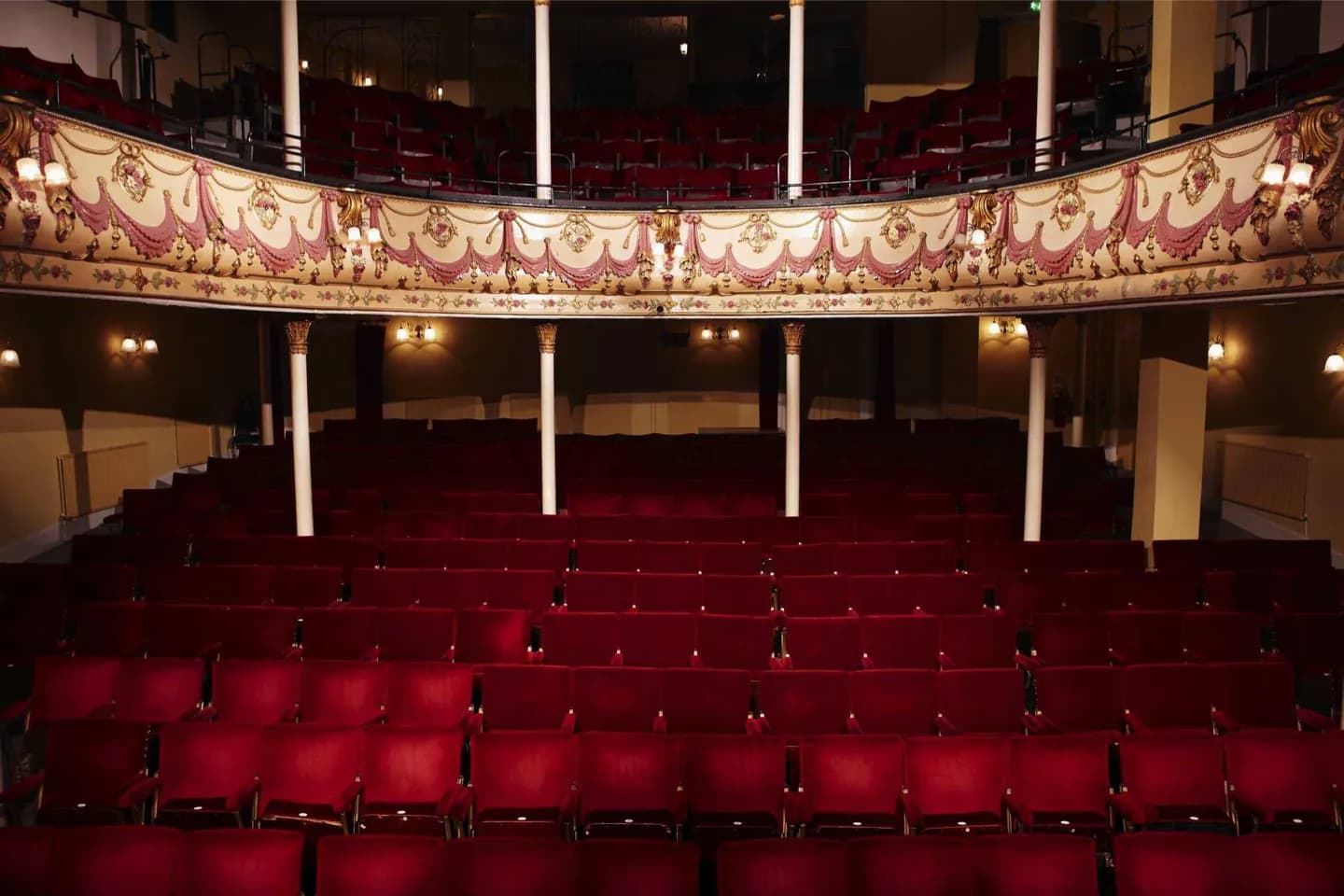
- The historic auditorium was designed with boxes arranged on three levels.
The full story
Opened in 1906, the King’s Theatre was designed through separate commissions for its exterior and interior. James Davidson created the building’s symmetrical street frontage. Its paired windows and central feature give it the formality of a civic or commercial building, rather than announcing the full richness of the auditorium from outside. J D Swanston designed the interior. The historic foyers combined carved mahogany, stained glass, marble details and parquet floors, while the auditorium’s boxes rose across three levels. That arrangement reflected the theatrical expectations of the early twentieth century, when an evening’s surroundings were part of the spectacle. The original glass canopy above the pavement was replaced during the mid-twentieth century, and later alterations changed the auditorium. Restoration and reopening in 2026 form the latest chapter in a building whose appearance has developed through successive periods of theatre use.
Useful to know
- Plan around a performance listed by Capital Theatres and use its current visitor arrangements for the restored building.
- Look at the Leven Street facade before going in to compare the restrained frontage with the theatre’s decorative design.
Your next visit
Estimated · Declared scenario and planning estimates; no live opening, weather, queue or booking service.
Indoor visit · 60–150 min
World planning estimate; admission, opening, visit duration and access need checking.