
Why go
Read this history before looking at the island’s footprint. The original island was much smaller than the present site, and its shift from oyster ground to private property, harbor defense and immigration station mirrors wider changes around Upper New York Bay.
The full story
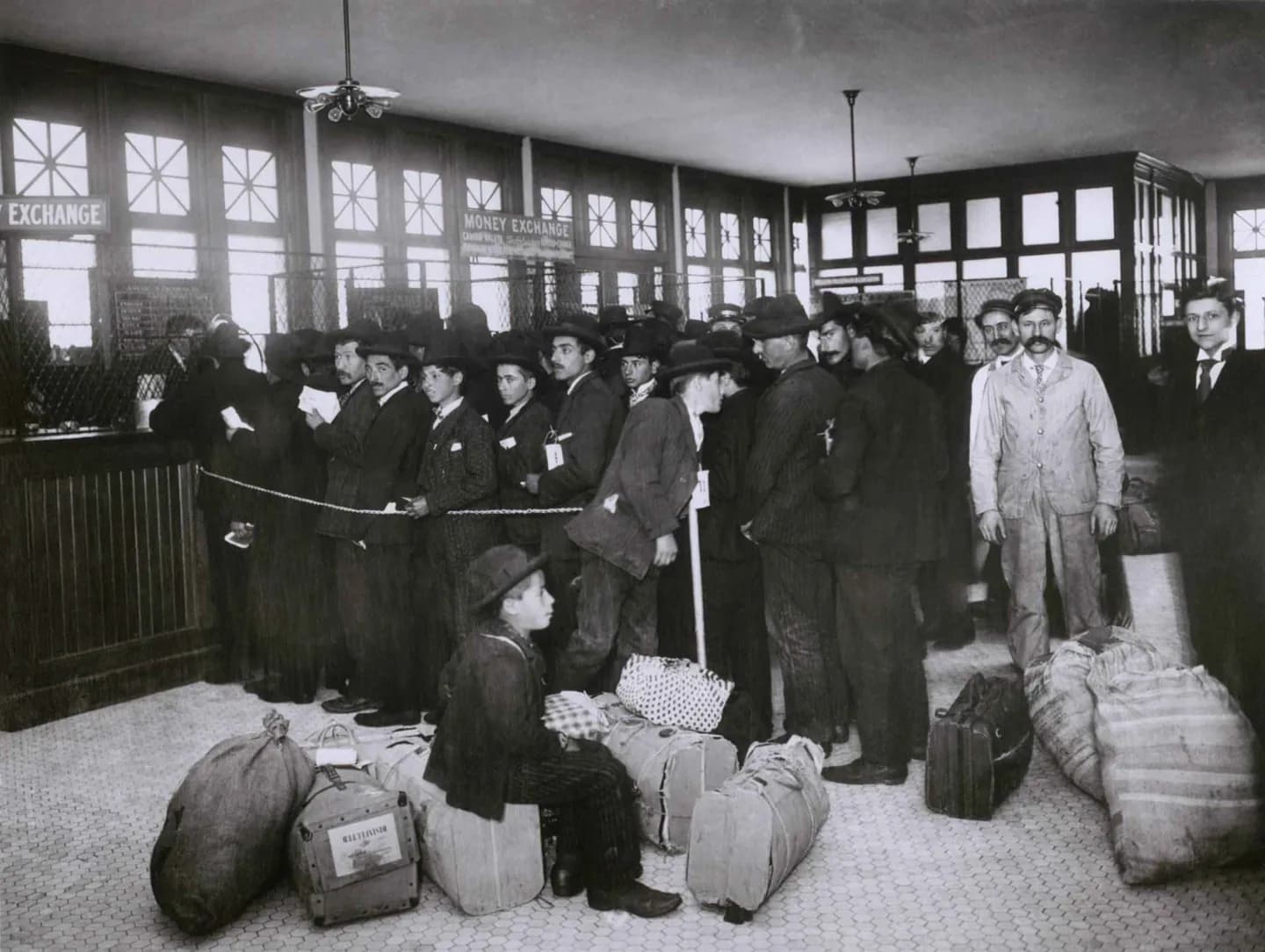
Before land reclamation enlarged it, Ellis Island was a low island near rich oyster beds in Upper New York Bay. The Lenape knew the area before Dutch and English settlement; later names for the island included Oyster Island. Samuel Ellis owned it in the late eighteenth century, leaving the name that endured. New York began to fortify the island in the 1790s, and the federal government acquired it in 1808. It then served harbor defense and military storage purposes, including the fort known as Fort Gibson. Federal officials selected the island for an immigration station in 1890, and processing began in 1892. The contrast between the small natural island and the expanded present land is the useful visual clue. The large station complex did not simply occupy a convenient old island; reclamation made room for a growing federal operation. That explains why the shoreline and jurisdiction story are inseparable from the immigration story.