
Why go
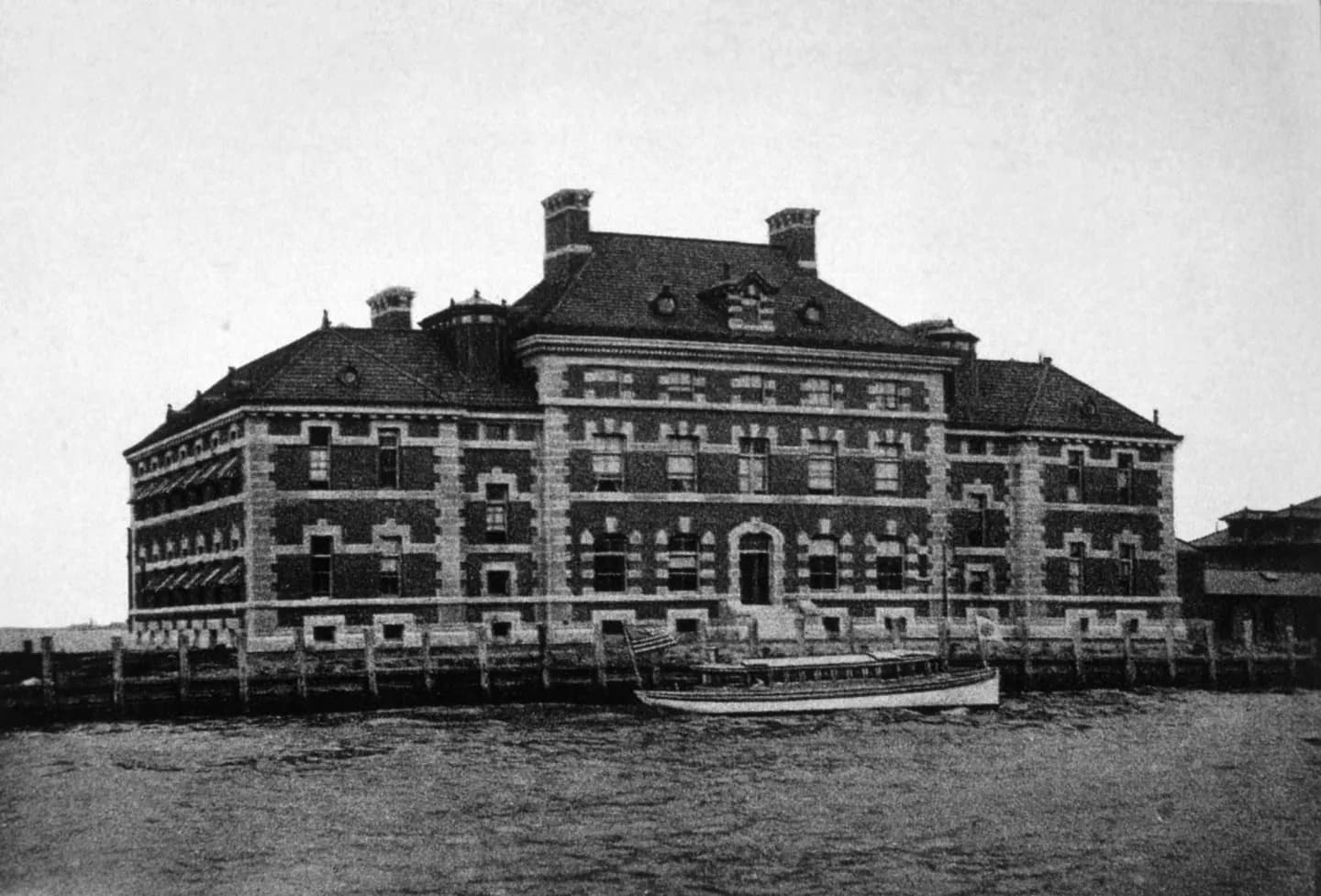
The south-side hospital buildings held people whose futures depended on both treatment and immigration decisions. Recovery could lead to entry into the United States; an unfavorable judgment could mean a return voyage. Read the wards and psychiatric unit as places where medical care, family separation, and government power converged, rather than as a list of diseases or equipment.
The full story
Doctors at the Ellis Island hospital encountered conditions including tuberculosis, trachoma, diphtheria, and cholera. The complex used medical equipment that was advanced for its time, but unfamiliar procedures could alarm patients who were already anxious about admission. Separation from family and the possibility of a return voyage added to that strain. Medical care could lead to recovery and entry, while an unfavorable judgment could lead to exclusion. The hospital also had a psychiatric ward. Historical assessments of mental illness were vulnerable to language barriers, cultural misunderstanding, and the prejudices of the period. Eugenic thinking formed part of that wider context; its claims about human worth are discredited. After the hospital’s medical role ended, parts of the complex served other federal uses before long periods of neglect prompted preservation efforts. Its surviving spaces speak to both public health ambition and the power immigration authorities held over patients’ lives.