
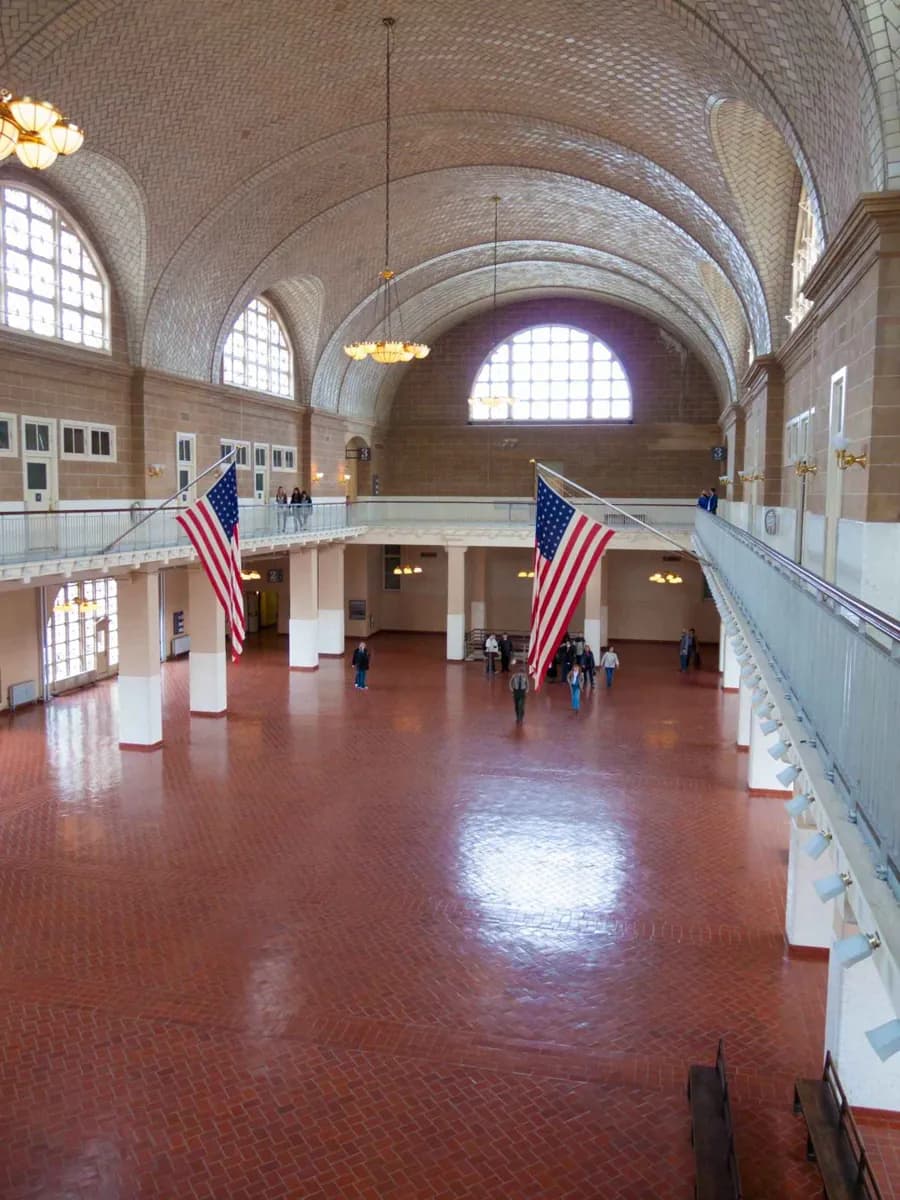
Why go
This later role complicates the familiar gateway story. The same island that processed mass arrivals became a place of prolonged detention under changing immigration and wartime security policies. Keep that shift in mind when viewing the station and hospital buildings together.
The full story
The quota law of 1921 and the Immigration Act of 1924 sharply changed the volume and character of work at Ellis Island. The station increasingly served people whose admission was contested or who faced removal. During World War II, the government held German, Italian, and Japanese nationals there under enemy-alien policies. It also used the island for wounded service members and Coast Guard training. These uses did not erase immigration processing, but they gave the island a different daily purpose from its busiest years before World War I. Detention continued after the war. The Internal Security Act of 1950 added grounds for excluding people associated with communist or fascist organizations. By the early 1950s the detainee population had fallen, and the station closed in 1954. When visiting, remember that the route through Ellis Island did not always end with reunion and departure for a new home; for some, it ended in confinement or removal.