
Why go
Read this before entering the Main Building to understand why its stairs, railings, and large hall mattered. For many steerage passengers, the walk from baggage to inspection was itself part of the medical assessment. A chalk mark meant further examination, not an automatic refusal of entry.
The full story
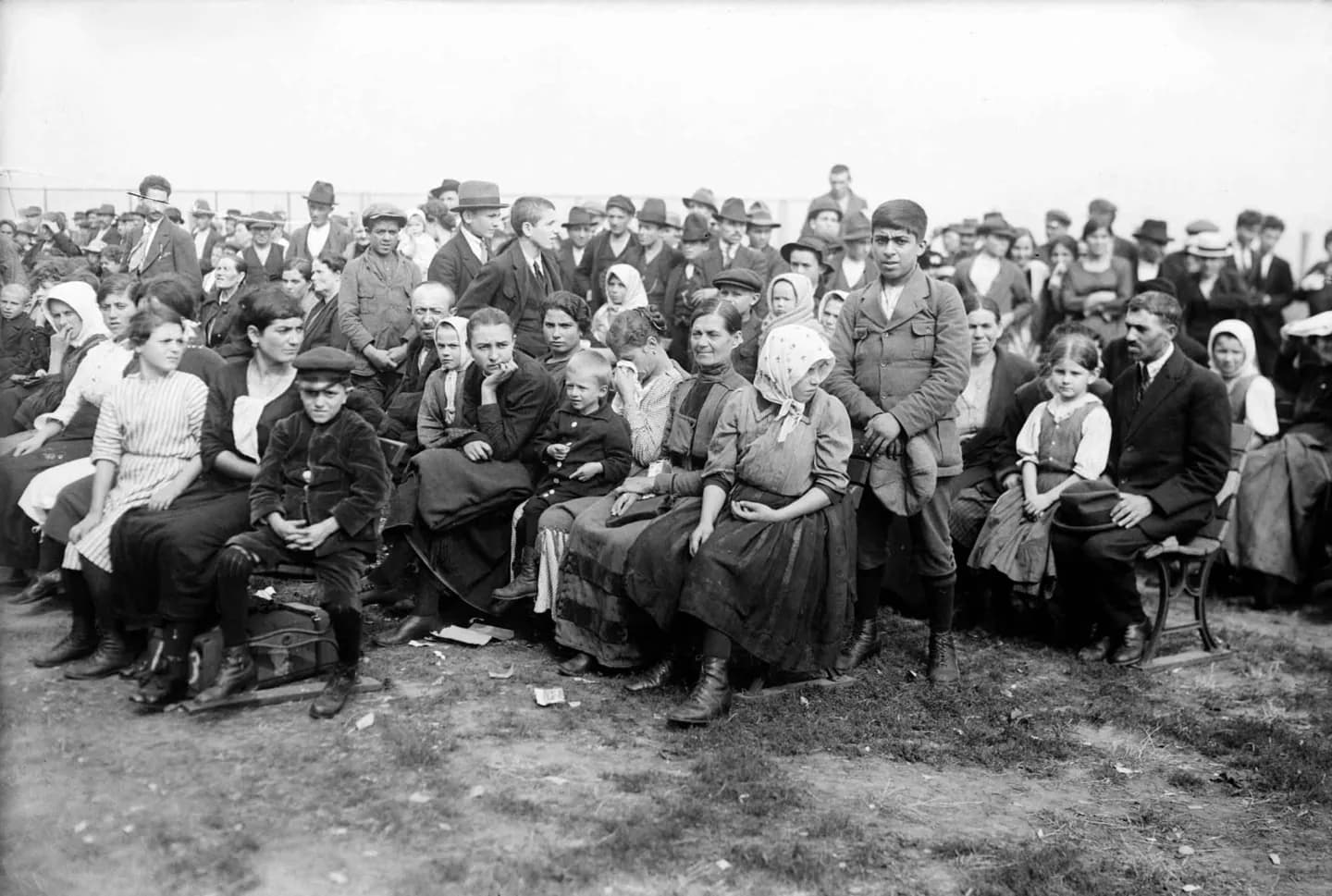
Steerage was the least expensive class of ship travel. Its passengers generally faced inspection at Ellis Island, while first- and second-class passengers were usually examined aboard ship. Inside the station, arrivals moved through lines divided by iron railings. Public Health Service doctors made rapid visual checks of the scalp, face, neck, hands, gait, and general condition. They could mark a coat or shirt with chalk to direct someone to a closer examination. Letters identified the area of concern, such as eyes or heart. Some people were also given tests of memory or problem solving. The process was shaped by the volume of arrivals and by inspectors’ judgments about appearance, sex, and race. Those judgments could have serious consequences for a traveler or family. In the Registry Room, consider how little time an examiner had to make a decision, and how much weight that decision carried.