
Why go
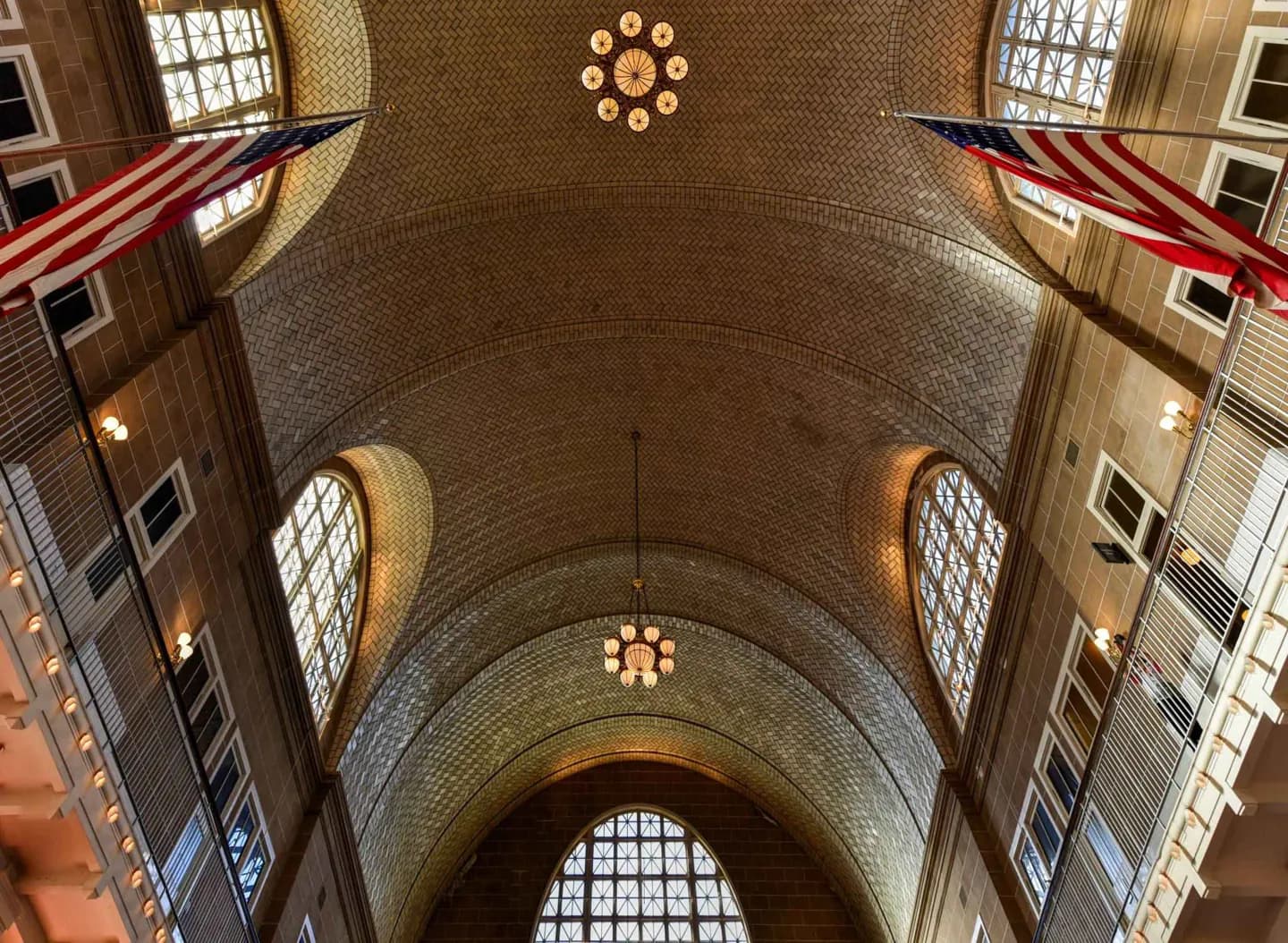
The Registry Room makes more sense when you picture the brief interview as a decision point rather than a welcome ceremony. Many approved travelers spent only a few hours on Ellis Island, but a concern about documents, health, or the ability to support oneself could lead to detention or rejection.
The full story
Immigration officials compared arriving passengers with the information recorded for their voyage and asked questions about matters such as name, occupation, and money carried. The government sought to determine whether people could support themselves; its rules also allowed exclusion on medical and other grounds. Most arrivals were admitted, but the consequences of a referral were substantial. A person might face additional questioning, be held for treatment or review, or be sent back across the Atlantic. The scale of the work peaked in 1907, when more than one million immigrants passed through Ellis Island. After the Immigration Act of 1924 restricted immigration and shifted much processing overseas, the station’s role changed. When standing in the Registry Room, imagine both the speed required to manage a crowded arrival day and the uncertainty faced by the person answering the questions.