
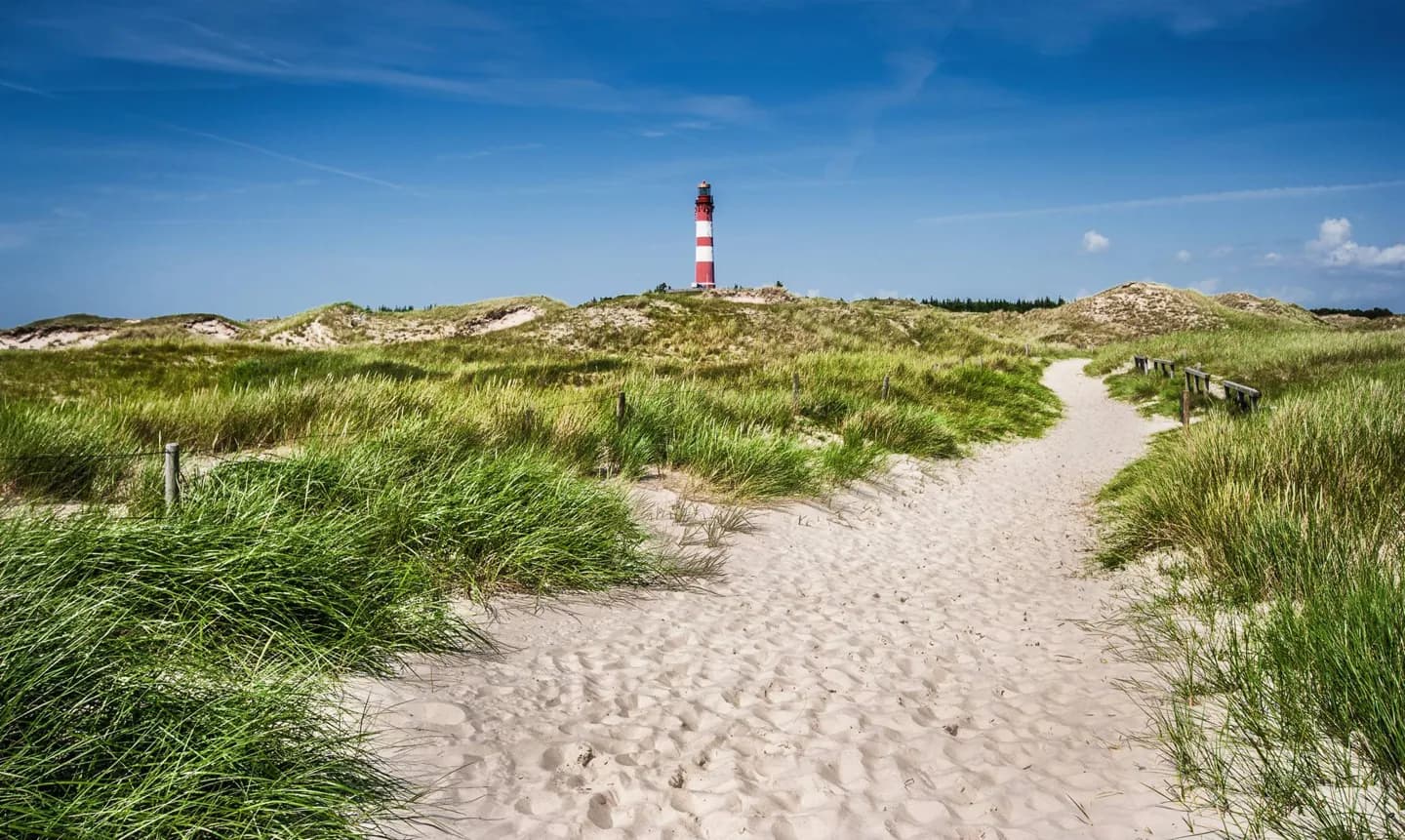
Why go
Use this contrast to choose a coast. The East and North Frisian islands sit beside the Wadden Sea, while Rügen, Usedom and Hiddensee belong to the Baltic’s intricate island and lagoon shore. Helgoland stands apart in the German Bight; Reichenau, Mainau and Lindau offer island visits on Lake Constance.
The full story
The Frisian islands may look like one chain on a map, but they have different origins. The North Frisian islands are remnants of land separated from the mainland by subsidence and flooding. The East Frisian islands formed from sediment moved by currents, waves and tides. That difference helps explain why the North Sea coast is shaped by the Wadden Sea and its changing waterline. Farther offshore, Helgoland has a separate geological story linked to a salt dome beneath the seabed. On the Baltic, Fehmarn, Poel, Hiddensee, Rügen and Usedom trace an island chain from west to east. Much of this coast has bodden: shallow lagoons left by postglacial flooding and later reshaped by deposited sediment. The Fischland-Darß-Zingst peninsula belongs to the same coastal landscape. Inland, Lake Constance has Reichenau, Mainau and Lindau, while the Herreninsel lies in Chiemsee.
Useful to know
- Choose the North Sea for a tidal coastal landscape and the Baltic for islands beside shallow lagoons.
- Treat Helgoland as a separate offshore trip when planning a North Sea route.
- For an inland island visit, look at Lake Constance or Chiemsee rather than building a coastal detour.