
Why go
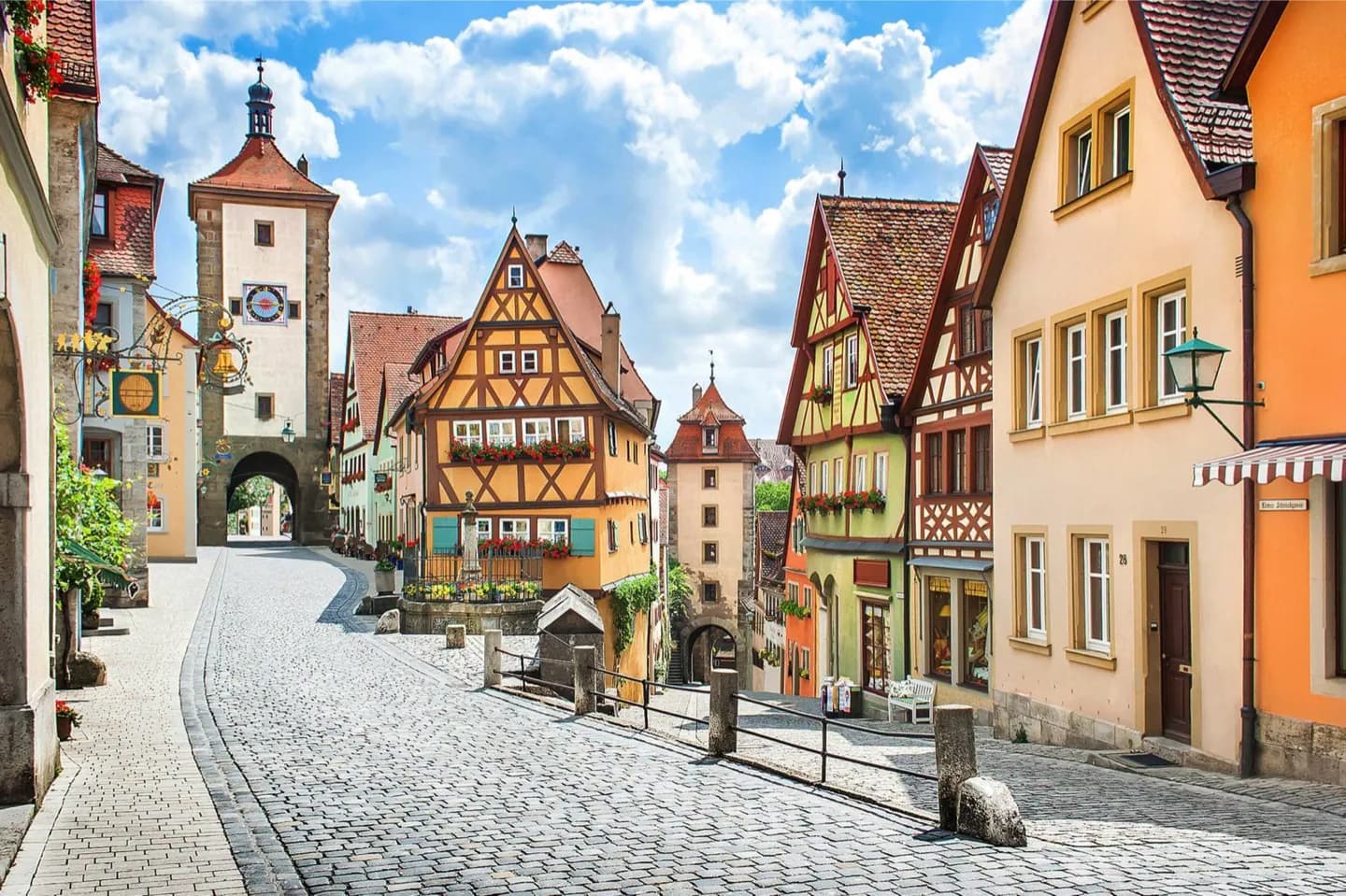
Fachwerk houses show local carpentry traditions, while Gründerzeit streets speak to the late nineteenth-century building boom. Jugendstil decoration and Bauhaus simplicity offer a further contrast. Recognizing those layers helps you understand why a medieval town, a spa resort and a modern city can look so unlike one another.
The full story
Half-timbered building, known as Fachwerk, varies by region and by carpentry tradition. In northern towns, Brick Gothic offers a different medieval language. Southern Germany has its own Baroque inheritance, including elaborate stucco work associated with the Wessobrunner School; the Upper Swabian Baroque Route brings several examples into one travel theme. The late nineteenth-century building boom left historicist streets often described as Gründerzeit. Around the turn of the twentieth century, Jugendstil introduced the German expression of Art Nouveau. Expressionist architecture followed, and the Werkbund and Bauhaus helped define modern design. Neuschwanstein Castle is a reminder that a building's appearance can deliberately revive an older style: its Romanesque Revival language belongs to a later age than the medieval structures it evokes. As you walk, compare materials and façades before assigning a date. Timber framing, brickwork, stucco and restrained modern forms tell different stories about region and period.
Useful to know
- Compare several streets in one town; Fachwerk and historicist styles are easier to read as ensembles.
- Use the Upper Swabian Baroque Route for a focused comparison of southern Baroque work.