
Why go
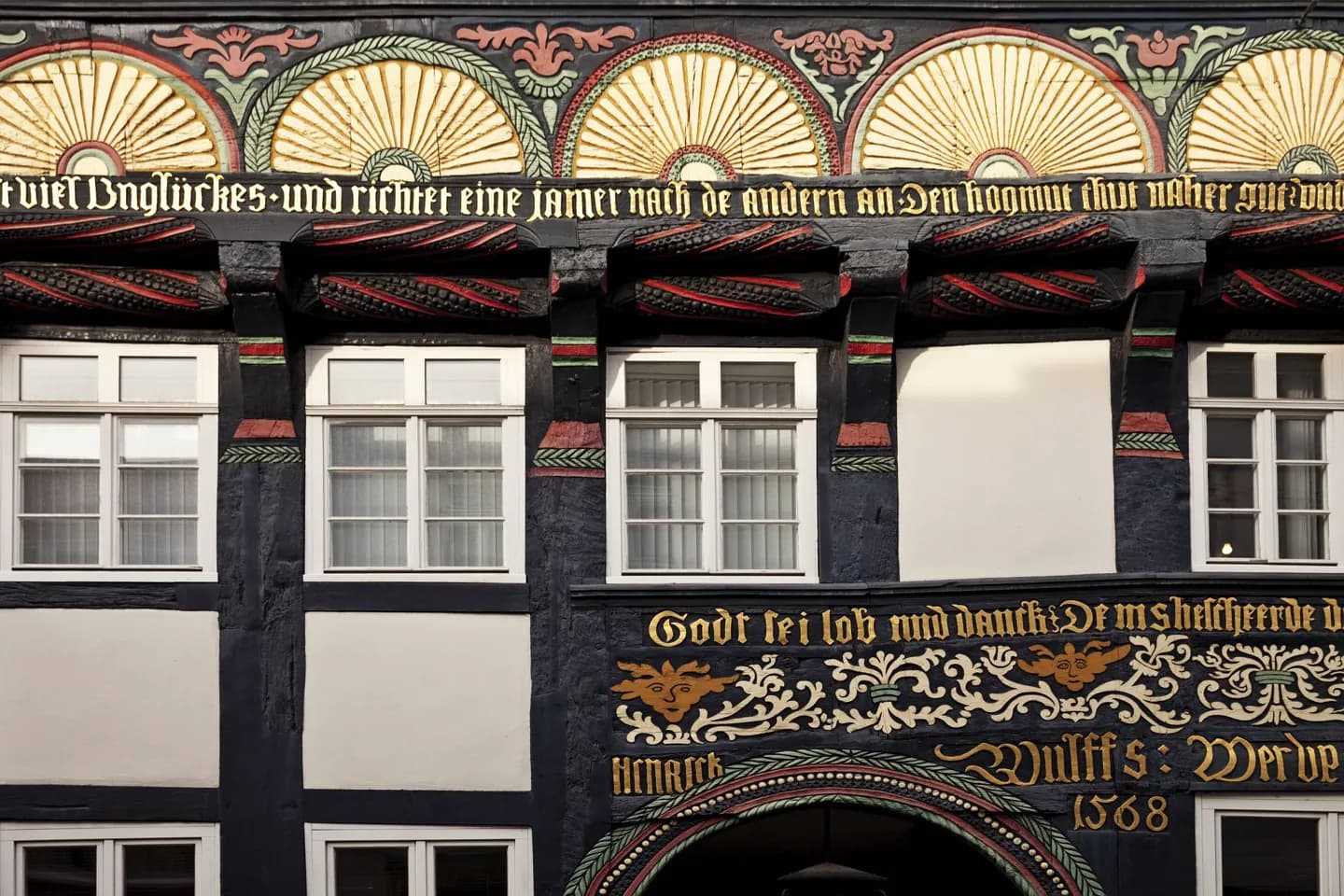
Compare the civic grandeur of Bremen's town hall with carved house fronts in towns such as Hameln, Lemgo or Höxter. Hämelschenburg and Brake Castle add the courtly side of the same period. Together they show how wealth before the Thirty Years' War appeared in both public and private buildings.
The full story
The Weser region saw substantial building in the sixteenth and early seventeenth centuries, before the Thirty Years' War began in 1618. The route brings together castles, town halls and town houses from that period across Hesse, North Rhine-Westphalia, Lower Saxony and Bremen. Stone and timber-frame buildings both belong to the story. Town halls in Bremen, Rinteln and Hann. Münden show how prosperous communities presented themselves; richly carved facades in Einbeck and Höxter bring the detail down to street level. Castles such as Hämelschenburg and Bückeburg show a different scale of patronage, while the unusual seven-sided mausoleum at Stadthagen points to wider European Renaissance ideas. The regional label can sound as if the style developed in isolation, but these buildings also reflect architectural connections reaching from Italy across the Alps. A town walk followed by one castle gives a clearer comparison than a rushed succession of remote monuments.
Useful to know
- Pair one town centre with a castle nearby instead of treating the cross-state route as a continuous day drive.
- Look closely at carved timber fronts as well as major stone landmarks; both carry the period's character.