
Why go
The bridge reveals how the riverfront changed after the age of docks and shipyards. From nearby public paths, the tilted crossing and arch can be read against the SEC Armadillo and Glasgow Science Centre. It is most rewarding as part of a waterfront walk, with both banks in view, rather than as a stand-alone destination.
What to look for
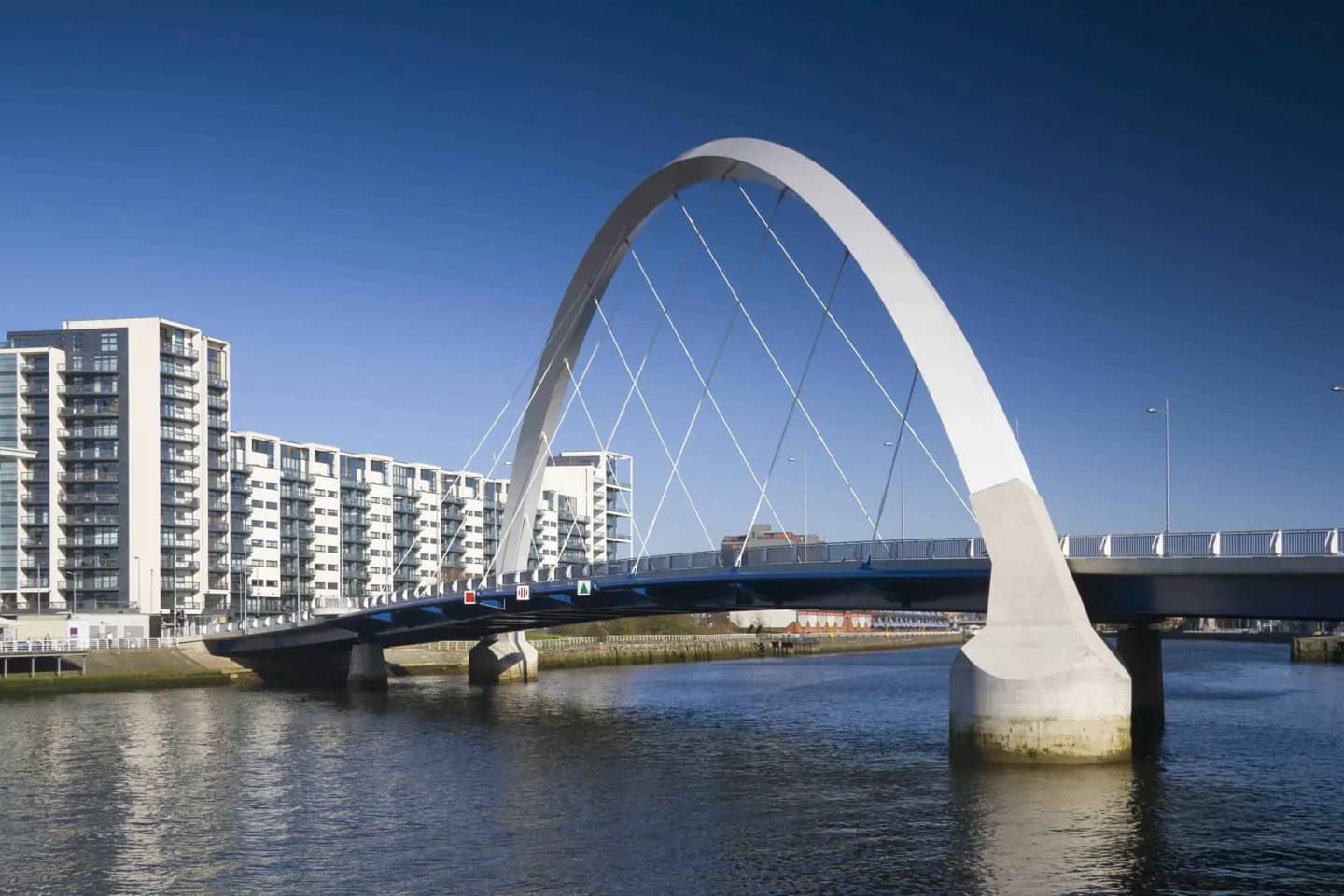
- The curved steel arch above the river.
- The bridge’s angled alignment between the two banks.
The full story
The Clyde Arc opened in the early twenty-first century as a new road crossing between Finnieston and the south-bank Pacific Quay area. Its angle to the river and broad steel arch gave it a recognisable silhouette and a local nickname, the Squinty Bridge. Earlier central crossings were built for different phases of Glasgow’s growth; this one belongs to the redevelopment of former industrial waterfront land. It connects areas containing event venues, museums and other newer uses along the Clyde. From a riverside path, look at how the arch rises above the deck and how the route meets the banks diagonally. The design is easiest to appreciate at a distance, when the bridge and neighbouring buildings sit in the same view. It is a useful crossing, but its wider story is the city’s changing relationship with the river.
Useful to know
- View the full arch from riverside paths before approaching the bridge.
- Use marked pedestrian routes if crossing between waterfront areas.