Chapter 1 / Glasgow
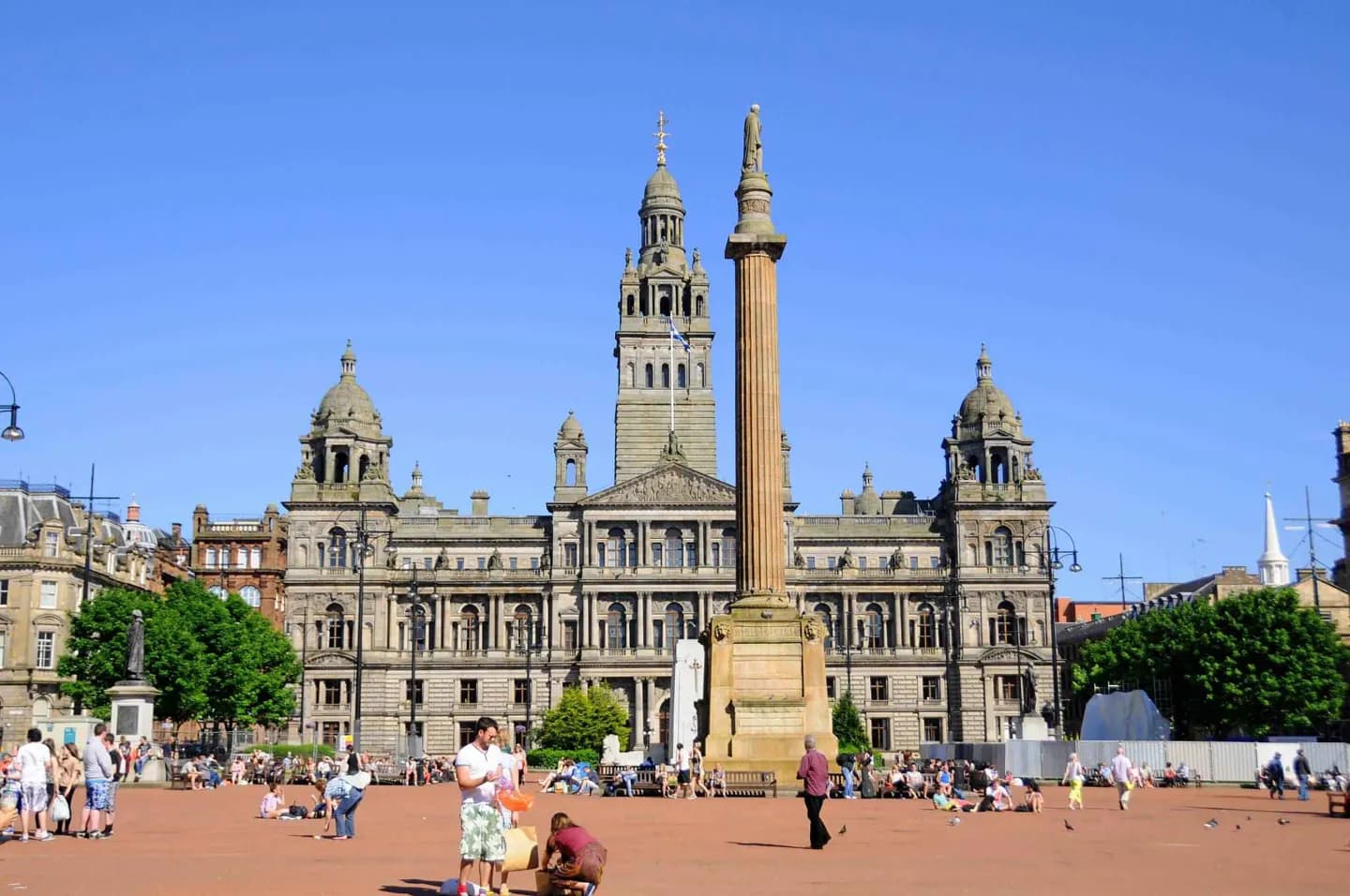
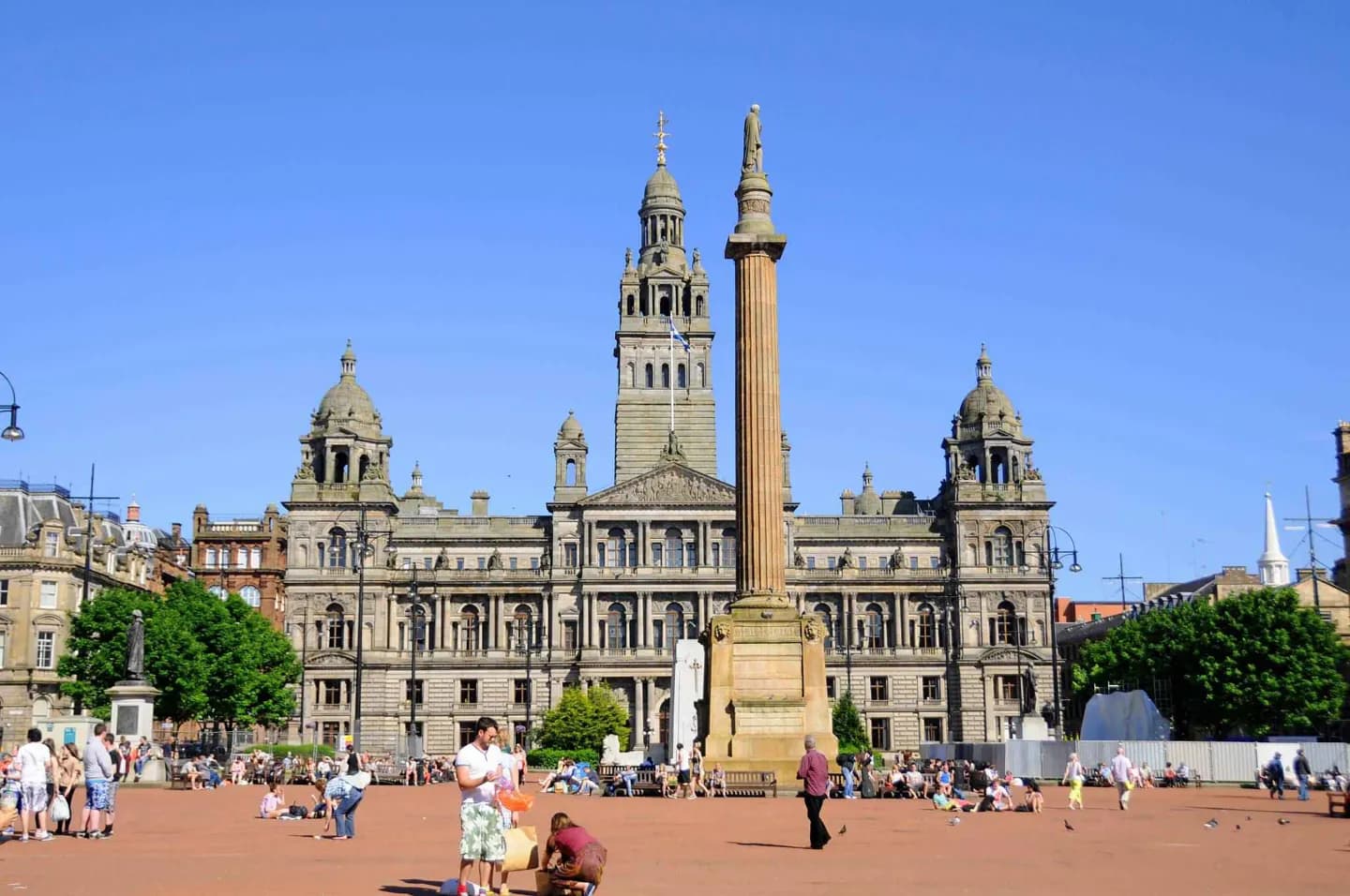
George Square.
Start with George Square. Let a detail decide which thread you follow next.
Pause here. What detail would you keep from this place?
Outdoor walks and façade observations. Interior admission is not included.
The full story
Glasgow’s civic square is a useful orientation point, with the City Chambers on its eastern edge and Queen Street Station nearby. Its monuments and surrounding buildings trace the city’s public history.
The square brings together public monuments, Victorian civic architecture and Queen Street Station in one compact area. Walk its edges to compare the City Chambers with the railway frontage and commemorative sculpture. Pair it with a City Chambers stop to orient yourself in the centre and understand how Glasgow presents its civic history.
George Square began as part of Glasgow’s late eighteenth-century grid plan. Named for King George III, it developed from rough ground into the civic centre of a growing commercial city. Queen Street Station opened at its northwestern edge in 1842, and the City Chambers later gave the eastern side its commanding municipal frontage. Monuments to figures such as Robert Burns, James Watt and Walter Scott added layers of public memory. The buildings around the square make its historic layout legible: the station frames one side, the City Chambers another, and monuments mark successive layers of civic memory. The contrast between the railway edge, civic facade and commemorative sculpture explains why this location remains a practical starting point for the centre.
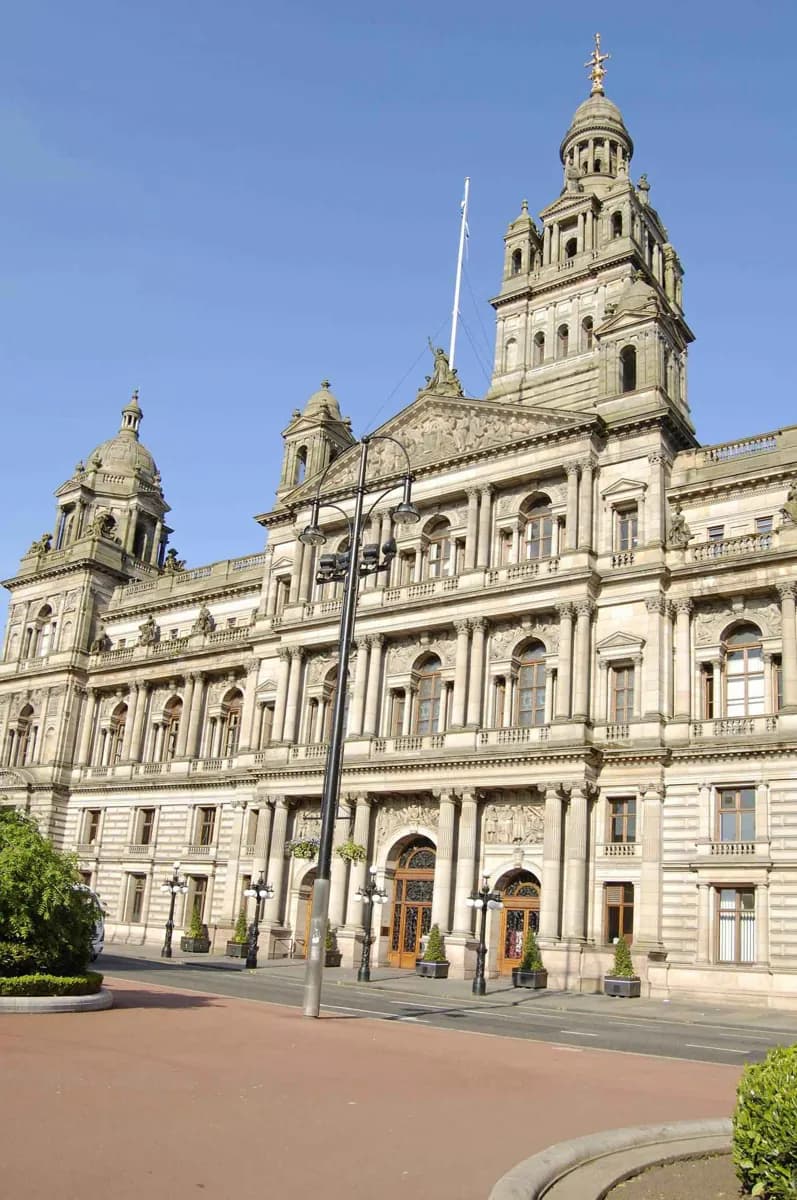
- Glasgow City Chambers rising above the square’s eastern edge
- The Queen Street Station edge and its relationship to the civic square
- Historic monuments and surrounding buildings visible from public paths
Check the latest redevelopment access before crossing the square; open routes are changing.
Use the available perimeter paths to pair the square with the City Chambers facade.
What is pulling you next?
Another door into this story