
Why go
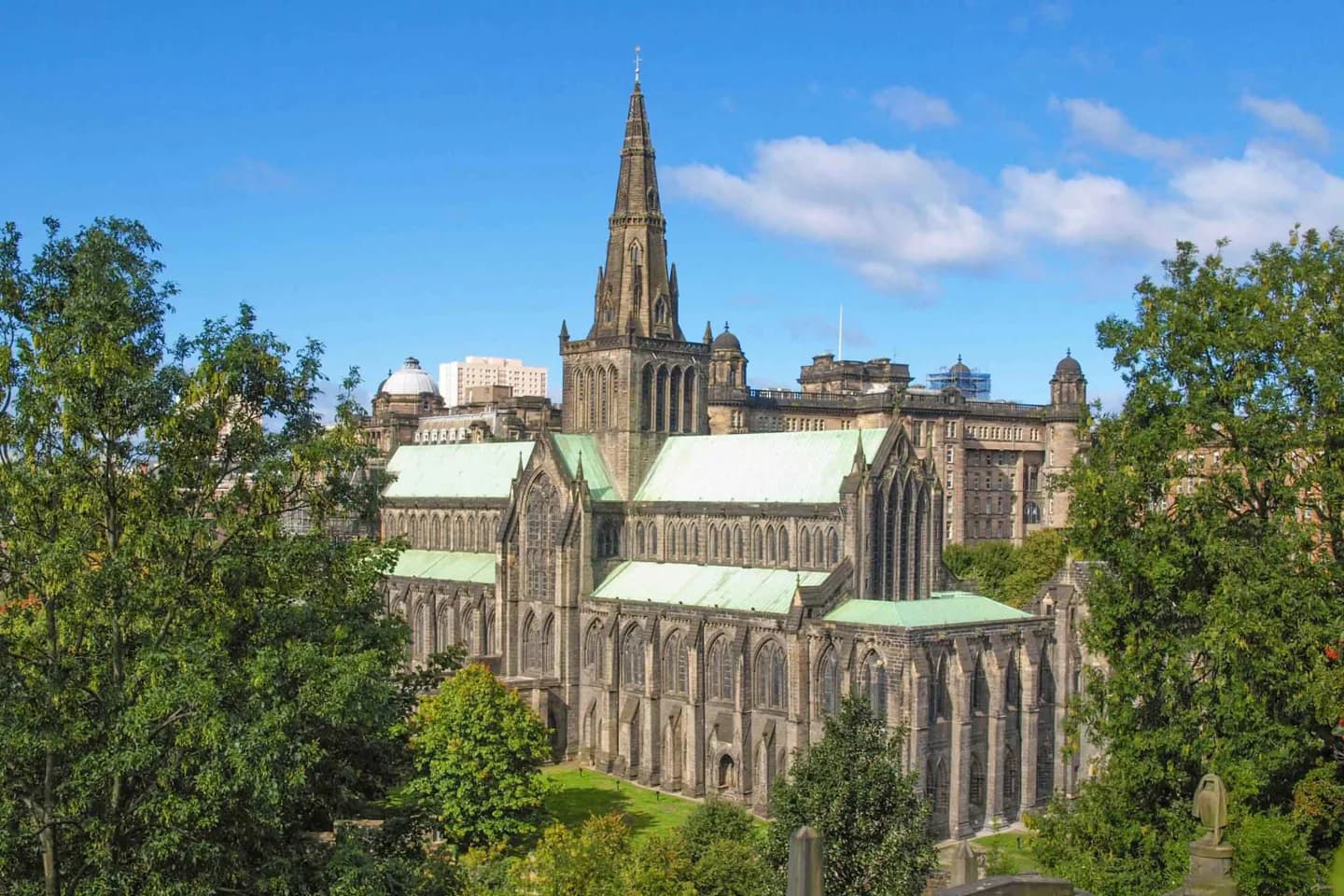
This is the strongest place to connect Glasgow’s medieval beginnings with a building you can still enter. Move from the tall nave down to the lower church to understand the layered plan, then look closely at the stone vaulting. The adjoining Necropolis offers a different view of the same historic precinct.
What to look for
- The height and stone vaulting of the medieval nave
- St Mungo’s shrine in the lower church
- The change in scale between the main church and crypt
The full story
Glasgow Cathedral grew from the late twelfth century around a site traditionally linked to St Kentigern, better known as St Mungo. His shrine in the lower church explains why the building became a place of pilgrimage. Before the Reformation it served as the seat of Glasgow’s bishop and later archbishop. It survived the religious changes that left many medieval churches roofless, and today remains an active Church of Scotland congregation. That history is visible in the building’s levels: the high nave conveys the scale of a medieval cathedral, while the lower church draws attention back to the saint and the city’s earlier story. Treat the visit as both a historic site and a working place of worship; the atmosphere and usable route can change around services.
Useful to know
- Allow time for both the nave and lower church rather than stopping at the entrance.
- Check the cathedral’s visitor information before setting out; worship and events can change access.
- Combine the church with the nearby St Mungo Museum or Necropolis if you want more of the precinct.
Your next visit
Estimated · Declared scenario and planning estimates; no live opening, weather, queue or booking service.
Outdoor visit · 30–45 min
World planning estimate; admission, opening, visit duration and access need checking.