
Why go
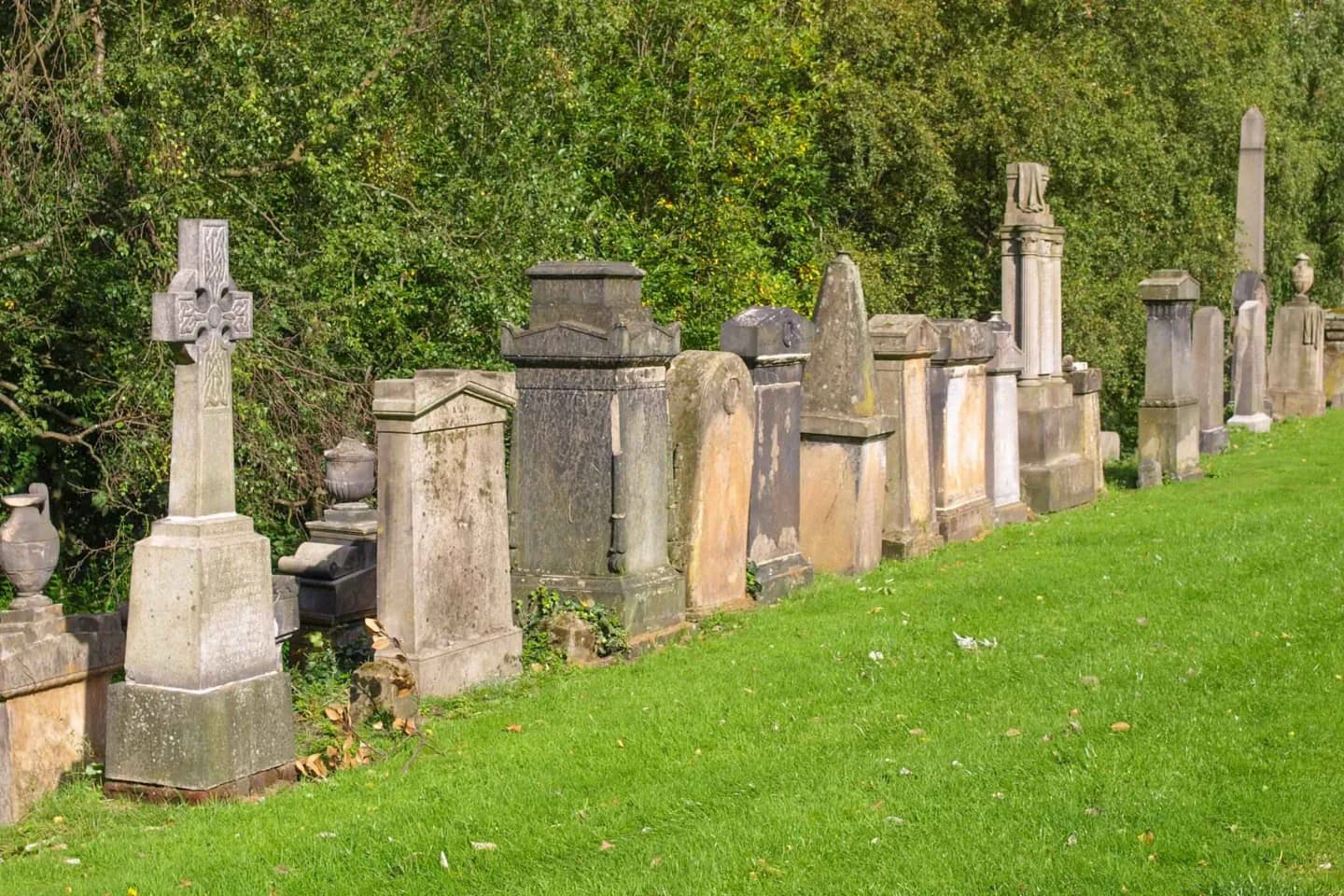
The Necropolis is both a burial ground and a record of nineteenth-century Glasgow’s public memory. Its monuments vary in scale, while the climb reveals how the cemetery was positioned above the Cathedral. Follow the paths rather than aiming only for the summit; a prearranged guided tour can add context to individual graves and designs.
What to look for
- Victorian tombs and funerary sculpture on the slope.
- The view across Glasgow Cathedral.
- The high John Knox monument above the cemetery.
The full story
The Glasgow Necropolis opened in the 1830s as a new kind of burial ground for a growing industrial city. The Merchants’ House helped plan it as parish churchyards faced changing needs and attitudes to burial. Its hilltop position beside Glasgow Cathedral made the landscape unusually prominent: monuments could be seen from the city, and the city could be seen from the graves. The John Knox statue already stood on the hill before the cemetery formally opened. Below it, a bridge later nicknamed the Bridge of Sighs became part of the route for funeral processions. Thousands of people are buried here, though only some are named on the surviving monuments. That difference is worth remembering while reading the grander stones. A slow climb reveals both individual sculptural choices and the way Victorian Glasgow arranged memory within sight of its medieval Cathedral.
Useful to know
- Allow for the climb and keep to cemetery paths.
- Arrange a Friends of the Necropolis tour in advance if you want guided interpretation.
Your next visit
Estimated · Declared scenario and planning estimates; no live opening, weather, queue or booking service.
Outdoor visit · 30–45 min
World planning estimate; admission, opening, visit duration and access need checking.