
Why go
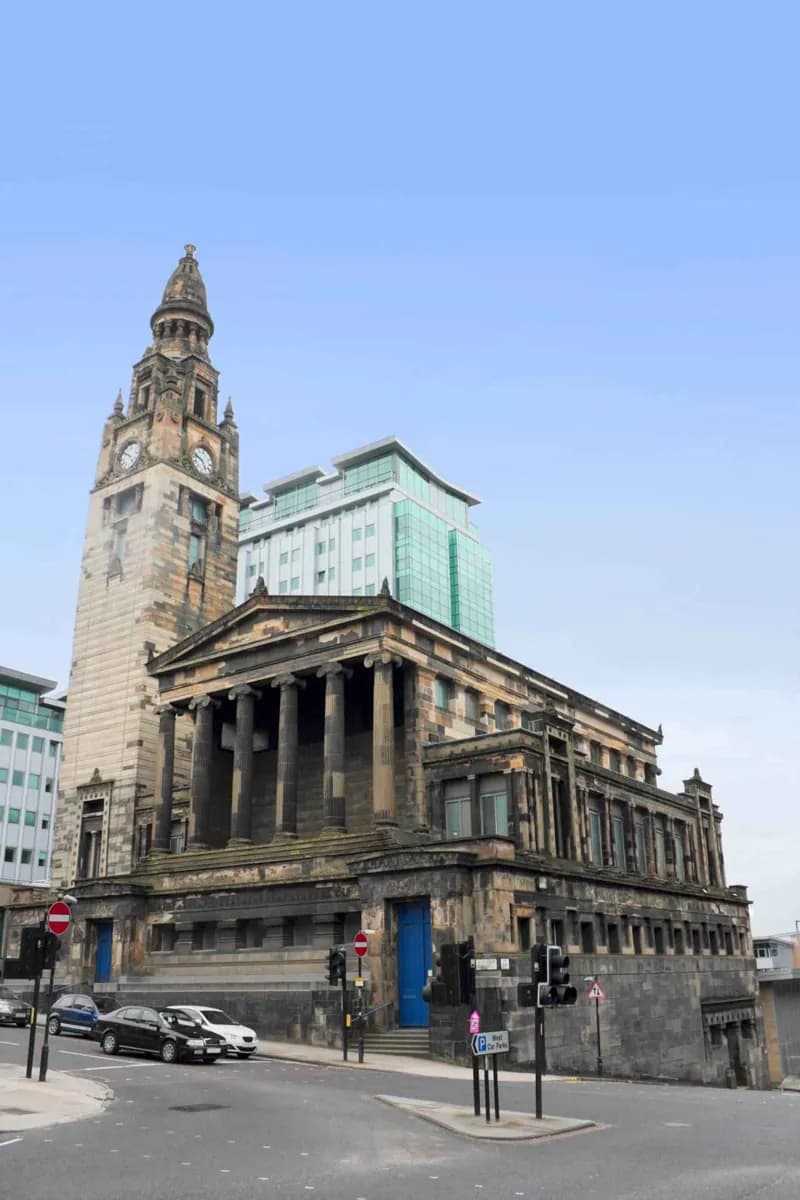
High Street connects Glasgow Cross, the former university site near Duke Street and the Cathedral precinct. The walk makes the city’s eastward origins clearer than a single monument can. Follow the route uphill, then continue to the Cathedral and nearby museum if you want the historical thread to deepen.
What to look for
- Glasgow Cross at the southern end of the route
- The uphill approach toward Glasgow Cathedral
- The former University of Glasgow area near Duke Street
The full story
High Street formed a main spine of medieval Glasgow, running between the religious centre near the Cathedral and the crossroads that became Glasgow Cross. The University of Glasgow occupied buildings near High Street and Duke Street from 1451 until its move to the West End in 1870. As industrial Glasgow expanded and civic power shifted westward, this older street lost some of its earlier central role. Walking it today reveals that change in the city’s shape. It is not a preserved medieval lane from end to end; later buildings and transport altered the surroundings. The value is in following the original line and using its remaining anchors to imagine how the cathedral, university and commercial crossing once related to each other.
Useful to know
- Walk from Glasgow Cross toward the Cathedral to follow the historical direction of the street.
- Treat this as a linear route; allow extra time if you add the Cathedral or St Mungo Museum.
Your next visit
Estimated · Declared scenario and planning estimates; no live opening, weather, queue or booking service.
Outdoor visit · 30–45 min
World planning estimate; admission, opening, visit duration and access need checking.