
Why go
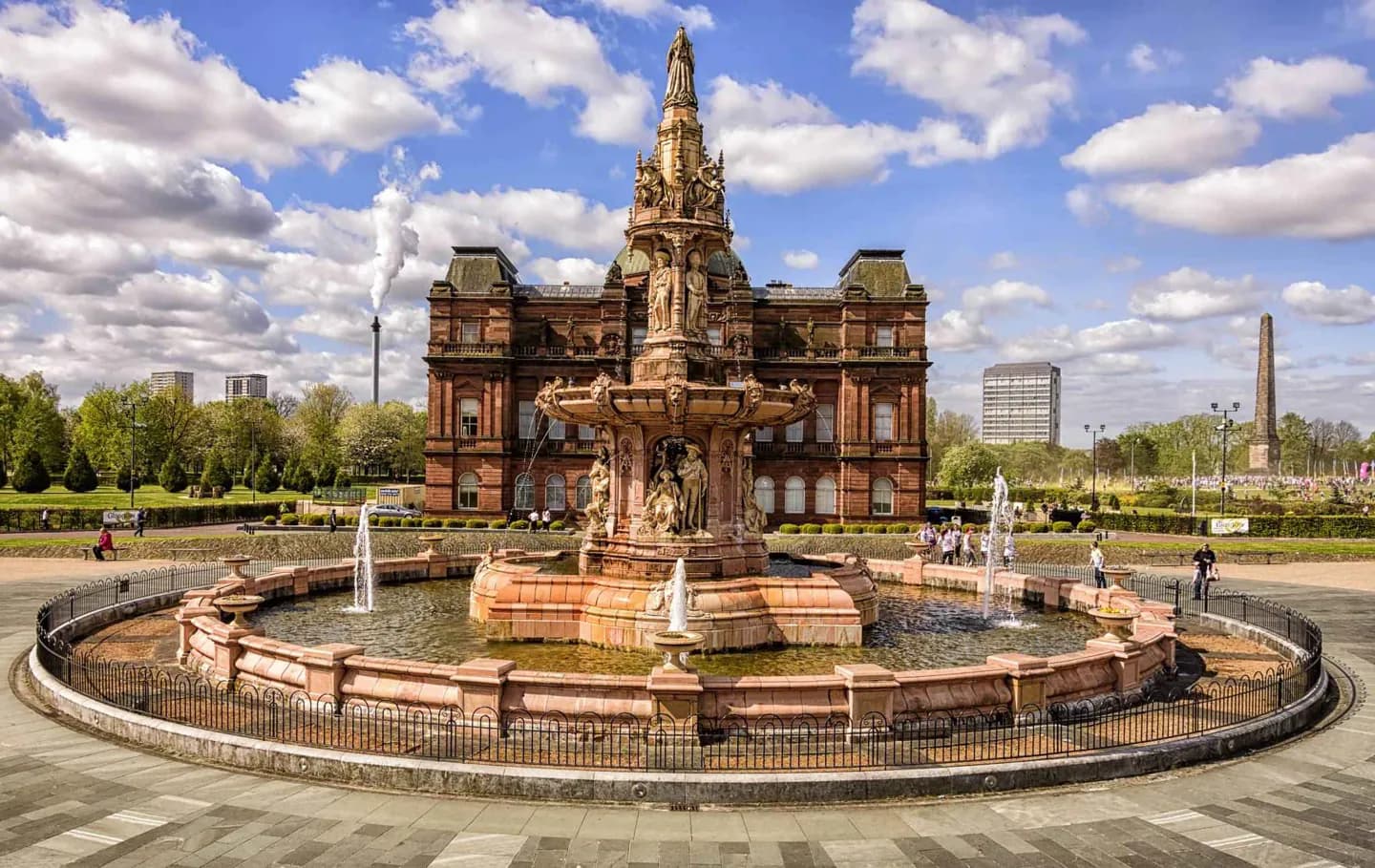
The Green is where a broad public landscape meets Glasgow’s river and East End history. Walk from the Doulton Fountain towards Templeton on the Green, then follow the Clyde path to see how the park opens to the water. The People’s Palace exterior adds a civic landmark to this outdoor route.
What to look for
- The Doulton Fountain in the park.
- Templeton on the Green’s distinctive façade.
- Paths following the River Clyde.
The full story
Glasgow Green grew from land granted for public use in the fifteenth century, long before it became the more even park landscape seen today. Early use was practical: people grazed animals, washed linen and dried fishing nets on its open ground. Later improvements drained and reshaped the area as the city expanded. That layered history helps explain the breadth of the Green and its close relationship with the Clyde. The park is not simply a lawn around monuments. The Doulton Fountain, Templeton on the Green and People’s Palace building each belong to later phases of Glasgow’s civic and social story. The palace and Winter Gardens add another layer to the park’s civic history; their relationship to the fountain, paths and river is easy to read on foot. Walk between the named landmarks and the river edge to see how the Green still works as shared city space.
Useful to know
- Plan an outdoor walk and allow for weather exposure.
- View the People’s Palace from the park; do not plan an interior visit while it is closed.
Your next visit
Estimated · Declared scenario and planning estimates; no live opening, weather, queue or booking service.
Outdoor visit · 30–45 min
World planning estimate; admission, opening, visit duration and access need checking.