
Why go
The Inner and Outer circles follow the same ring in opposite directions, a rare simple plan for an old metro. Knowing that history makes a ride feel different from a modern network built in branches. Use the separate current travel guide for today’s fares, hours and accessibility.
The full story
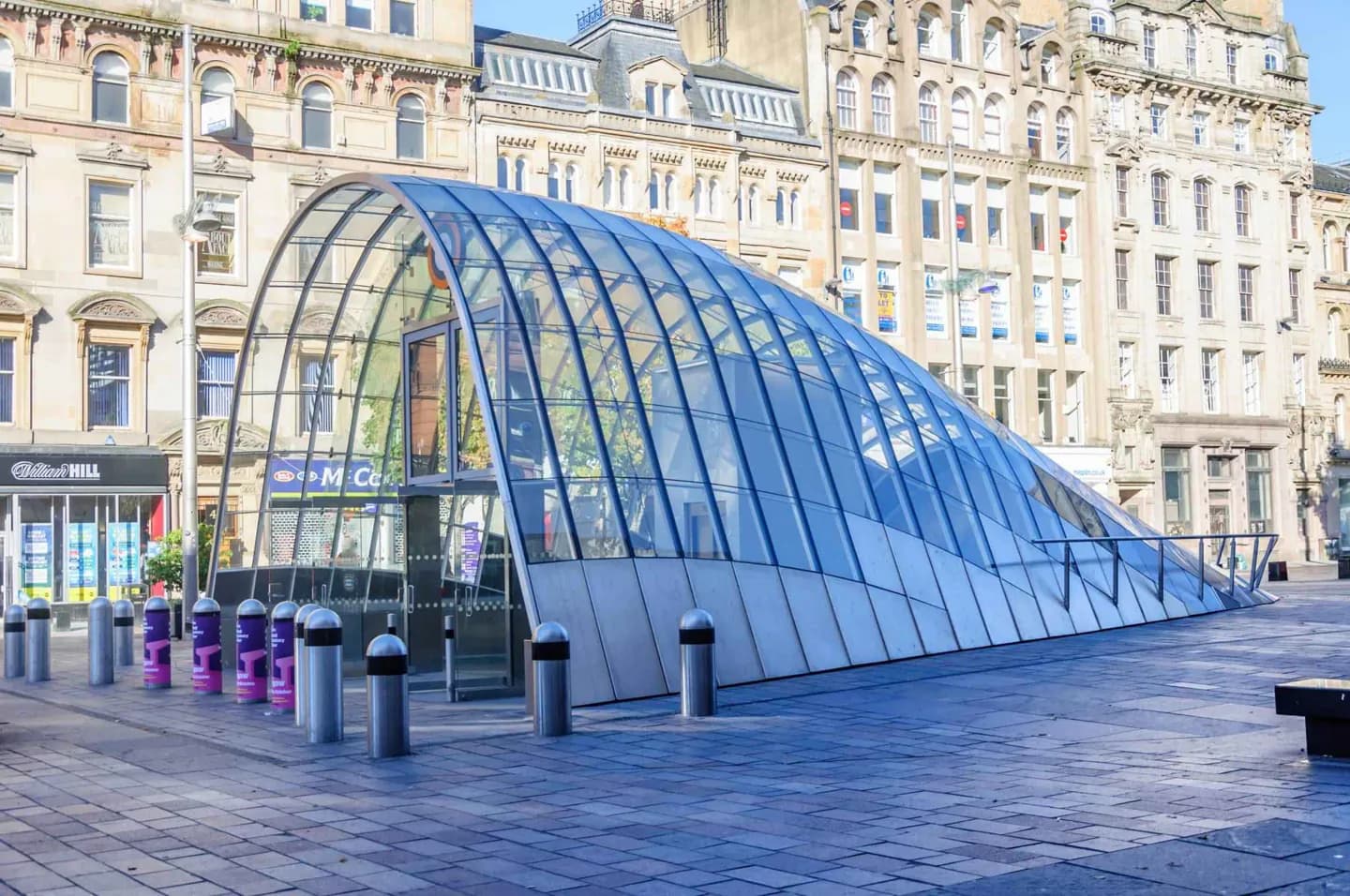
Glasgow’s Subway opened in 1896, making it one of the earliest underground urban railways. It began with cable-hauled trains and was later electrified, but the fundamental route stayed a double-track circle. The two directions came to be known as the Inner and Outer circles. The compact tunnels and narrow track gauge gave the system a distinctive scale, while the fixed loop linked parts of the centre, West End and districts south of the Clyde without extending across all of Glasgow. Its name changed with different operators before “Subway” returned as the familiar official term. The most revealing feature is not its age alone but the persistence of that geometry: stations can be reached in either direction around the ring, yet places outside it require another mode. A historical ride lets you notice the small-scale engineering; a practical journey still needs current operator information for schedules, tickets and step-free access.