
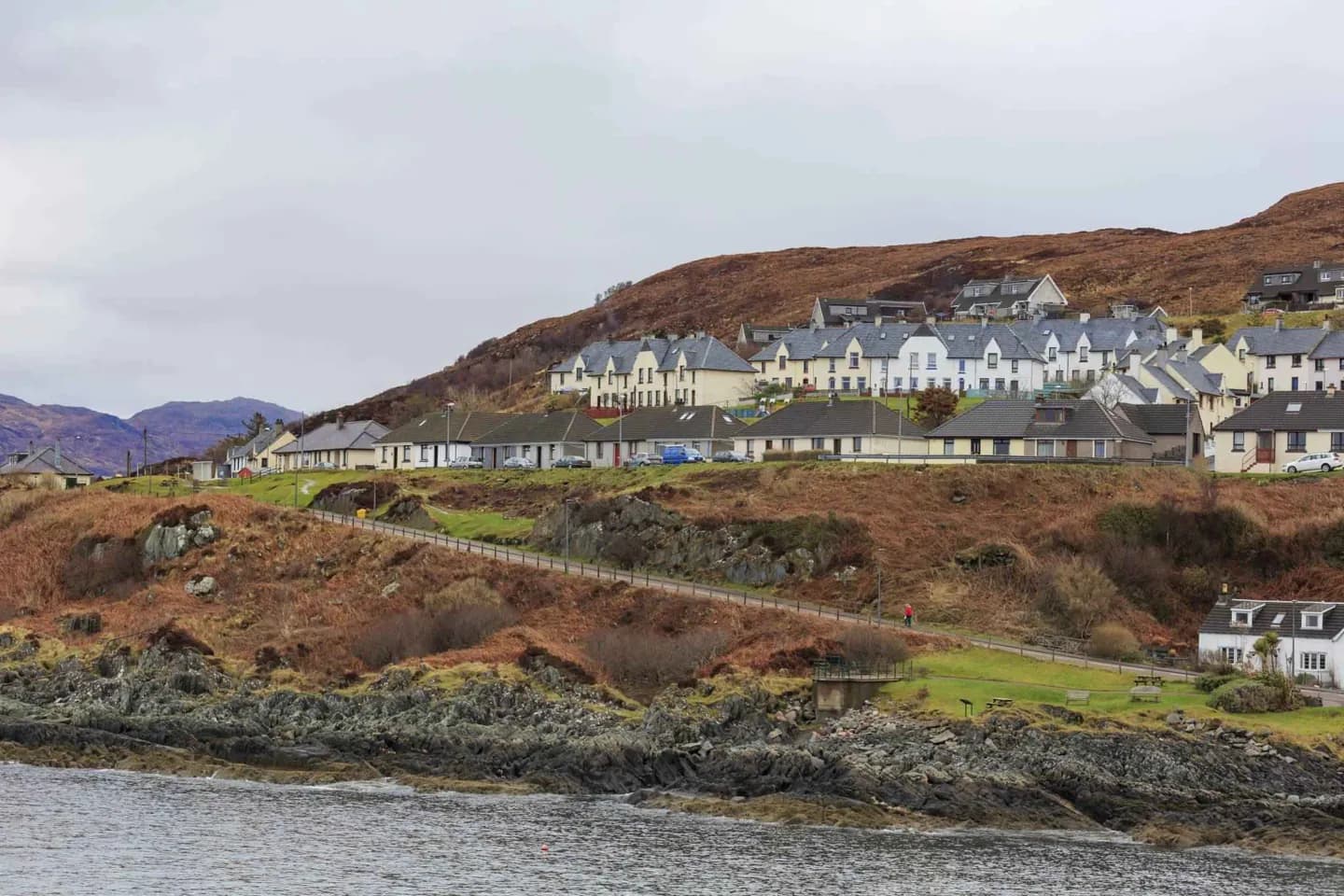
Why go
The port makes sense as both a place to pause and a gateway onward. The rail approach from Fort William ends among fishing boats and ferry departures, while routes to Skye and the Small Isles extend the journey. Check the particular ferry before planning to continue, since the harbour serves several destinations.
What to look for
- Fishing harbour at the end of the rail line.
- Ferries departing towards islands and peninsulas.
The full story
Mallaig grew as a fishing village on Scotland’s west coast and expanded with the arrival of the railway at the start of the twentieth century. The rail terminus linked the harbour more firmly to inland markets and remains a memorable way to approach the town. Ferries now give it another role, carrying travelers towards Skye, the Small Isles and other coastal communities. Those functions make the harbour the natural focus of a visit. Look at the working waterfront rather than expecting a single monument, and notice how train, boats and village streets meet within a small area. Mallaig is also a decision point: some visitors turn back after a rail journey, while others continue by sea. Either plan depends on transport timing, and neither should be compressed into an ordinary Glasgow sightseeing circuit.
Useful to know
- Check ferry route and sailing details for the intended destination.
- Allow time in Mallaig if arriving by the scenic railway from Fort William.