
Why go
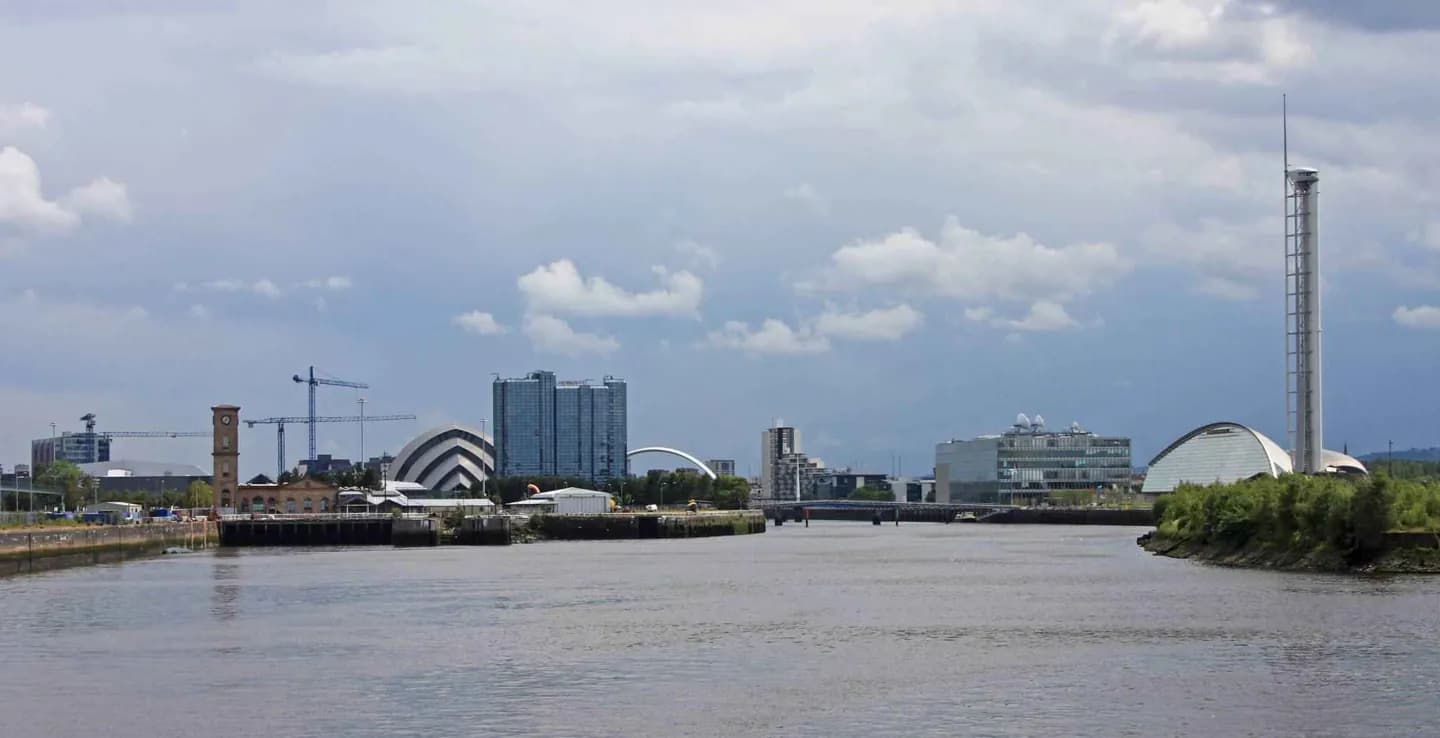
Glasgow’s history is easiest to read where the city meets the Clyde. Around the central bridges, former quays and road crossings show how trade and transport reshaped the banks. Farther west, Riverside Museum and the Tall Ship Glenlee turn the river’s industrial and maritime past into visits with clear stopping points. Pick one section for a satisfying walk.
What to look for
- Central bridges crossing between the north and south banks.
- Waterfront buildings and spaces shaped by former docks.
The full story
Glasgow grew along a river that could connect inland industry to the sea, but the Clyde visible today has passed through many different uses. Shipyards, engineering works and docks once occupied long stretches of the banks. Bridges and quays still show how strongly movement across and along the water shaped the city. Later industrial decline changed those working edges, and some riverfront sites gained museums, event buildings and public routes. A walk is more revealing when focused on a short stretch: the central bridges show road and pedestrian crossings close together, while the western reach around Riverside Museum and the Tall Ship brings the shipbuilding story into sharper focus. Keep the two banks in view; the river’s significance lies as much in what was built beside it as in the water itself.
Useful to know
- Choose a short river section with named endpoints, such as the central bridges or Riverside Museum.
- Expect open, exposed stretches beside the water.