
Why go
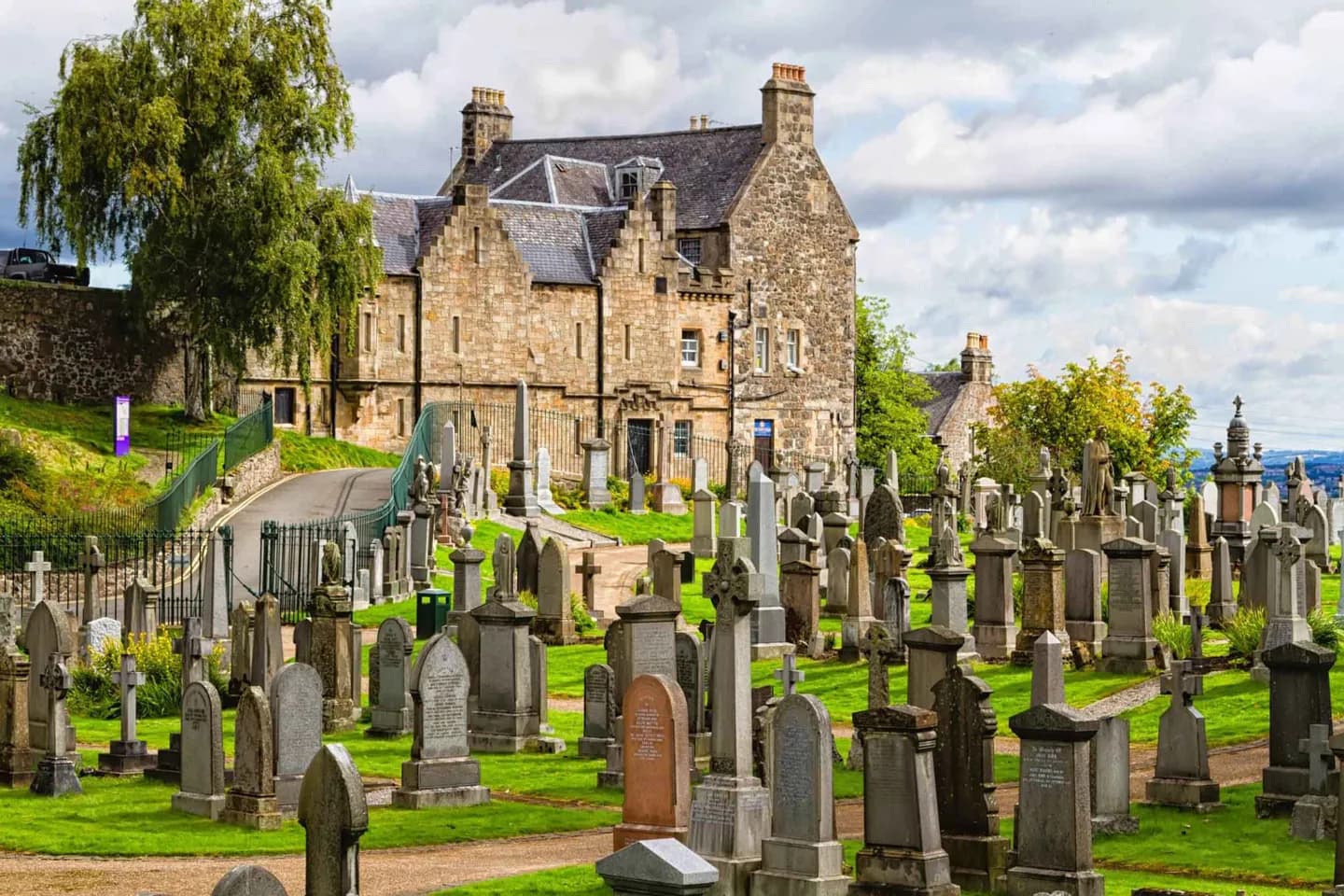
The castle dominates the city from above, but Stirling’s story also lies in the old streets and the crossing landscape below. A focused visit can link the hilltop stronghold with the medieval town; the National Wallace Monument and Bannockburn are separate choices requiring more time. Plan one coherent Stirling day.
What to look for
- The castle above Stirling Old Town.
- The city’s relationship with the River Forth crossing.
The full story
Stirling grew where movement across the River Forth made control of routes north and south especially important. The castle’s hilltop position dominates the view, but the older town below also formed part of the historic centre of power, trade and travel. Its role as a royal stronghold gave the city a significance out of proportion to its size. That geography is still the best way to understand Stirling: begin with the old streets, climb towards the castle, then look back across the surrounding landscape. Other sites associated with Scottish history, including the Wallace Monument and Bannockburn, are not simply beside the castle gate. They call for separate time and transport choices. Stirling works as an independent destination from Glasgow, with enough concentrated history for a day rather than a brief detour.
Useful to know
- Allow for uphill walking between the town and castle.
- Choose separately whether to add the Wallace Monument or Bannockburn.