
Why go
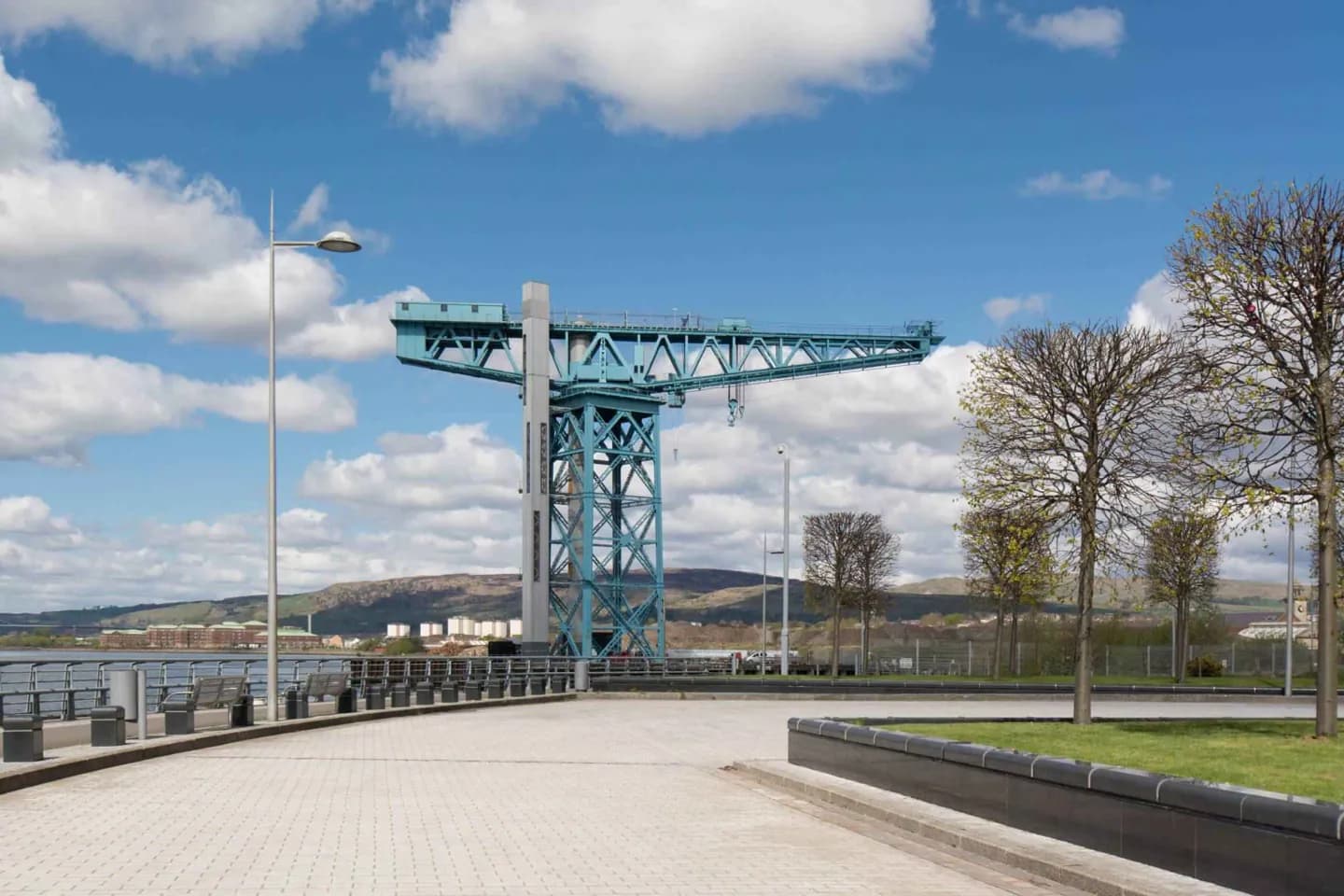
The crane makes the scale of Clyde shipbuilding immediately visible. Its long arm was built to lift heavy engines and boilers into vessels at the John Brown yard, where major liners took shape. An exterior view is worthwhile for industrial history, but the viewing platform should count only if the operator confirms access.
What to look for
- The cantilever arm above the former fitting-out basin.
- The crane’s relationship to the Clydebank waterfront.
The full story
Titan was completed in the early twentieth century for the John Brown shipyard at Clydebank. Its cantilever arm solved a practical problem: enormous engines and boilers had to be lifted into ships during fitting out. The electrically powered crane stood at the basin where some of the Clyde’s largest vessels were prepared, including famous ocean liners. From the quay, the length of the arm and its position over the water explain the engineering task more clearly than a photograph of a finished ship. The structure later became a heritage attraction, but that past use does not establish present platform access. Look at it from outside and place it within the wider yard landscape. The crane is both a surviving machine and a marker of the industrial organisation required to build very large ships on the Clyde.
Useful to know
- Plan an exterior view from public Queens Quay space.
- Confirm any platform reopening before travelling specifically to climb.